
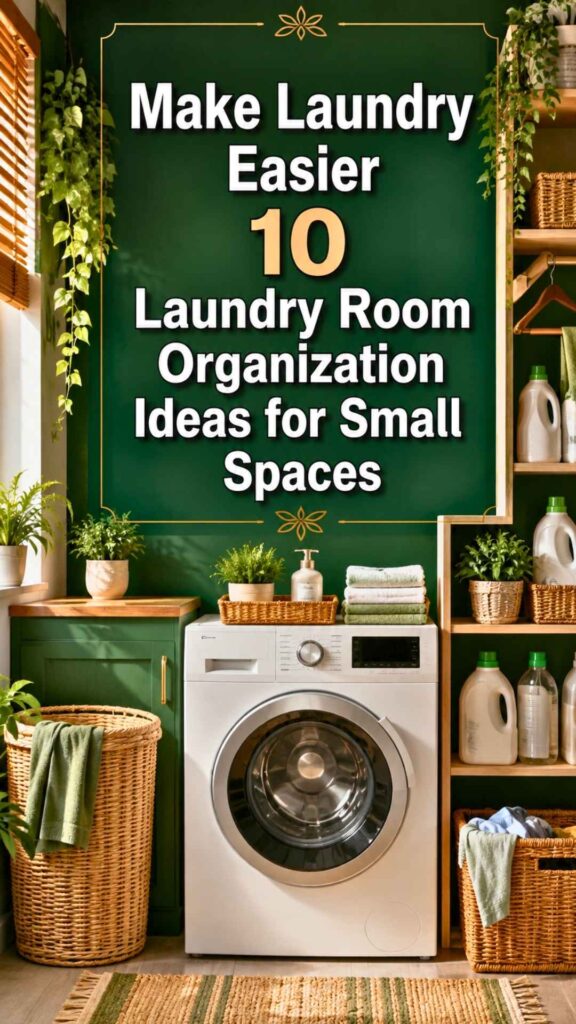
These laundry room organization ideas for small spaces solve everyday problems like cluttered floors, misplaced detergent, lost socks, drying racks, and limited folding space with practical solutions that fit real homes.
In a small laundry room, the problem is often not simply a lack of space. It is the way that limited space is being used.
A laundry basket may end up blocking the washer. Detergent gets left on top of the machine because there is nowhere else to put it. Clean clothes sit around because there is no convenient surface for folding. Small items pulled from pockets—coins, receipts, clips, and tissues—seem to collect wherever there is an empty corner.
That raises a useful question: Do you actually need more storage, or does each task simply need a designated place?
Good laundry room organization ideas for small spaces start with that question. Instead of adding shelves and containers everywhere, think about the room as a series of tasks: bringing in dirty clothes, washing, drying, folding, storing supplies, and dealing with the small items that appear during laundry day.
Before buying anything, look at the room and ask yourself: Is the floor always crowded with baskets? Do you have to search for detergent? Do clean and dirty clothes get mixed together? Does the drying rack get in the way? Is the wall above the machines empty while the floor is packed? Do small items such as stain removers, sock clips, or pocket contents have no fixed home?
Those observations will tell you what needs to change.
1. Turn the Space Above the Washing Machine Into an “Active Zone”
The space above the washer and dryer is often left unused, even in a very small laundry room. As a result, detergent and other daily essentials end up on the floor, on the machine, or wherever they happen to fit.
A shallow shelf or compact cabinet can make that space useful without making the room feel crowded.
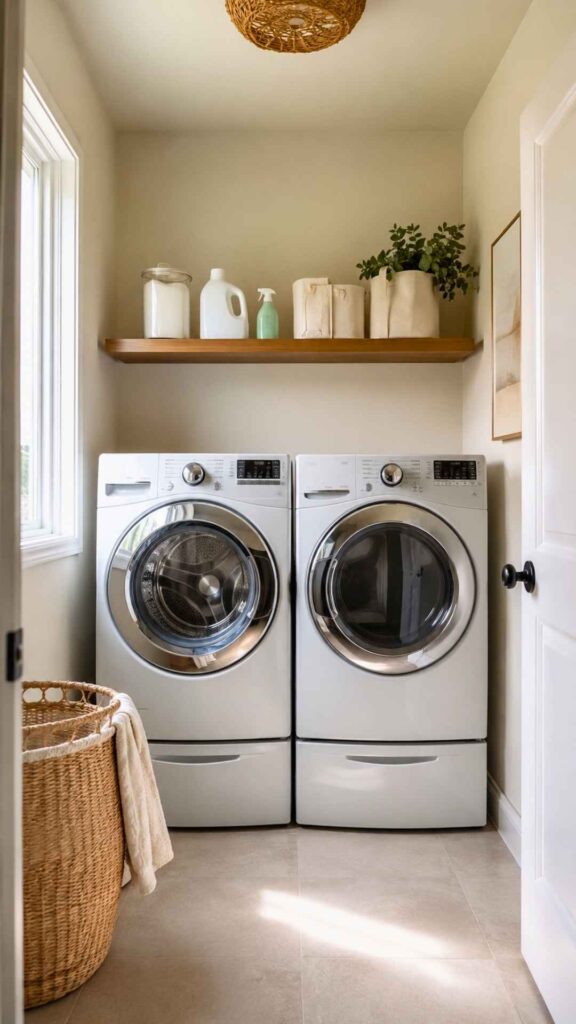
Use it for things you reach for often, such as detergent, stain remover, laundry bags, or dryer sheets. Avoid turning it into a general storage shelf filled with rarely used products.
The depth matters, too. A bulky shelf can make a narrow room feel even tighter. In a small space, storage should add function without taking over the room visually.
2. Put the Laundry Basket Where Clothes Actually Arrive
A laundry basket does not have to live in the most convenient-looking corner. It should live where people naturally leave their clothes.
If clothes are usually brought into the laundry room from a bedroom or hallway, think about that path before deciding where the hamper belongs. A slim, tall hamper may work better than a wide basket if floor space is limited.
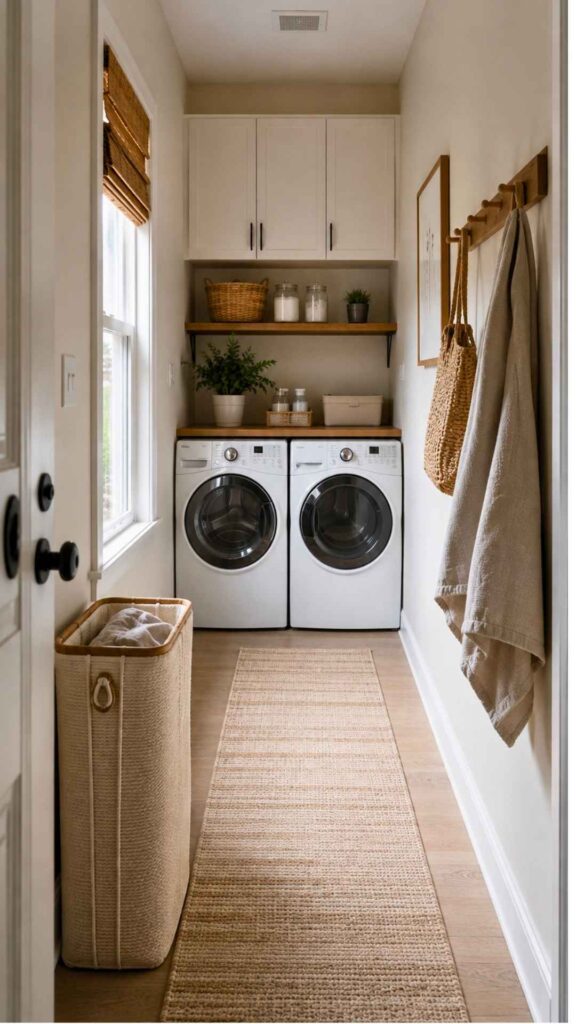
The best hamper is not necessarily the prettiest one. It is the one that fits the way your household actually uses the room.
A simple change in placement can prevent the basket from blocking the washer and keep the main walkway clear.
3. Turn Detergent Storage Into a Simple Refill System
Large detergent bottles often stay out because they are inconvenient to put away. Then backup bottles begin collecting around them, and the laundry area slowly becomes cluttered.
A better approach is to separate what you use now from what you are storing for later.
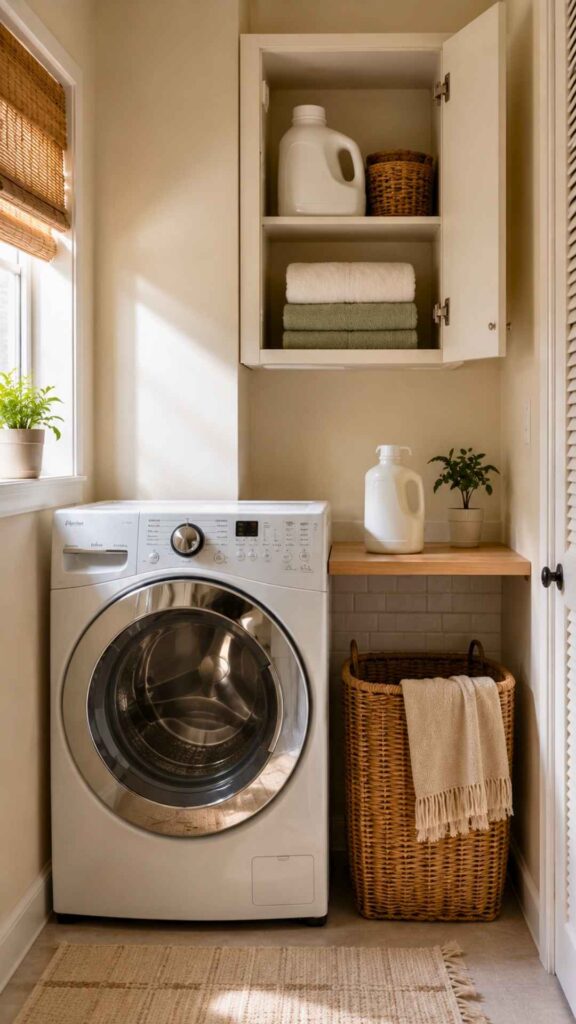
Keep the everyday detergent in the easiest-to-reach position and place backup supplies on a higher shelf or inside a cabinet. You do not need matching containers for everything. The goal is simply to make daily use easier and prevent backup products from taking over the working area.
Think of it as a one-in-use, one-in-backup system.
The system is more important than the containers themselves.
4. Give Lost Socks a Temporary Home
Many households know this problem well: one sock turns up, but its partner does not.
Instead of leaving the unmatched sock on top of the washer or tossing it into a random drawer, give it a temporary home. A small wall-mounted pocket, basket, or container beside the washer can hold unmatched socks until the missing pair appears.
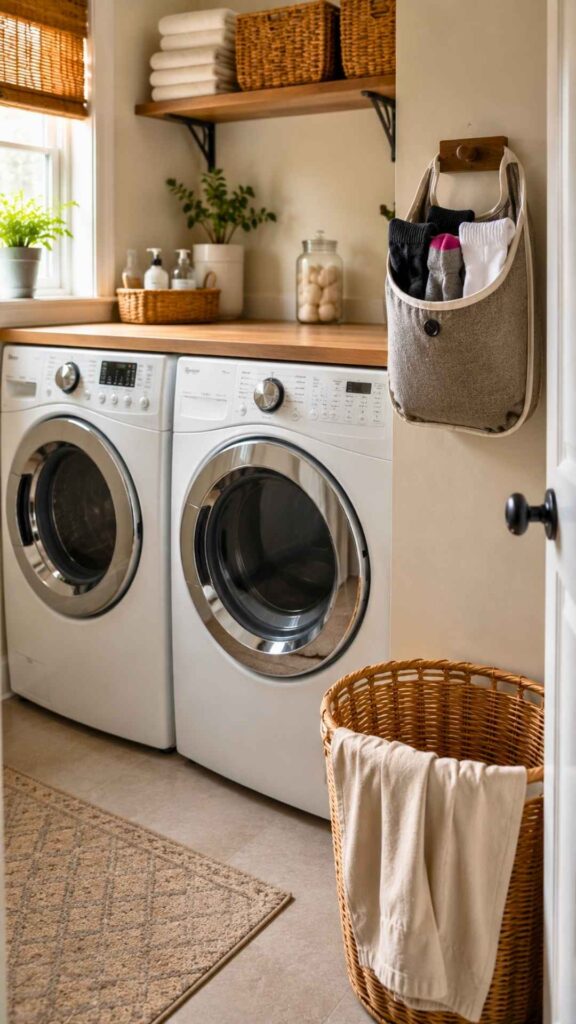
The important word here is temporary.
This is not a long-term storage solution. It is simply a reliable place for something that has not found its partner yet. Once the pair is complete, take the socks out and put them away.
A tiny system like this can prevent a surprisingly persistent source of laundry-room clutter.
5. Stop Letting the Drying Rack Own the Floor
A drying rack can be useful, but in a small laundry room it can also consume most of the available walking space.
Before choosing one, think about what happens when you are not using it.
A fold-down wall rack, retractable drying line, or compact ceiling-mounted system may work better than a full-size rack that has to remain open. The right choice depends on your layout, but the principle is simple: unused equipment should take up as little space as possible.
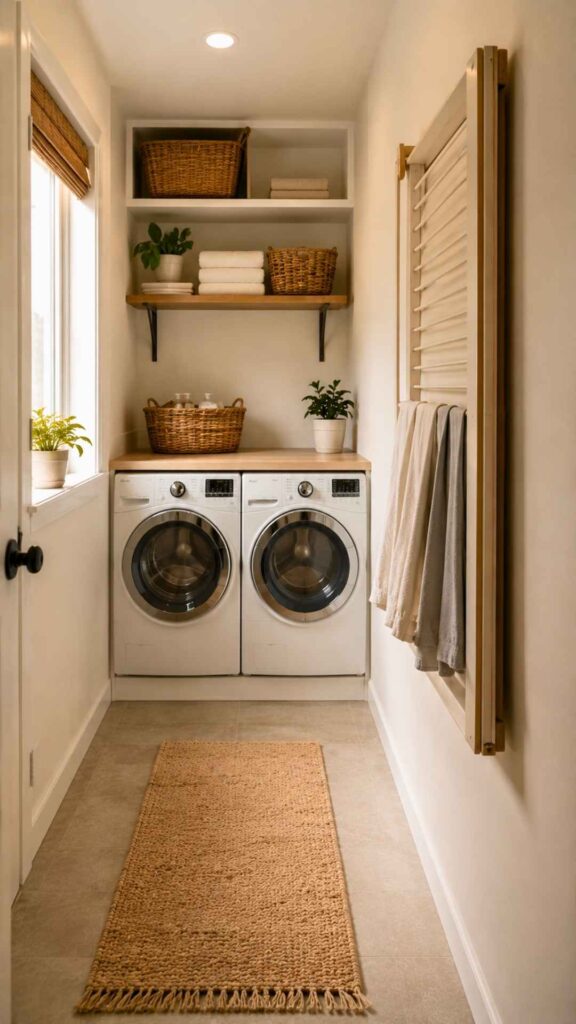
Before installing anything, make sure it will not block the doorway, washer, dryer, or normal walking path when fully opened.
In a small room, that clearance can matter more than the rack itself.
6. Create a Laundry “Landing Zone” for Pocket Items
Laundry often uncovers a collection of small objects: coins, receipts, tissues, hair clips, and other things that were left in pockets.
Without a designated place for them, those items end up on the washing machine or disappear under baskets.
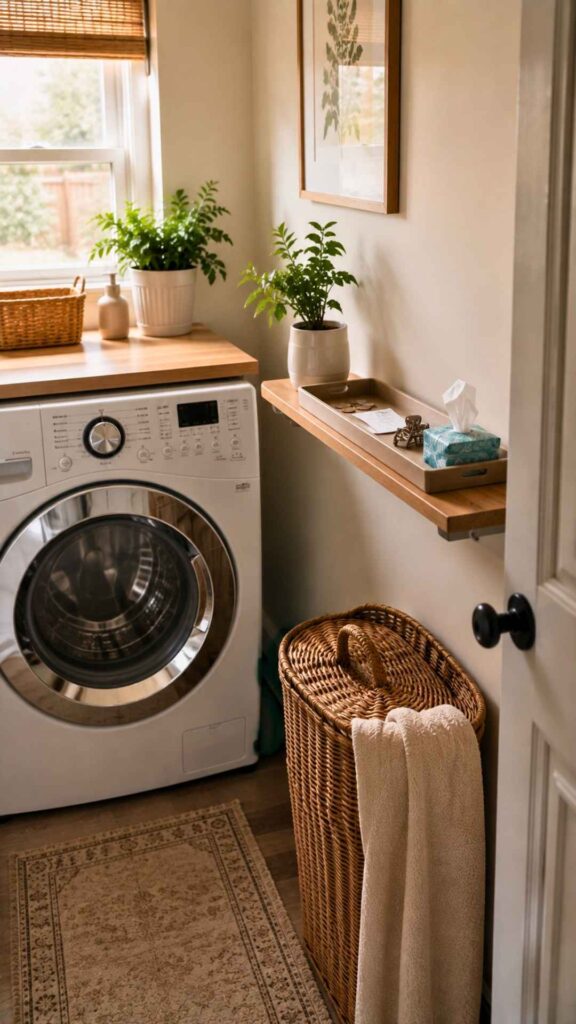
A shallow tray placed near the washer creates a simple landing zone. Empty pockets, place the items there, start the wash, and deal with them afterward.
This works because you are not trying to eliminate the small clutter completely. You are giving it a predictable temporary destination.
That small distinction can make the room much easier to manage.
7. Use a Narrow Gap Only If It Is Actually Safe and Useful
A narrow space between the washer and the wall may look like wasted storage potential. It can be tempting to buy a slim shelf immediately.
Measure first.Check the width, depth, door clearance, appliance movement, and any ventilation or maintenance requirements. Only then decide whether narrow shelving makes sense.
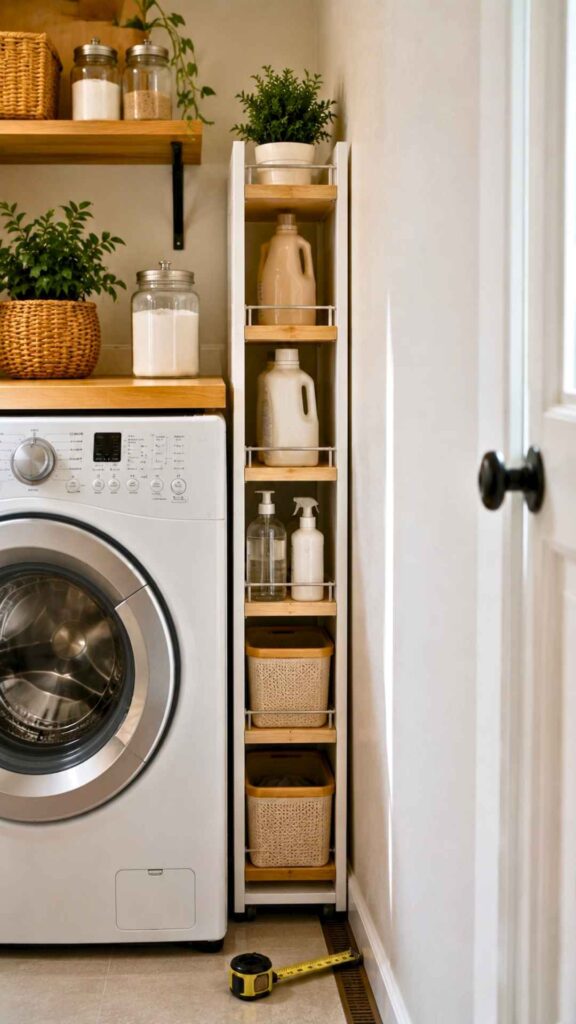
And remember: not every empty gap needs to become storage.
Some spaces are necessary for access, movement, airflow, or maintenance. A storage solution is not helpful if it makes it harder to reach the machine or creates a problem later.
Good organization uses available space carefully. It does not automatically fill every empty space.
8. Separate Laundry Supplies From General Cleaning Supplies
Laundry rooms have a habit of becoming the household’s catch-all cleaning closet.
Detergent ends up next to floor cleaner. Brushes sit beside stain removers. Extra cleaning sprays, rags, trash bags, and other supplies gradually fill every shelf.
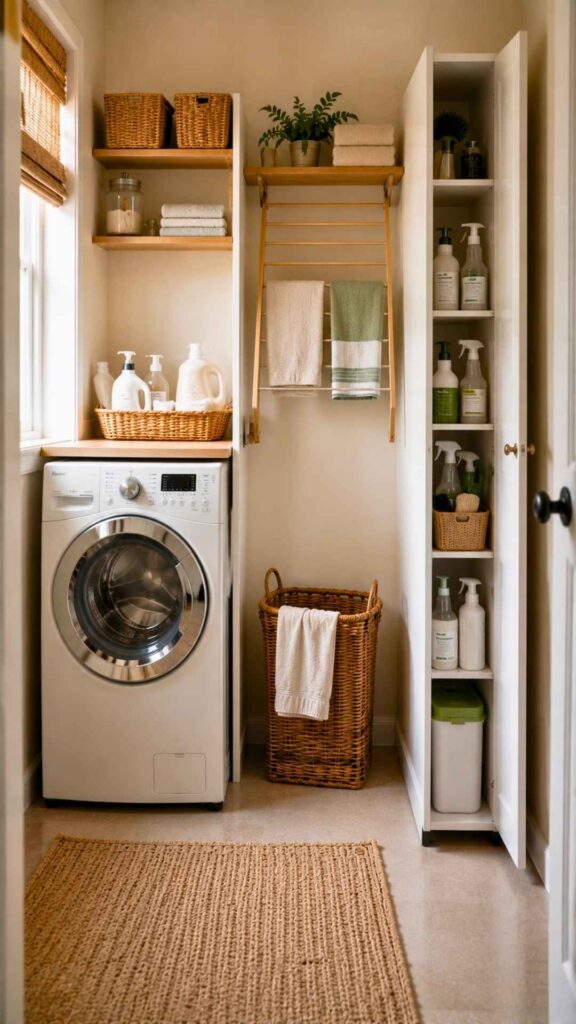
Instead, organize storage around how the room is used.
Zone 1 — Washing: Detergent, stain removers, laundry bags, and other washing essentials.
Zone 2 — Drying: Drying accessories and garment-care items.
Zone 3 — Cleaning Backup: General household cleaning products and backup supplies.
These laundry room organization hacks work because they follow your workflow rather than relying only on visual categories.
9. You May Not Need a Full Folding Table
A dedicated folding table sounds useful until you try to fit one into a small laundry room.
Instead of asking, “Where can I put a table?” ask, “How much surface do I actually need?”
A fold-down wall surface, slim countertop, pull-out folding board, or even a small section of usable counter space may be enough.
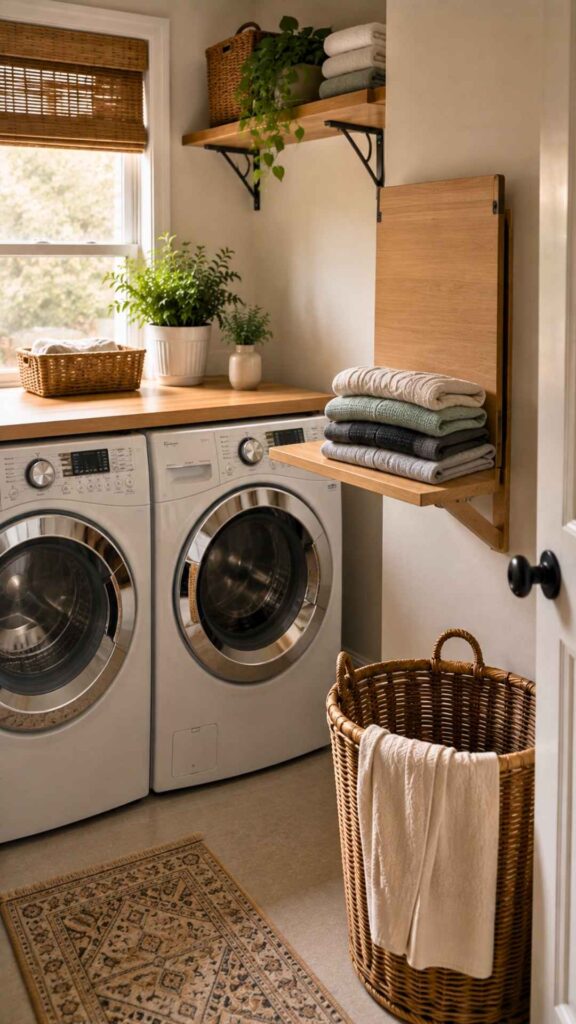
If you are only folding a few shirts or towels at a time, there is little reason to give up valuable floor space for a large permanent table.
In a small room, a surface that appears only when needed can be more useful than one that takes up space all day.
10. Follow a “One In, One Out” Laundry Supply Rule
An organized laundry room can slowly become cluttered again, even when the original storage system was good.
The reason is simple: new products keep coming in, while old or unnecessary products remain.
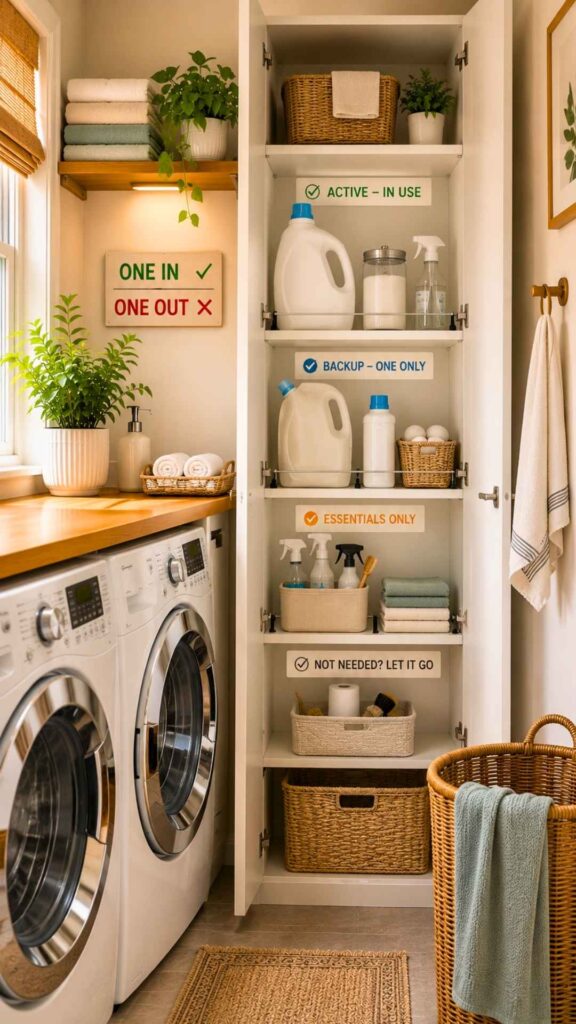
A practical rule is one in, one out. Before buying another backup, check whether you already have enough. Once a product is finished, replace it rather than continuing to build a large collection.
Once a month, look for duplicates, expired products, unused supplies, and backups you are unlikely to need.
The most organized laundry room is not the one with the most shelves, baskets, and containers. It is the one that contains the essentials and gives each of them a sensible place.
Final Thoughts
Having a small laundry room does not mean you have to cram everything into it. The goal of laundry room organization ideas for small spaces is not to make a small room hold more things. It is to make the things you already use easier to reach, easier to put away, and less likely to become clutter.
Add storage only where it solves a specific problem.Sometimes the best organization solution is not another product. It is removing one unnecessary step.
The best laundry room organization hacks are the ones that fit naturally into your daily routine. When the room follows the way you actually do laundry, staying organized becomes much easier—and a small laundry room can feel far more functional without becoming overloaded with storage.
FAQs
What is the best way to organize a small laundry room?
Start by identifying the biggest daily problem. It may be baskets blocking the walkway, scattered detergent, limited drying space, or nowhere to fold clothes. Solve that problem first instead of trying to reorganize everything at once.
How can I add storage to a very small laundry room?
Look at vertical and otherwise unused space before adding floor-standing furniture. Shallow shelves, compact cabinets, narrow storage, and fold-away solutions can add function without sacrificing valuable walking space.
Where should I put the laundry hamper?
Place the hamper where clothes naturally arrive. This may be near the laundry-room entrance, hallway, bedroom, or another point where people routinely change clothes. The most convenient location is usually better than the most attractive one.
How do I keep laundry detergent from cluttering the room?
Separate your everyday supply from your backup supply. Keep the product you use regularly within easy reach and store backup products separately. This keeps the active workspace clear.
How can I organize a small laundry room without remodeling?
Start with placement rather than construction. Move the hamper, group supplies by function, add a small landing tray, use available wall space, and choose fold-away equipment where appropriate. Small changes can often solve the biggest practical problems.
How do I make room for a folding area?
You may not need a permanent folding table. A fold-down wall surface, slim countertop, pull-out board, or another small usable surface may provide enough room for folding everyday laundry.
Are narrow laundry-room storage shelves worth using?
They can be useful when the gap is genuinely available and the shelf does not interfere with appliance access, ventilation, movement, or maintenance. Always measure the space before buying anything.
How do I stop my laundry room from becoming cluttered again?
Create simple rules that are easy to maintain. Keep everyday supplies separate from backups, give small items a temporary home, and regularly remove duplicates or products you no longer use. Organization works best when the system matches your daily routine.