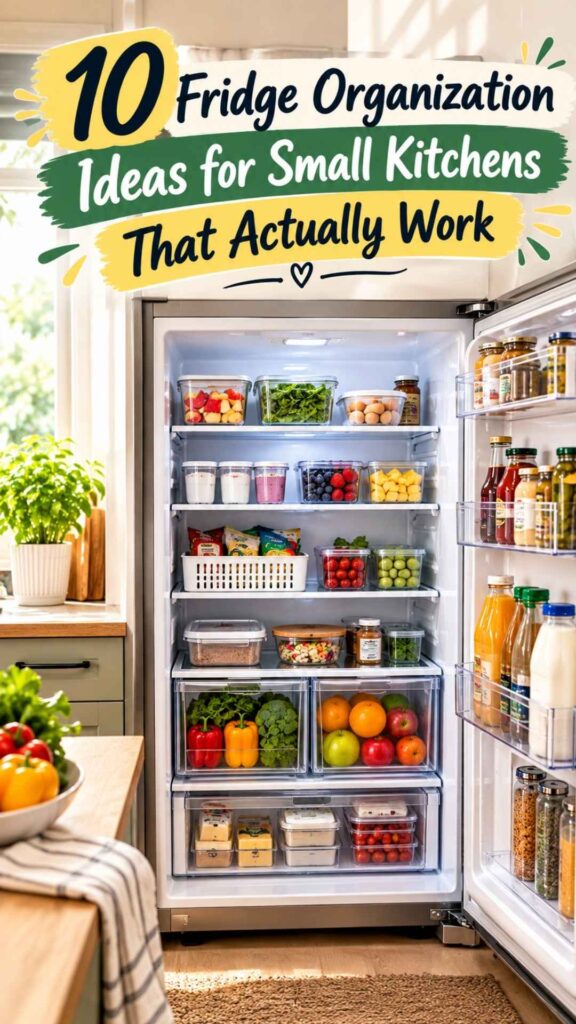
Discover practical fridge organization ideas for small kitchens, including smart solutions for crowded shelves, tall bottles, produce, leftovers, snacks, spills, and double-door refrigerators.
After a grocery run, one of the first things we want to do is get everything into the fridge as quickly as possible. And that is usually where the problem starts.
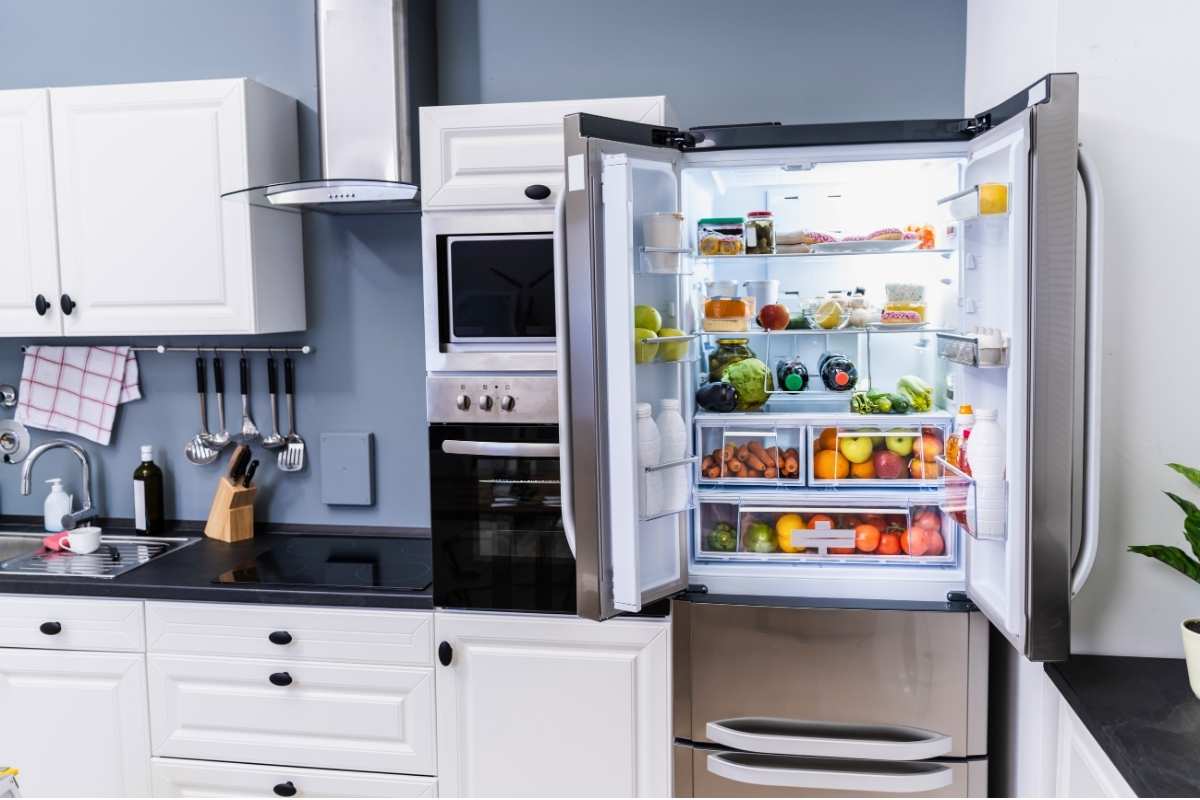
We take the food that was already in the fridge and push it farther toward the back, then place the new groceries at the front. A few large bottles can take up most of the available space on a small shelf. Even with a vegetable drawer, smaller produce bags often end up wherever there is room. In a double-door fridge, we often fail to use both doors properly and simply place things wherever we see an open spot.
Then there is another common problem: buying the same item again because the one we already have is hidden somewhere behind everything else.
So, when does this happen?
It happens when we assume the fridge is too small. But often, that is not the real problem. The space is there; it is just being used in the wrong way.
Even expensive refrigerator accessories cannot fully solve the problem if the basic organization is not working. The better approach is to organize the fridge around the habits you already have in your kitchen, using solutions that can adapt to different fridge layouts.
The goal is not to fit more and more things into a small space. It is to give the things you already have a better flow.
That is what these fridge organization ideas are designed to address, including practical fridge organization ideas double door solutions for refrigerators with two separate doors. At the end, we have also included a quick decision guide that can help you keep your fridge organized.
1. Create a “First-In, First-Out” Front Row
When we stock the fridge after a grocery run, we often place new packages at the front and push older ones to the back. As a result, we lose track of expiration dates or end up buying duplicates.
The root cause is a lack of visibility. Traditional shelving does not naturally keep older items in sight, so they get pushed farther back and become easy to forget.
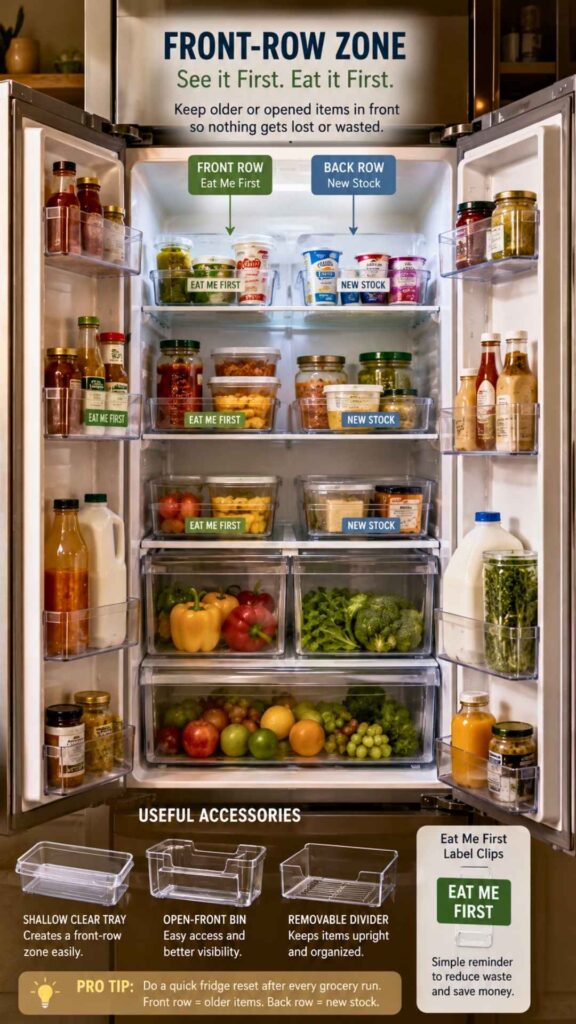
The solution is to create a front-row zone on every major shelf. Keep older or opened items at the front and place newer or extra stock at the back.
You can achieve this using shallow, clear trays, open-front refrigerator bins, or removable acrylic shelf dividers.
The point is not to create another complicated system. It is simply to make the food you should use first impossible to overlook.
2. Think “One Shelf = One Daily Decision,” Not “One Shelf = One Job”
Items like leftover milk, sauces, and snacks often get jumbled together. While organizing strictly by food category is technically sound, it can make everyday decisions more time-consuming.
Instead, organize fridge shelves around the decisions you make every day: what to eat today, what is for breakfast, what needs cooking, and what serves as a backup.
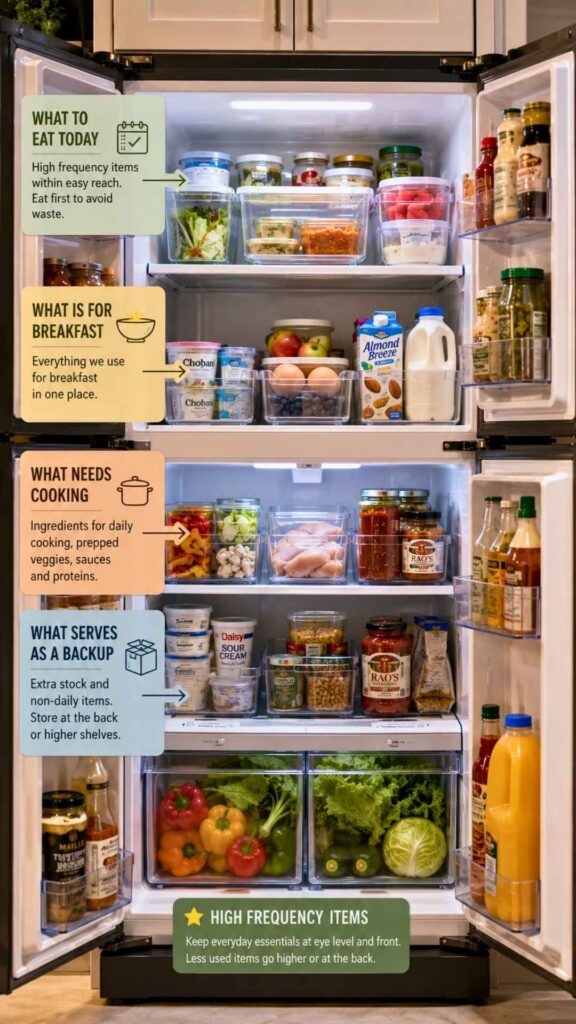
Place high-frequency items—the things you use most often—on the easiest-to-reach shelves. Store less frequently used items on higher shelves or in deeper spaces.
The goal is to make the fridge easier to use, not simply easier to photograph. Group items visually, but avoid filling every shelf with containers just for the sake of organization.
A few shallow, open bins or adjustable dividers can be enough to make the next trip to the fridge faster and less frustrating.
3. Solve the Height Problem for Large Bottles, Not the Space Problem
One of the biggest challenges in fridge organization is dealing with tall items such as juice, milk, and sauce bottles. They can waste vertical space, while smaller jars do not fit properly into the gaps around them.
Instead of treating this as a general storage problem, look at the height of the items first.
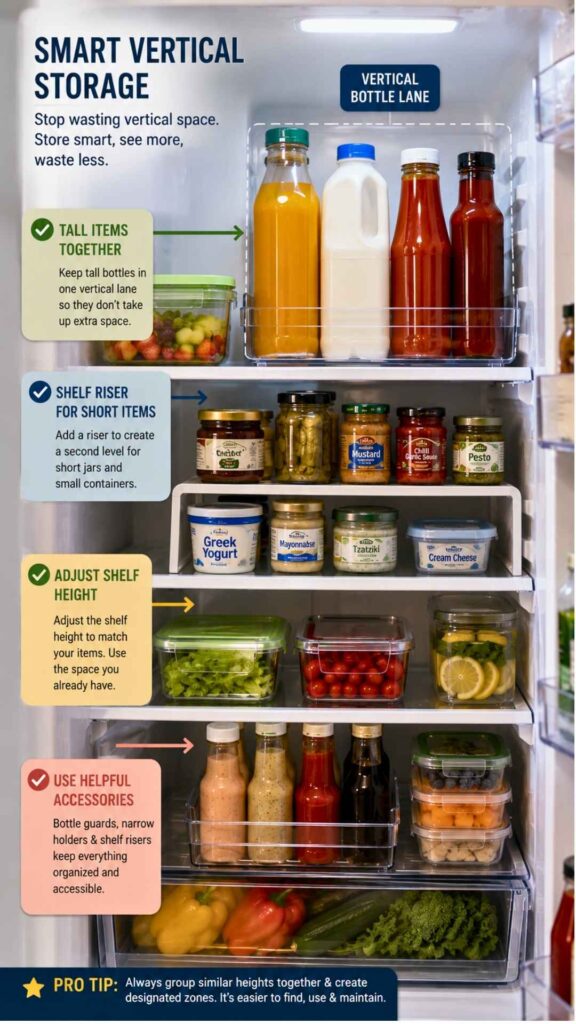
Create a specific vertical zone for tall bottles and use shelf risers to organize shorter items separately. Avoid the common mistake of moving every bottle to the door. If the shelf is adjustable, change its height to match the bottles you actually keep in the fridge.
Accessories such as bottle guards, narrow bottle holders, and adjustable shelf risers can help.
Often, the wasted space in a fridge is vertical rather than horizontal. Using that height properly can make the existing shelves work much harder without adding another storage layer.
4. Don’t Mirror Both Doors of a Double-Door Fridge
It is easy to open a double-door fridge and start filling every available door shelf with whatever happens to be nearby. Before long, both doors are crowded with bottles, condiments, and small containers.
Instead, separate frequently used items from backups and less frequently used products.
For example, you might use the left door for daily-use items and the right door for backups or things you reach for less often. The exact arrangement should depend on your household’s routine rather than following a fixed formula.
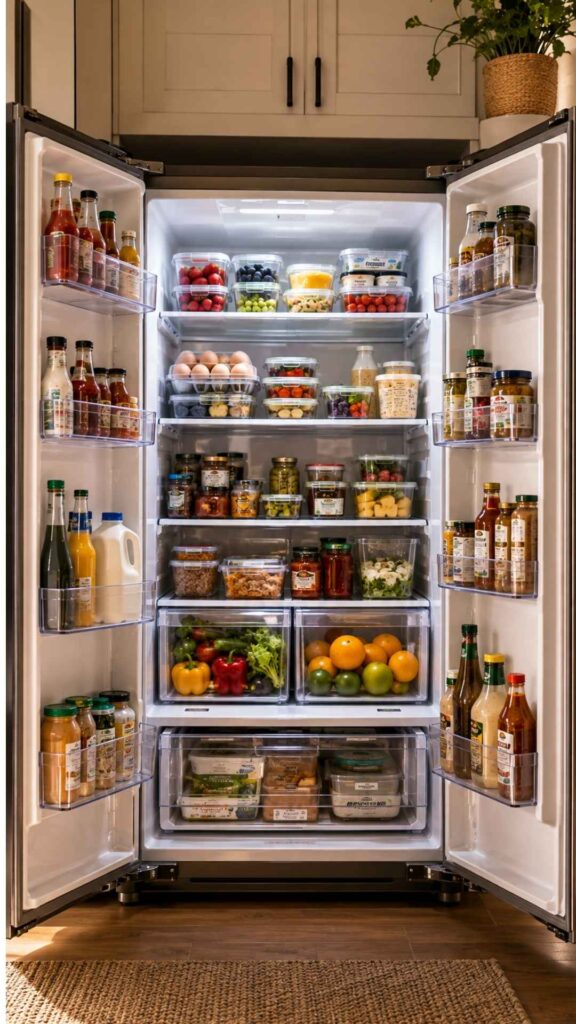
Useful accessories include narrow bins, bottle separators, and removable mini-bins.
Always follow the manufacturer’s storage recommendations and door-shelf load limits. Heavy containers should not be placed in the door simply because they are convenient to reach.
These fridge organization ideas double door solutions work best when each door has a clear purpose.
5. Create a “Tomorrow Zone” for Leftovers
Another common mistake is letting leftovers get pushed to the back of the fridge. We then forget to take them out for the next meal, and eventually they go to waste.
Instead of thinking of them simply as “leftovers,” think of them as tomorrow’s meals.
Place foods intended for the next one or two meals in a shallow tray at an easy-to-see level. Keep the tray visible every time you open the fridge so those foods stay on your radar.
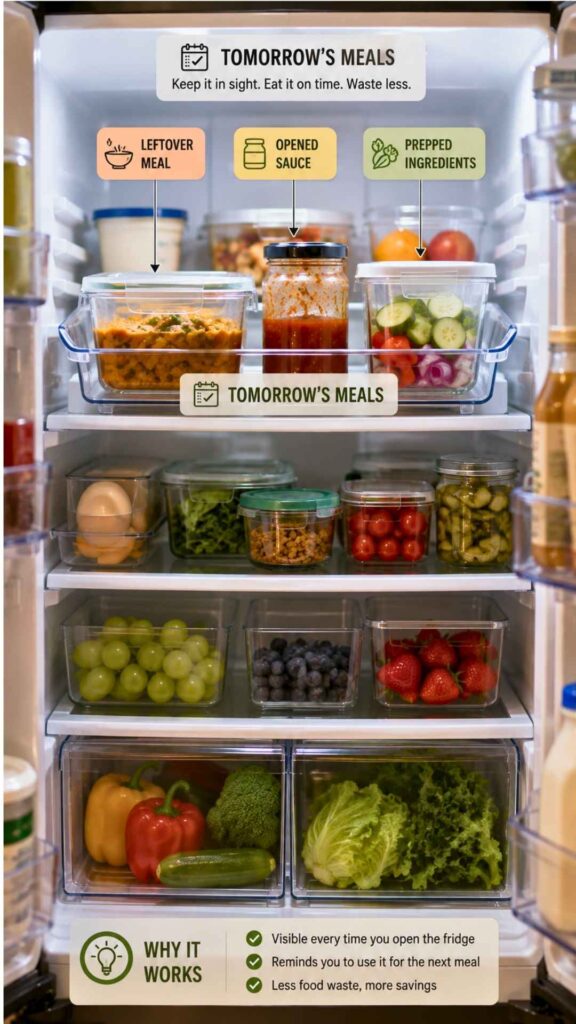
You can group a leftover meal, an opened sauce, and prepared ingredients together rather than scattering them across different shelves.
Useful accessories include shallow refrigerator trays and stackable meal containers.
The idea is simple: make the food you need to use soon easier to see than the food you are saving for later.
6. Keep Green Produce Visible
You might bring home plenty of vegetables but end up stuffing them into the fridge without a clear system. Vegetable packets get mixed with fruit, while small items disappear into the drawers.
That creates clutter and makes it easier to forget what you already have.
The solution is to separate vegetables, fruits, and small loose items so you can see what is there at a glance.
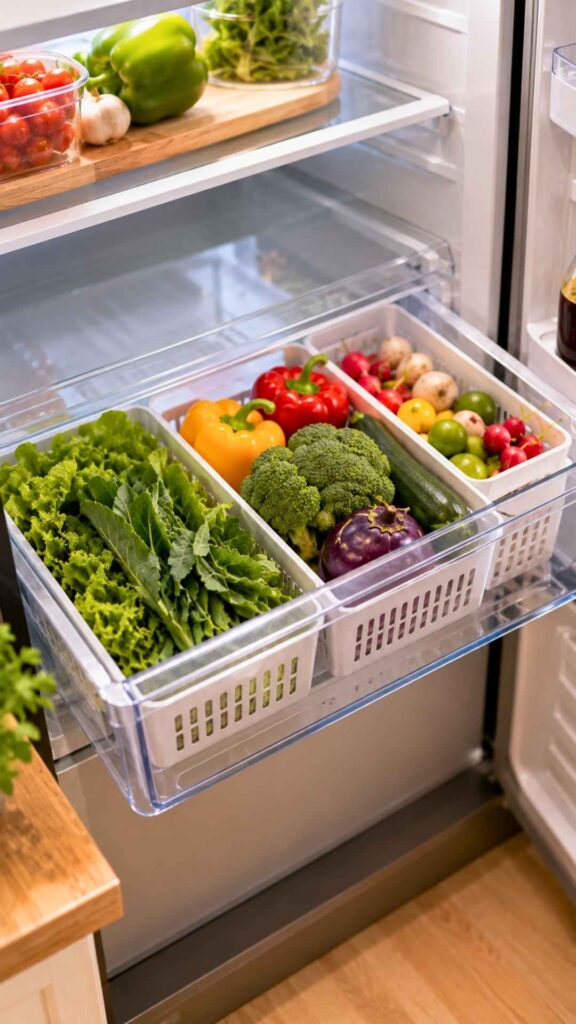
Small ventilated produce bins, reusable produce bags, and drawer dividers can help create simple subdivisions without taking over the entire drawer.
Visibility matters just as much as separation. You should be able to tell what you have without having to move three other items first.
When storing produce, follow the recommendations for your refrigerator and the storage requirements of individual foods. Airtight containers are not suitable for every type of produce.
7. Create a “Spill Moat” Instead of Covering the Entire Shelf With a Liner
When items such as yogurt containers or bottles leak in the fridge, the entire shelf can become sticky and difficult to clean.
Instead of covering every shelf with a decorative liner, group high-risk liquid items on a removable tray.
A washable shallow tray or suitable silicone refrigerator mat can contain a small spill before it spreads across the entire shelf.
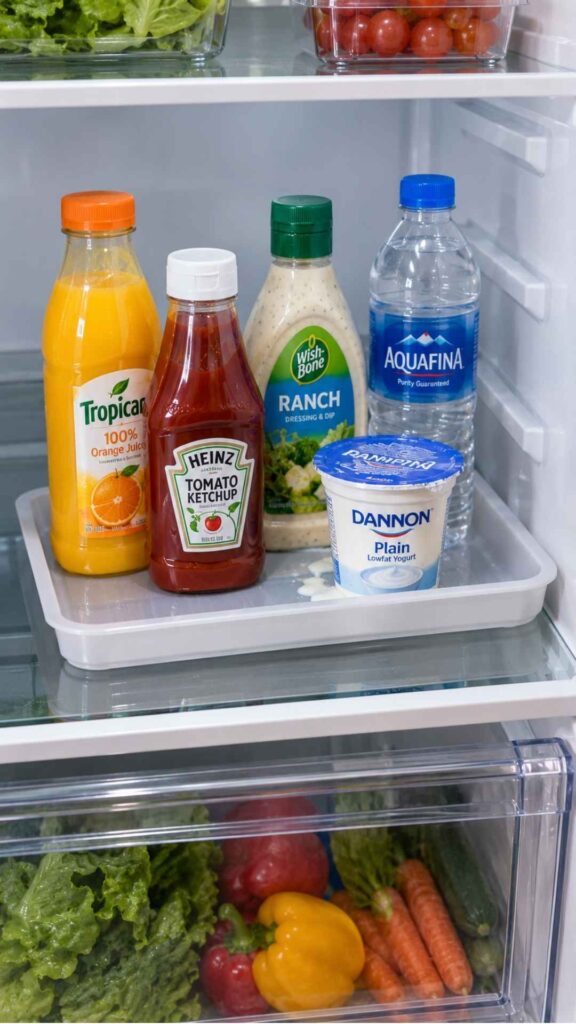
When something leaks, you can remove the tray, wash it, and put it back. That is much simpler than emptying the entire shelf for a deep clean.
The goal is not to prevent every spill. It is to keep a small mess from becoming a refrigerator-wide cleaning job.
8. Make Snacks a “Reachability Zone,” Not a “Kid Zone”
We frequently open the fridge to grab snacks, whether they are large or small. When snacks are placed at the bottom or pushed toward the back, reaching for one can disturb everything around it.
A better approach is to organize snacks based on accessibility.
Keep frequently used snacks on an easy-to-reach shelf and use small, open bins for individual snack packs.
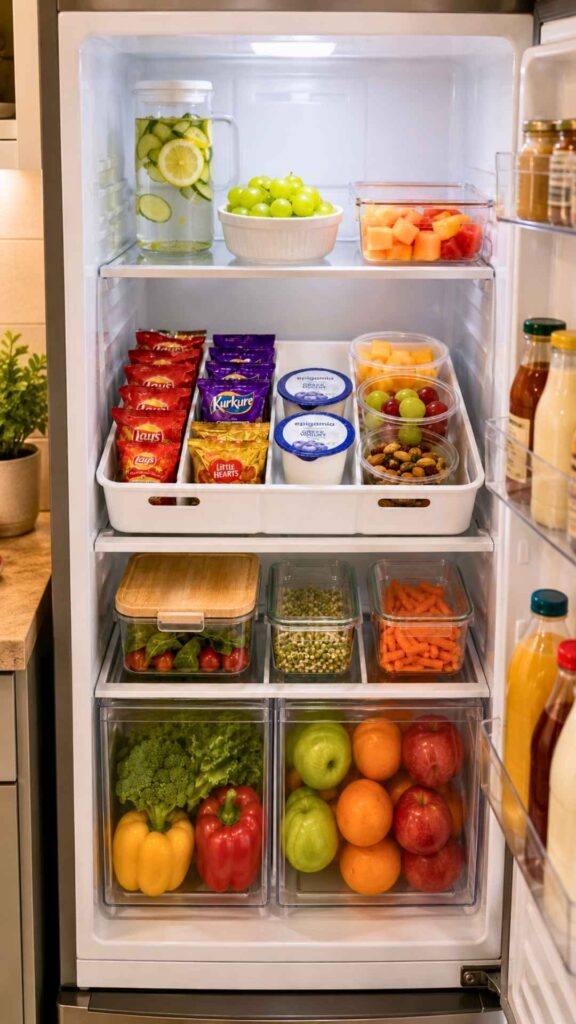
Narrow bins with handles and removable dividers can make these items easier to see and pull out without disturbing the rest of the shelf.
The important thing is not whether the bin looks attractive. It is whether you can grab what you need without moving five other things first.
Visibility and accessibility should guide the arrangement.
9. Don’t Buy an Organizer Just Because You See Empty Space
It is tempting to buy containers whenever you notice an empty spot in the fridge. But containers take up space too, and adding too many can actually reduce usable storage.
Before buying anything, monitor the fridge for seven days.
Notice which items keep getting pushed to the back. Look at which bottles are awkward to store. Pay attention to shelves that remain mostly empty and items that require you to move other things before you can reach them.
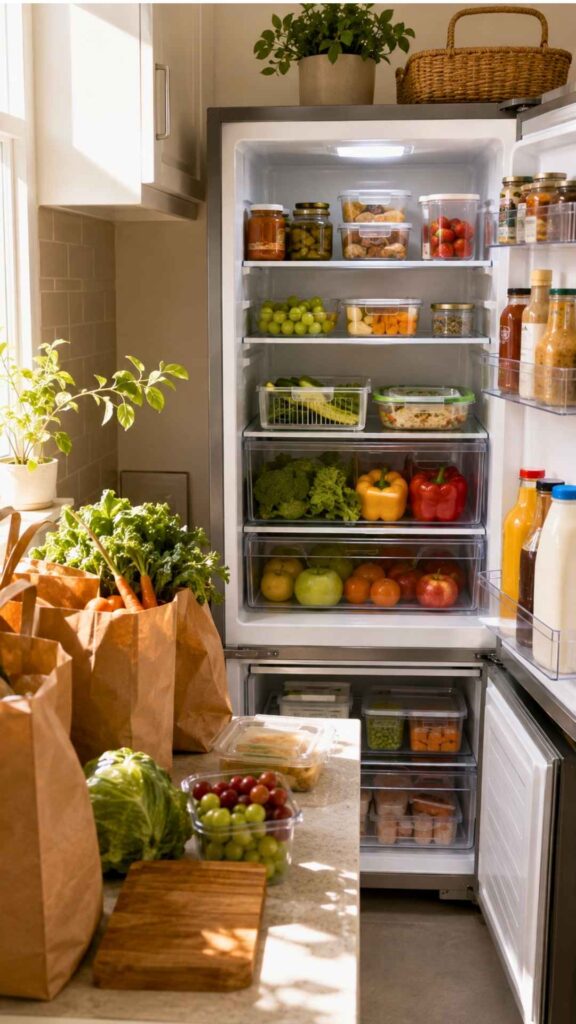
Then choose an accessory that addresses a problem you have actually observed.
That might be an adjustable shelf riser, a shallow bin, or a bottle separator.
An organizer is useful when it solves a repeat problem. It is not automatically useful simply because there is space available for it.
10. Turn Your Weekly “Fridge Reset” Into a Grocery Reset
On grocery day, the fridge often becomes disorganized because new groceries are added quickly. Older items get pushed back while new ones move to the front, and the organization system starts falling apart.
A simple solution is to perform a five-minute reset before grocery shopping.
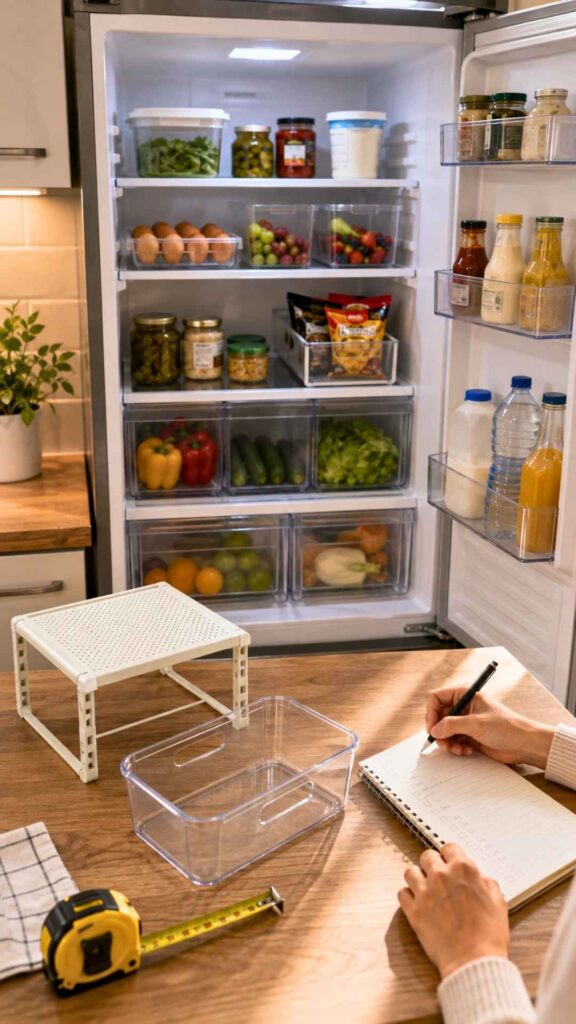
Step 1: Move older or opened food items to the front.
Step 2: Check what is needed for tomorrow.
Step 3: Remove empty containers.
Step 4: Identify duplicate products.
Step 5: When stocking new groceries, place the new items behind the older ones.
This small reset keeps the fridge from returning to the same cluttered state every time you shop.
Quick Decision Guide
If your fridge always feels overcrowded:
Focus on vertical height and a front-row arrangement.
If you tend to forget leftovers:
Create a specific “for tomorrow” section.
If bottles are taking up too much space:
Create a vertical bottle zone and adjust shelf height.
If your double-door fridge is messy:
Give each door a clear purpose based on your household’s routine.
If vegetables get lost or forgotten:
Use visible, subdivided crisper storage.
If spills happen frequently:
Group high-risk items on a removable tray.
If you still run out of space after buying organizers:
Track how you use the fridge for seven days before buying anything else.
If the fridge gets messy again on grocery day:
Use a five-minute weekly grocery reset.
Final Thoughts
Effective fridge organization in a small kitchen is not about cramming the refrigerator to capacity. The real goal is to keep items that need to be used first visible and make frequently used items easy to reach.
Before organizing, observe your habits for a few days. Notice which items repeatedly end up in the wrong place, which shelves feel awkward, and what you keep forgetting about. Then make a small adjustment that addresses that specific problem.
The best fridge organization ideas are not necessarily the ones that add the most containers or storage. They are the ones that make the fridge easier to use every day.
For fridge organization ideas double door setups, the same principle applies: give each section a purpose based on how your household actually uses it.
A small fridge does not need perfect organization. It needs a system that works with your daily meals, grocery habits, and the way you naturally use the space.