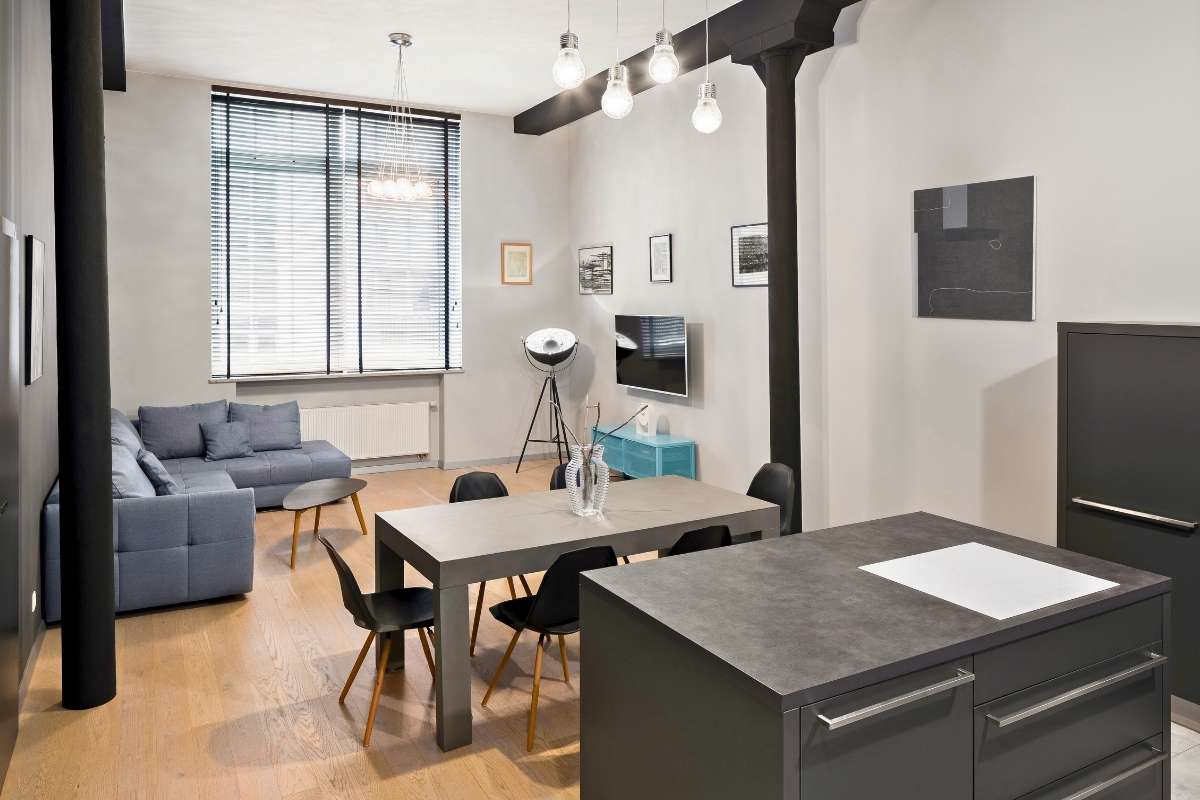
Discover 10 practical hidden storage ideas for small apartments, from under-bed drawers to stair storage, mirror cabinets, sofa compartments, and window seats.
It often feels as though a room becomes cluttered again almost immediately after you clean it. You turn around and notice shoes back near the door, a charger on the table, a blanket left out, or cleaning supplies pushed behind the washing machine. Suddenly, it can seem as though nothing was organised at all. When small items repeatedly return to visible surfaces, the room can look untidy even after the main cleaning is finished. The problem is often less about the amount of space available and more about where everyday belongings are kept.
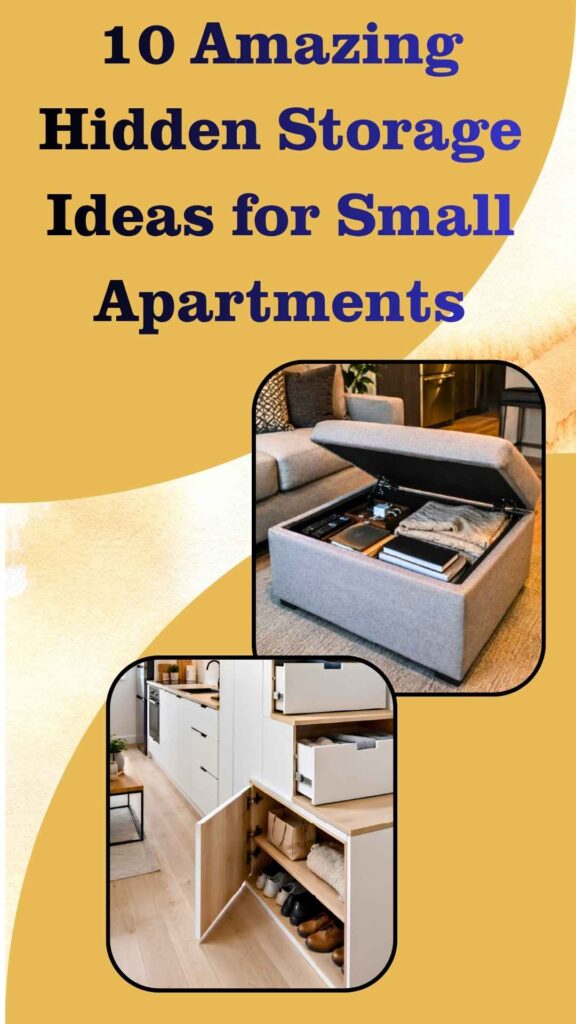
The first instinct is often to buy another cabinet, but that raises an obvious question: where would you put it? This is where hidden storage ideas become more useful. Instead of buying more furniture or filling every corner with boxes, look at your home differently and identify spaces that are already there but rarely used.
These overlooked areas may include the space under or behind the bed, behind a mirror, beneath a bench, above a doorway, or inside narrow gaps between walls. By using these spaces more effectively, you can organise your belongings without adding bulky furniture. The advantage is simple: you gain storage from surfaces and cavities that already exist rather than sacrificing more floor area to another cabinet.
In this article, we explore 10 hidden storage ideas for small apartments and homes that make better use of existing space without relying on extra cabinets or oversized storage units.
1. Build Storage Into the Door
Creating storage within the door itself is an inventive way to use an area that would otherwise serve only one purpose. Narrow vertical shelves can be built into the door, but the materials should remain lightweight so the door does not become difficult to open or close.
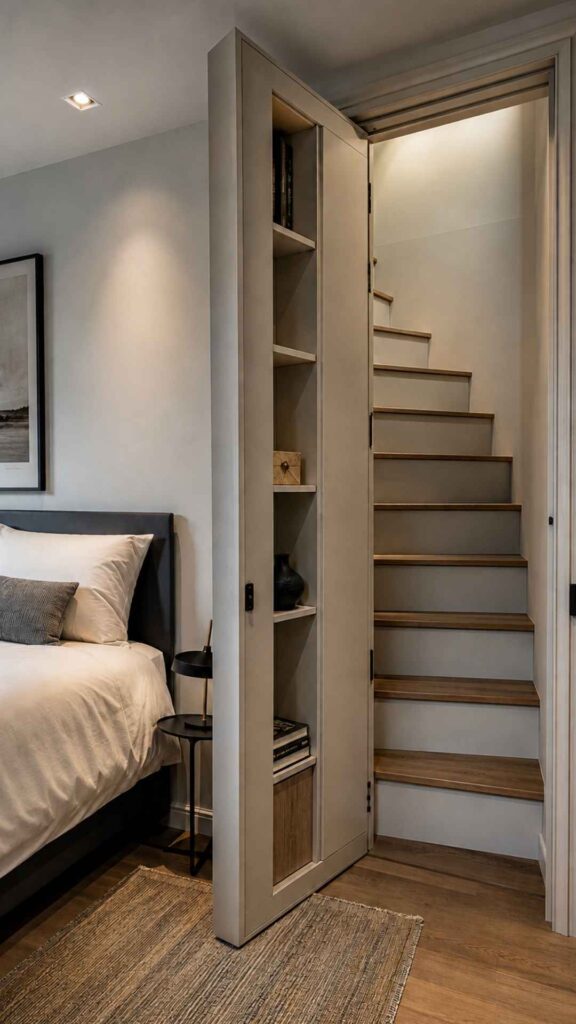
You can use this space for bedroom essentials or other small daily-use items. Among hidden storage ideas for compact homes, this works particularly well in small bedrooms, loft rooms, and studio apartments where every inch matters.
2. Use the Most Common Hidden Space: Under the Bed
In a small bedroom, the area beneath the bed takes up a large amount of floor space. If there is no built-in storage, it often becomes little more than a place where dust collects.
To use it more effectively, consider drawers or a hydraulic lift-up mechanism. If that is not practical, storage boxes on wheels are a simple alternative. This area is better suited to seasonal blankets, spare bedding, luggage, winter clothes, and items you do not need every day.
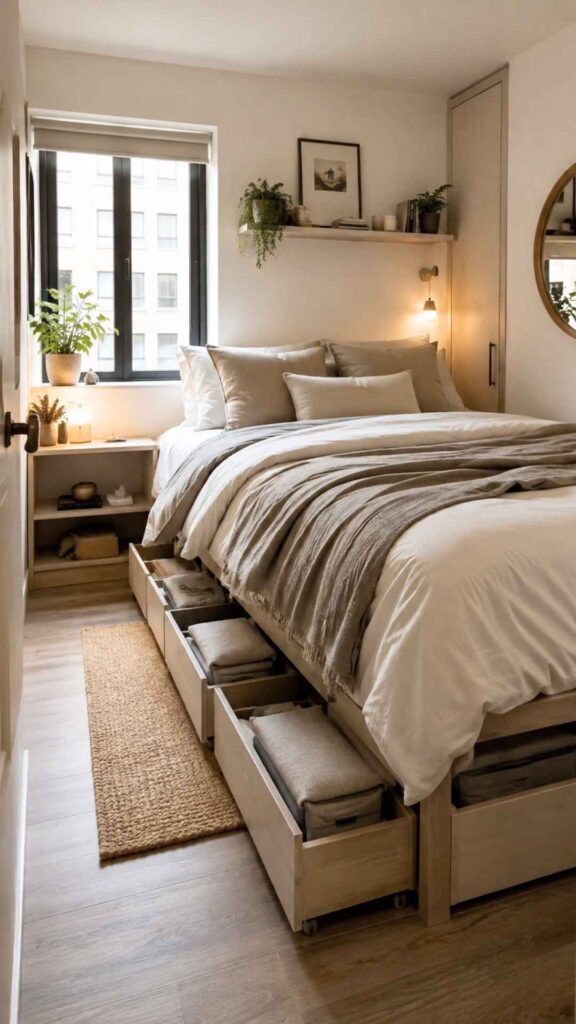
Keeping seasonal items together also makes it easier to rotate what you use as the weather changes, while leaving everyday essentials within easier reach elsewhere.
Well-planned hidden storage ideas should make a room feel calmer and less cluttered, not force you to crawl under the bed every time you need something.
3. Turn the Headboard Into Storage
Most headboards do little more than sit behind the pillows, even though many are surprisingly thick, wide, and tall. A slim concealed compartment can hold books, glasses, medication, and other bedtime essentials.
Another option is to add narrow hidden openings along the sides instead of visible shelves. The key is to prevent the headboard from looking bulky. Keep the storage flush with the surface and match the finish so it feels like part of the design rather than an added cabinet.
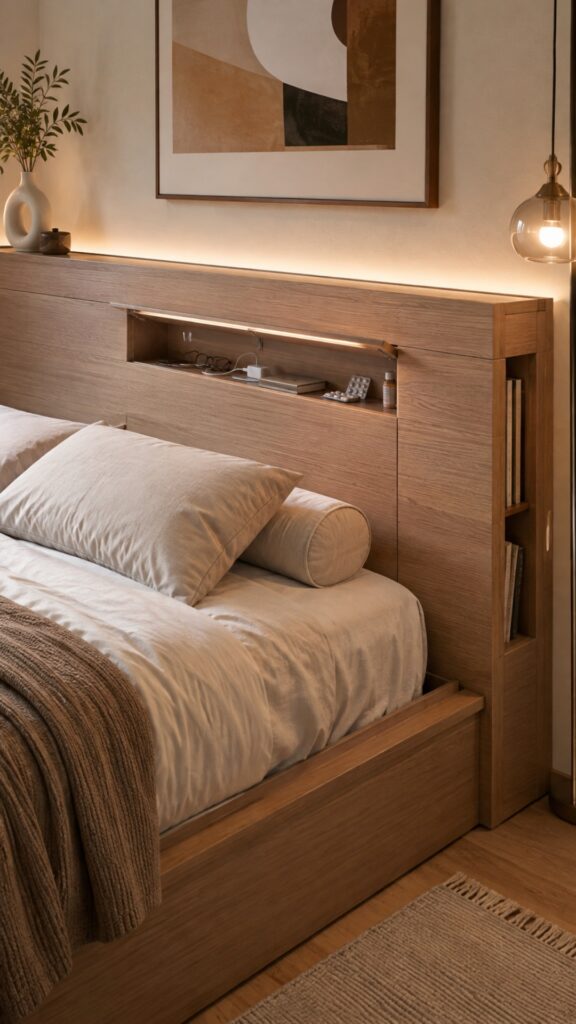
The concealed design matters here. If the compartment projects too far forward or uses a noticeably different finish, the headboard can appear oversized rather than streamlined.
This is one of the more subtle hidden storage ideas because it uses an existing bedroom feature without taking up additional floor space.
4. Use Hidden Storage in the Staircase
We use stairs every day but rarely think about the amount of space they occupy. In homes with staircases, the space beneath or within the steps can offer excellent storage opportunities.
A drawer can be built into each step, depending on its width and depth. These drawers can hold household supplies, daily essentials, or other belongings.
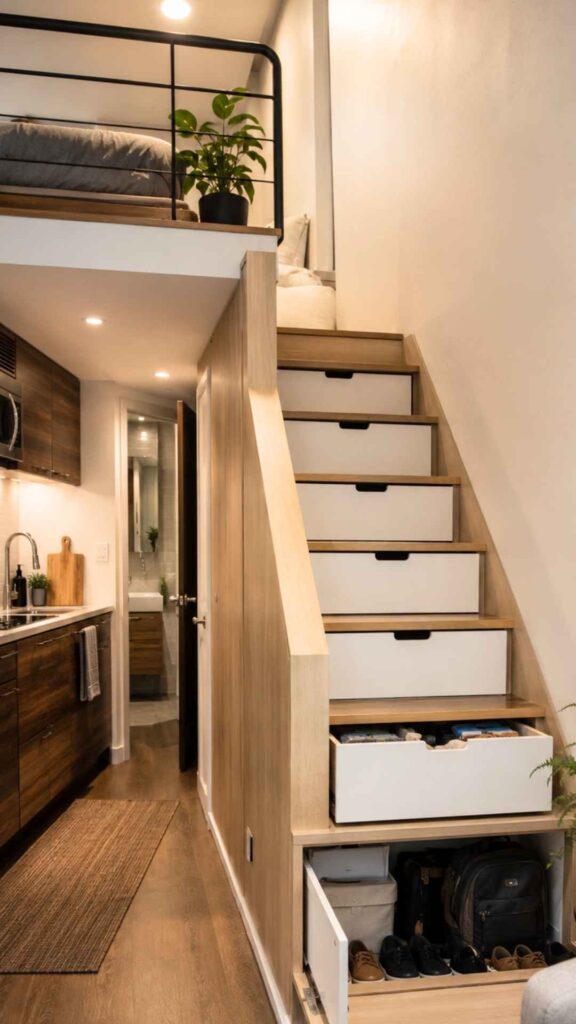
With careful planning, either during construction or afterwards, the storage can be incorporated without affecting the appearance of the staircase.
Among practical hidden storage ideas, stair drawers are especially useful because they add function while preserving the overall design.
5. Make the Entryway Bench Work Harder
In a small entryway, a bench can do more than provide a place to sit. A lift-up seat or sliding compartment can create useful storage for shoes, shopping bags, gloves, and other frequently used items.
A lift-up bench is particularly practical because it combines seating and storage in one compact piece. It also gives frequently used belongings a dedicated place, which helps prevent them from spreading across the entryway.
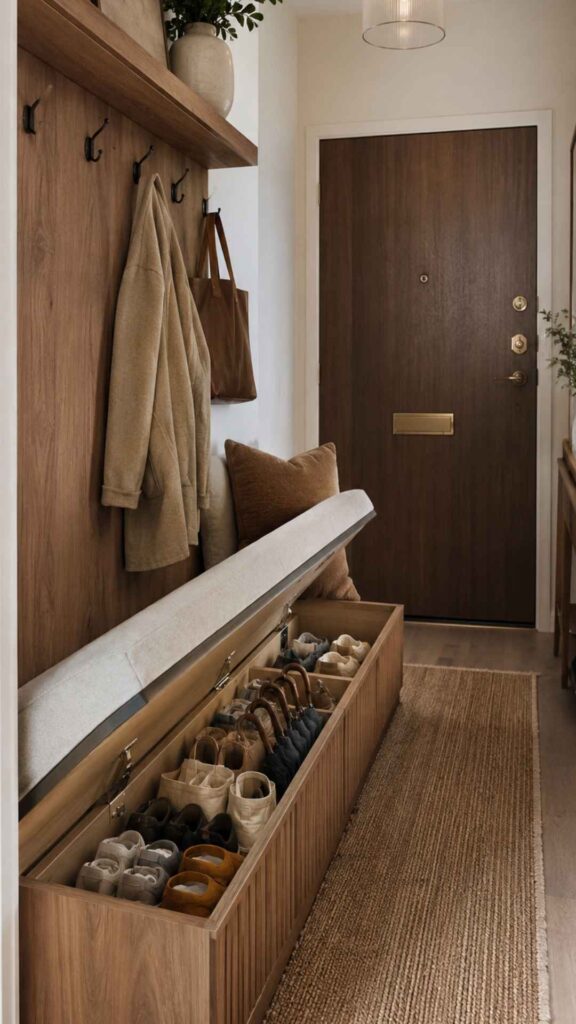
Wall hooks can also help keep bags and accessories off the floor.
These hidden storage ideas are useful in entryways because they reduce visible clutter while maintaining a simple, organised look.
6. Use a Full-Length Mirror With Storage Behind It
A full-length mirror is already useful in a small bedroom because it reflects light and can make the room feel larger. It can also conceal valuable storage.
A slim cabinet behind the mirror can hold sunglasses, hair accessories, perfumes, jewellery, keys, and other daily essentials. This keeps frequently used items organised while reducing clutter on dressing tables and countertops.
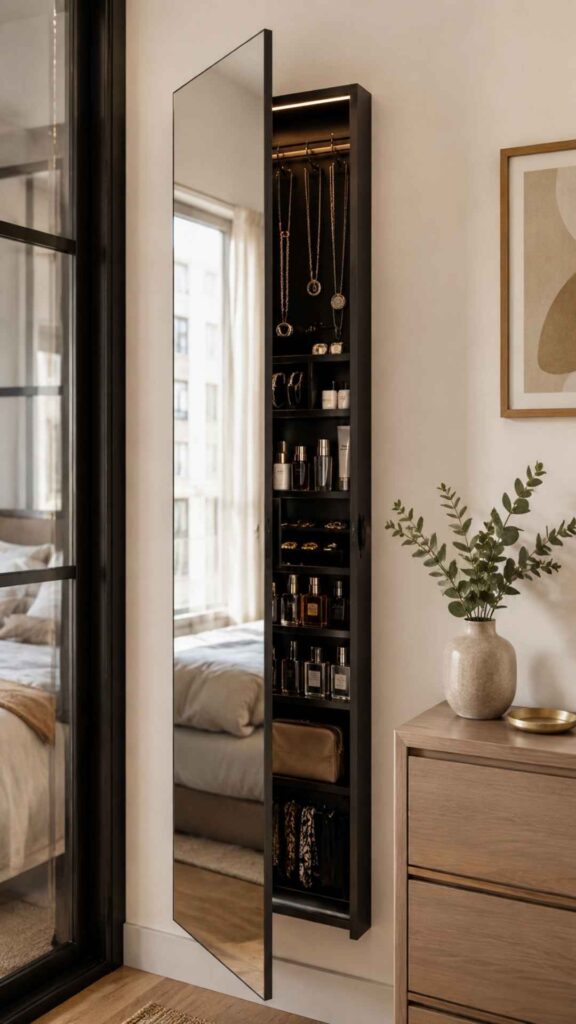
Making the cabinet full-length can increase capacity while keeping the mirror useful as a normal part of the bedroom.
Of all the hidden storage ideas for vertical wall space, a full-length mirrored cabinet is one of the most efficient because it combines storage and decoration without using extra floor area.
7. Add Hidden Storage to the Sofa
In a small living room, the sofa occupies a significant amount of space, and the area beneath it is often wasted. When choosing a sofa for a compact room, consider a multifunctional design with built-in storage.
A lift-up seat can reveal a compartment for cushions, blankets, or boxes, while a pull-out drawer underneath can hold bedding, clothes, or household essentials.
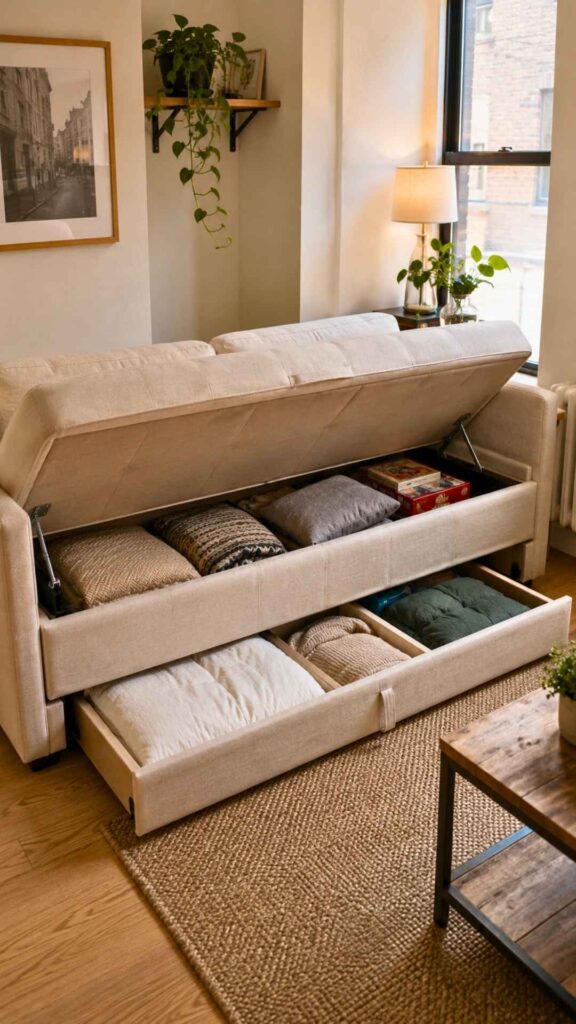
These hidden storage ideas allow one piece of furniture to provide both seating and useful storage, which is especially valuable when floor space is limited. This keeps the room functional without giving up valuable space to more furniture.
8. Install a Toe-Kick Drawer in the Kitchen
Kitchen cabinets usually extend close to the floor, leaving the narrow toe-kick area under the lower units unused. A shallow pull-out drawer can make this space functional.
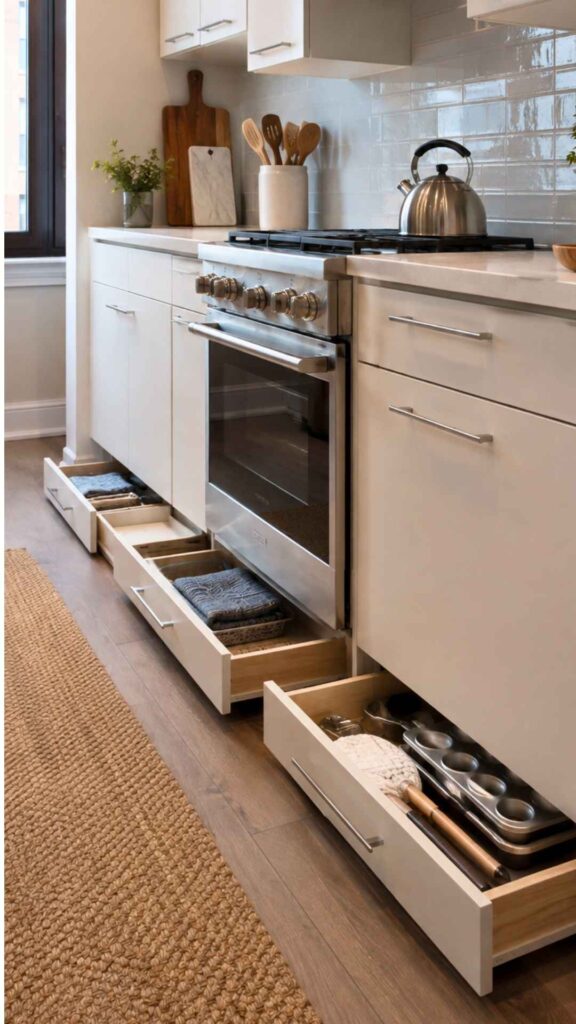
A toe-kick drawer is ideal for flat items such as trays and other slim kitchen essentials. Because the drawer front can match the cabinetry, it remains almost invisible when closed.
For kitchens, hidden storage ideas like toe-kick drawers are effective because they use an overlooked area without changing the layout or taking away valuable walking space.
9. Turn a False Wall or Panel Into Concealed Storage
Not every storage solution needs to come from furniture. Architectural features can also be used. If you have a built-in partition or false wall, it may be possible to turn part of it into concealed storage.
A handle-free door can blend into the wall, while shelves inside can hold books, files, cleaning supplies, or personal care products.
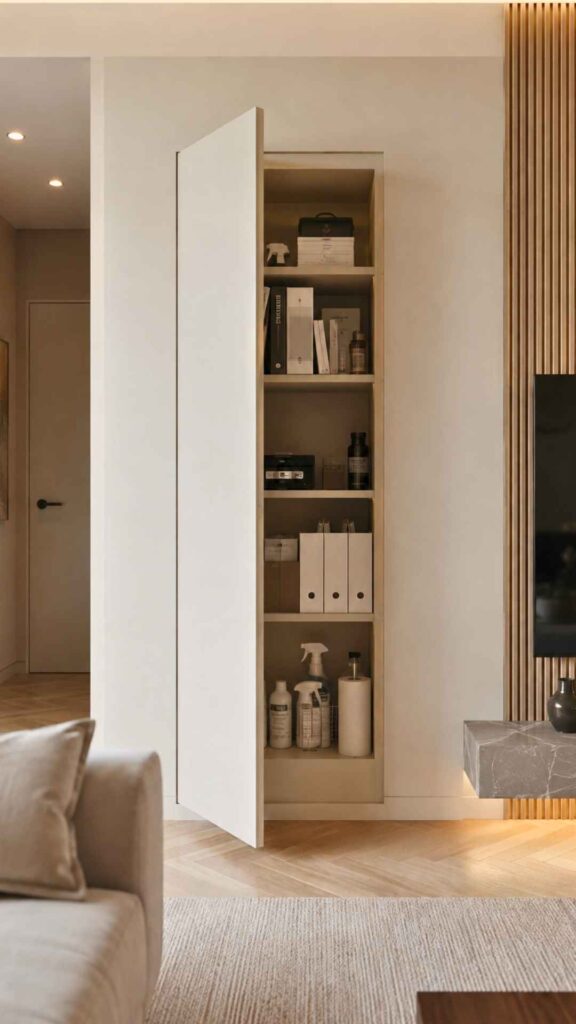
When closed, the storage looks like part of the wall rather than a separate cabinet.
This is one of the cleanest hidden storage ideas for anyone who wants to reduce visual clutter and keep the room looking streamlined.
10. Build Storage Into a Window Seat
The area beneath a window is often used for a standard cabinet, but a window seat can make better use of the same space. A cushioned top can lift open to reveal storage, while lower compartments or pull-out drawers can provide additional room for belongings.
This arrangement combines seating and storage in one place while creating a comfortable spot to sit near the window.
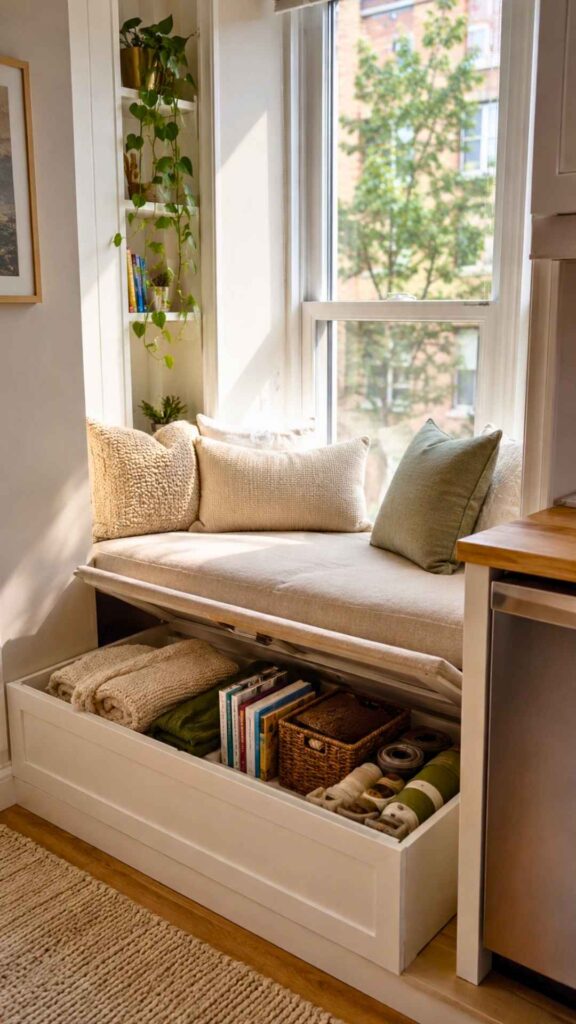
As hidden storage ideas go, a window seat is especially useful because it turns an underused area into something practical without requiring another standalone piece of furniture.
Final Thoughts
A small apartment can feel cramped not only because of the size of the furniture but also because too many belongings are visible at once. Hidden storage helps create a cleaner visual appearance and can make a bedroom or home feel more open.
That does not mean every nook and corner should become a storage compartment. These hidden storage ideas work best when they remain easy to access and visually integrated. First, decide what you actually need to store and where those items are most useful. Before buying cabinets, baskets, shelves, or storage carts, assess the spaces already available beneath furniture, behind mirrors, above doors, under the bed, or within built-in features.
The best hidden storage ideas are the ones that suit your actual needs. Likewise, hidden storage ideas should match what you need to store instead of filling every unused gap. Rather than trying to add every solution at once, choose the options that reduce clutter without making your home feel overdesigned.