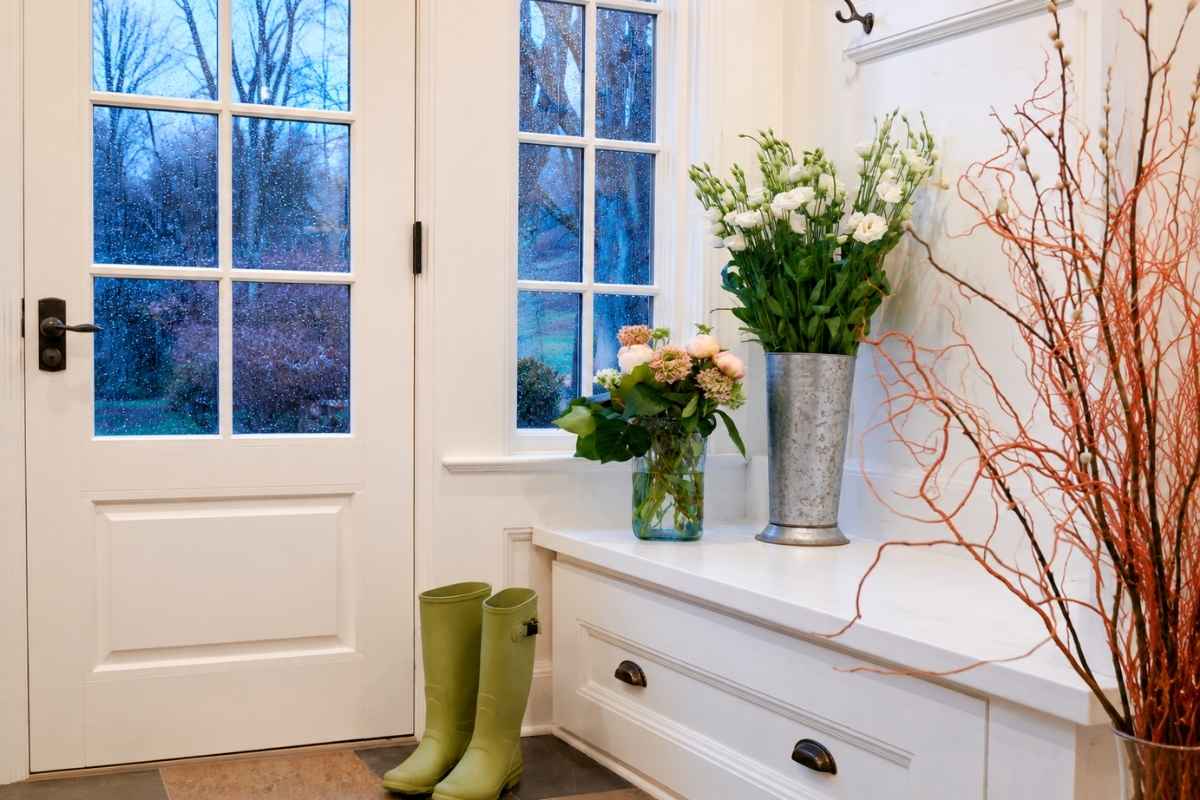
Discover 10 practical Entryway Storage Ideas for Small Spaces that reduce fall clutter, use overlooked areas, and keep daily essentials organized.
There’s a jacket draped over the chair, shoes gathering by the door, an umbrella with no obvious home, and a pile of reusable bags that seems to grow overnight. Entryways collect clutter quickly, especially in autumn, when footwear, rain gear, scarves, bags, and everyday essentials all compete for limited space.

That is why Entryway Storage Ideas for Small Spaces are especially useful during the fall season. Even a tidy entrance can start to feel crowded when seasonal items begin moving in and out of the house every day. The answer, however, is not always more furniture. Often, the most useful storage is already hiding in plain sight: behind a door, beside a cabinet, under a bench, or along a narrow stretch of wall.
The key is to create temporary, practical places for the things you use most. Fall clutter is often seasonal, so it does not need permanent storage. It simply needs a clear place to land until it is used again or put away. These Entryway Storage Ideas for Small Spaces focus on making the area work better for daily life rather than packing more into it.
1. Create a “Wet Stuff” Parking Strip
Umbrellas, damp shoes, and raincoats are among the hardest things to manage near the front door because they cannot always be stored immediately. Keeping them together in one dedicated zone prevents moisture and mess from spreading across the entryway.
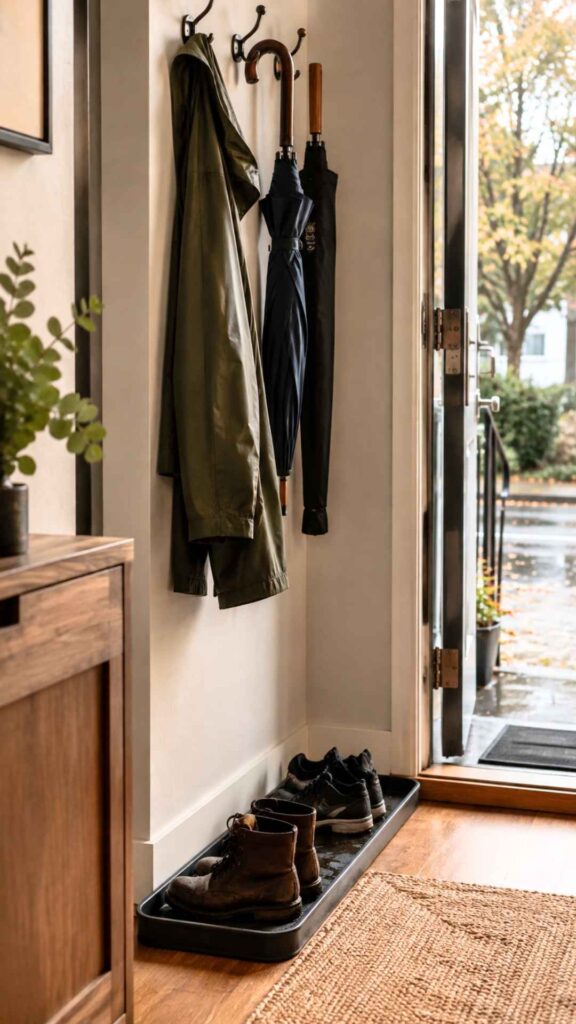
Place a long, narrow waterproof tray against one wall and install a row of sturdy hooks above it. Shoes and umbrellas can sit on the tray while raincoats hang above, creating one compact vertical area for wet-weather gear.
This simple setup is one of the most practical Entryway Storage Ideas for Small Spaces because it contains seasonal mess without requiring a cabinet or freestanding rack.
2. Add a Flip-Down Wall Shelf for “Just Got Home” Items
A small fold-down shelf gives you a temporary landing spot without taking up valuable floor space. Use it for keys, gloves, takeaway coffee cups, parcels, or anything else you need to set down the moment you walk through the door.
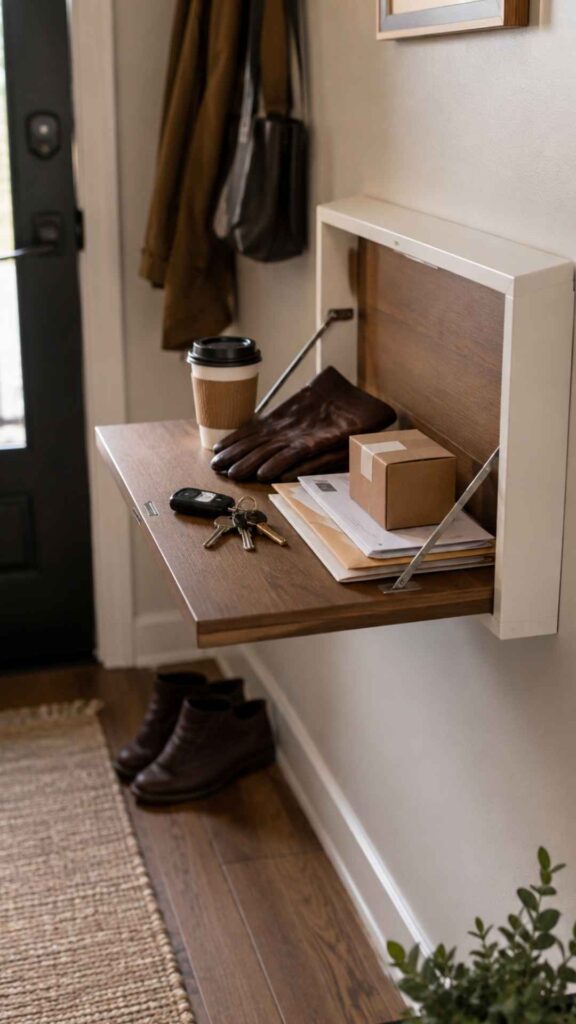
Once those items have been put away, fold the shelf back against the wall. In a compact entryway, a surface does not need to be available all day; it only needs to be there when you need it.
For homes where every inch matters, Entryway Storage Ideas for Small Spaces work best when they serve more than one purpose and disappear when they are not in use.
3. Build a Vertical “One Hook Per Person” Drop Zone
A row of hooks can quickly become another source of clutter if everyone uses every available hook. A more useful approach is to assign one hook to each family member and add a small basket or fabric pocket beneath it for smaller belongings.
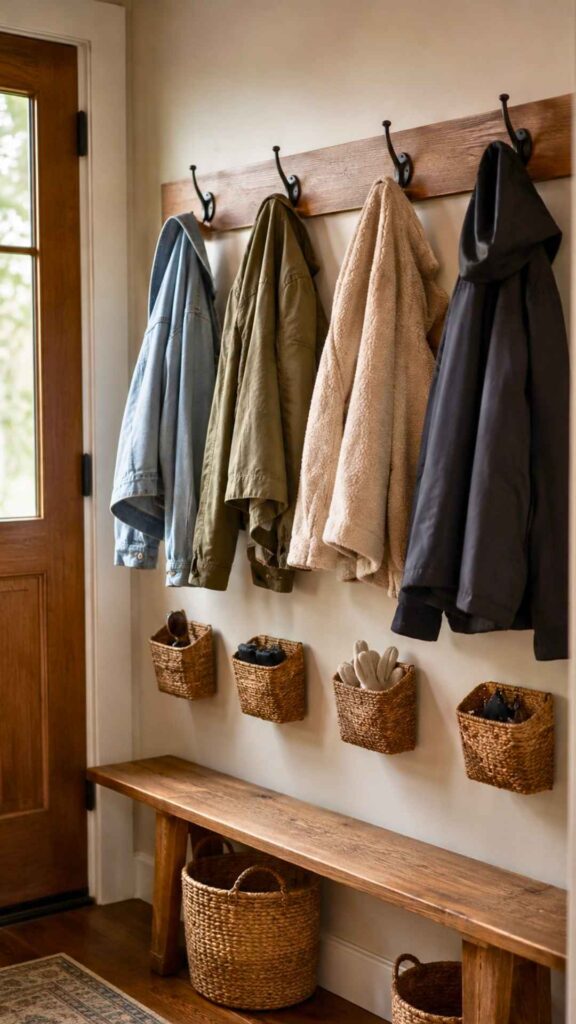
This creates a clear personal drop zone for jackets, scarves, keys, sunglasses, or other everyday items. It also sets a natural limit: if a basket or hook begins to overflow, it is time to clear it out.
4. Turn the Side of a Shoe Cabinet Into Storage
The side panels of a shoe cabinet are easy to overlook, yet they can provide surprisingly useful storage. Add a slim rail, elastic straps, magnetic clips, or narrow pockets to hold foldable umbrellas, reusable bags, dog leads, shoehorns, or lint rollers.
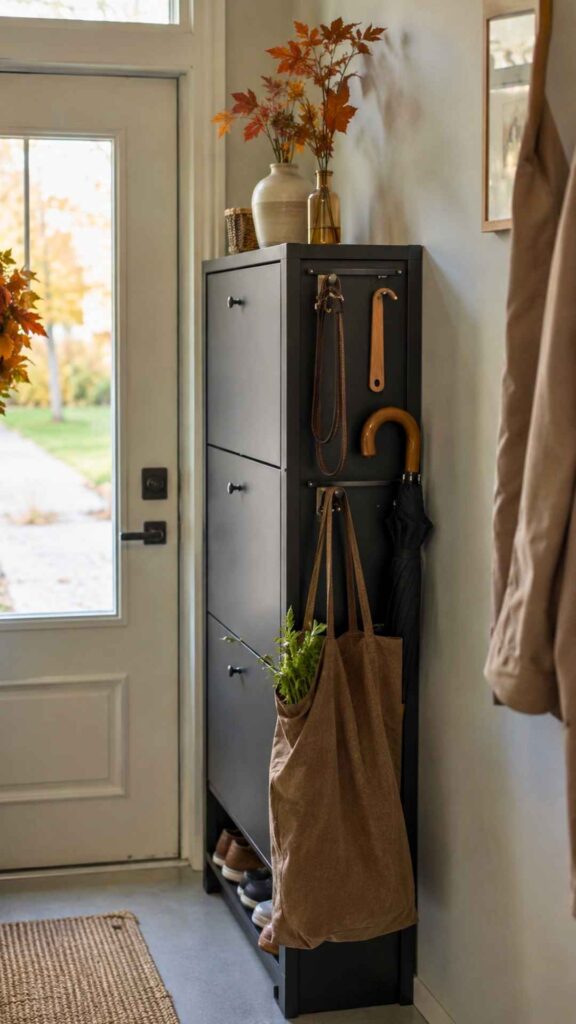
Because this storage sits on furniture you already own, it does not take up additional floor space. That makes it one of the easiest Entryway Storage Ideas for Small Spaces to add without changing the layout of the room.
5. Create a Fall “Out-the-Door” Pocket
Some things are waiting to leave the house.
Create a dedicated bag, pouch, basket, or wall pocket for library books, returns, letters to post, borrowed items, gloves, or anything else you need to remember on your way out. These objects are “in transit,” so treating them like permanent storage only creates unnecessary clutter.
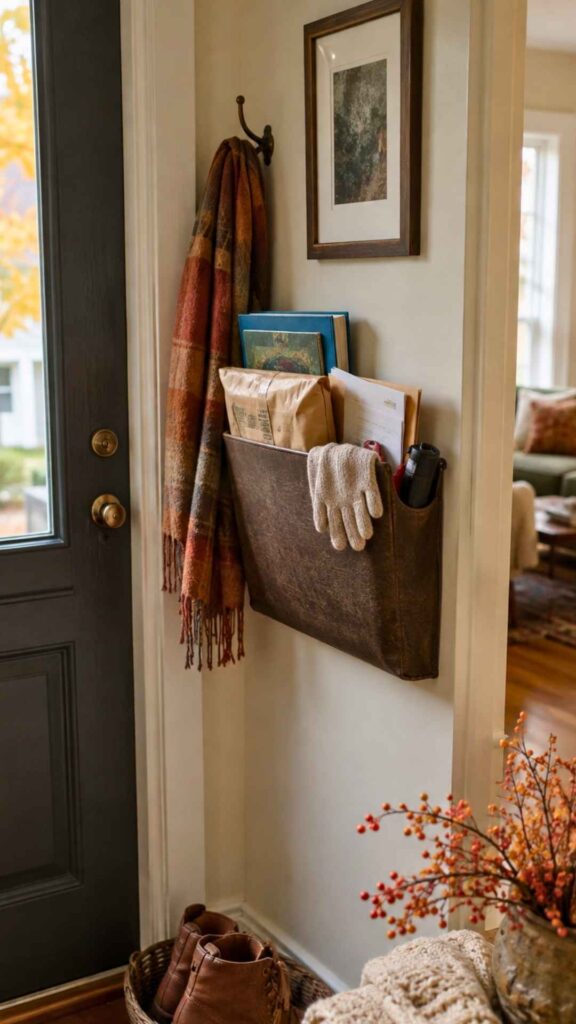
Among Entryway Storage Ideas for Small Spaces, this strategy is especially useful because it separates outgoing items from the belongings that actually live in the entryway.
6. Make a “Second Row” Behind the Door
The back of a door can hold more than one row of hooks. If clearance allows, add a second rail or slim rack lower down for lightweight items such as reusable bags, compact umbrellas, scarves, or grab-and-go accessories.
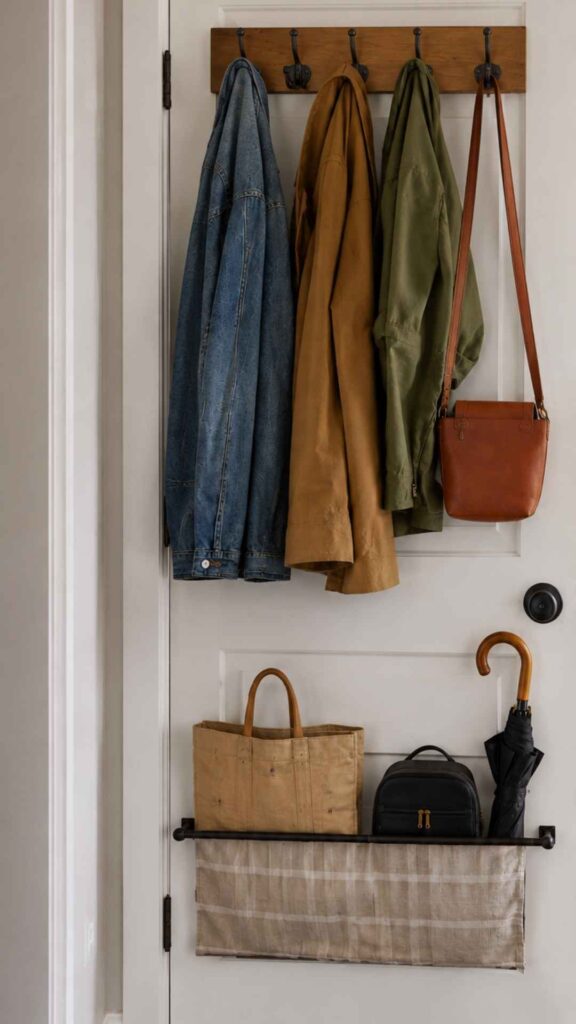
Among the most efficient Entryway Storage Ideas for Small Spaces, behind-the-door storage works well because it uses an area that is often ignored. Just be careful not to overload the door.
7. Create an Under-Bench “Fall Drawer” Without Adding Drawers
If you already have a bench in the entryway, the space underneath it can become seasonal storage without buying a new unit.
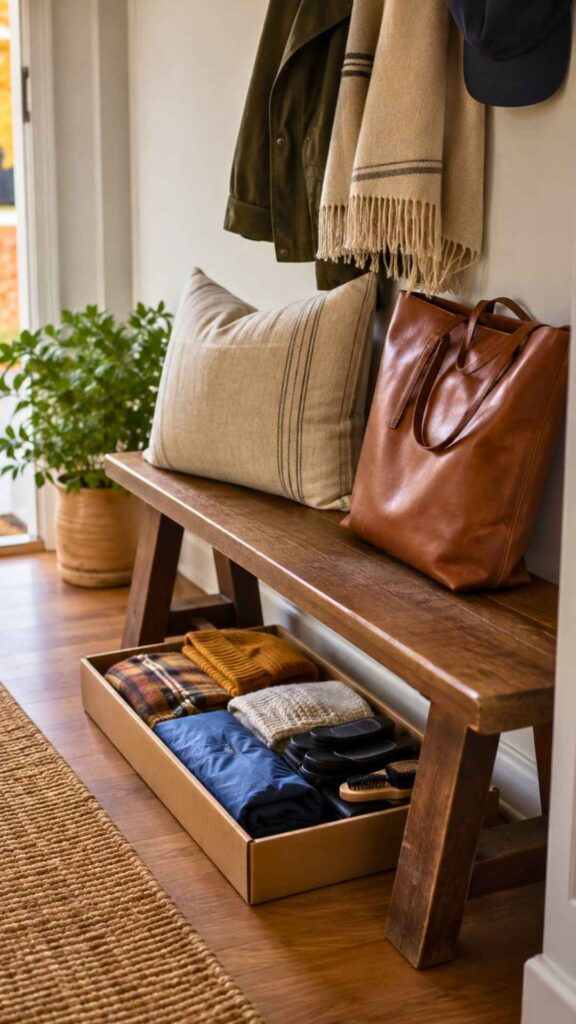
Use a sturdy box, basket, or neatly finished cardboard container sized to slide beneath the bench. Fill it with gloves, scarves, shoe-care items, or other small autumn essentials.
This is one of the most flexible Entryway Storage Ideas for Small Spaces because it creates drawer-like storage only when you need it.
8. Add a Narrow “Bag Rail” Instead of More Hooks
Bags tend to bunch together when they are hung from fixed hooks, making it difficult to reach the one you actually need. A horizontal rail with movable S-hooks gives you more control.
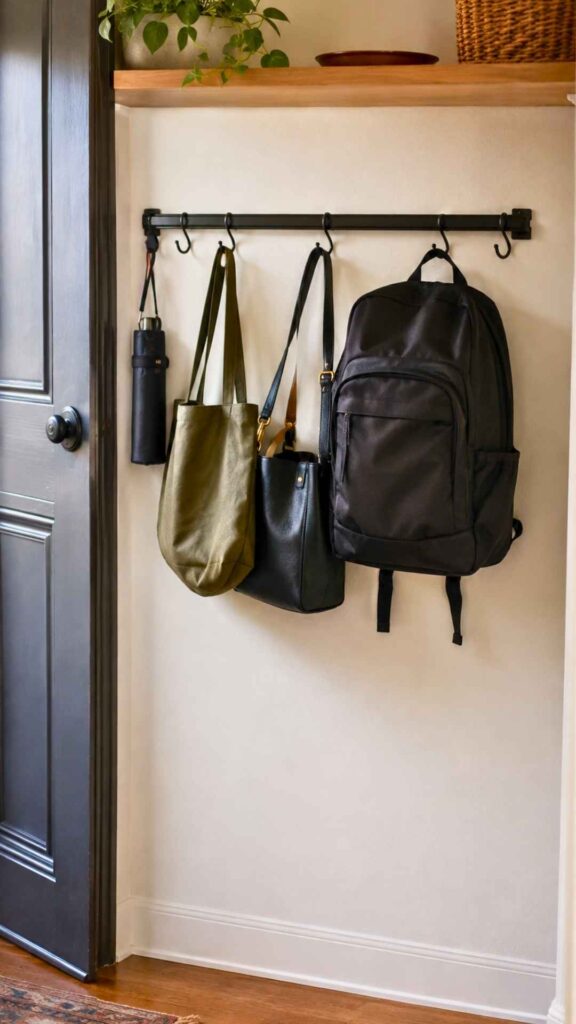
Adjust the spacing depending on what is hanging there, whether it is a backpack, handbag, grocery tote, small umbrella, or reusable shopping bag. If you mount the rail behind a door or along a narrow wall, make sure it does not interfere with the door swing or walking space.
Among practical Entryway Storage Ideas for Small Spaces, adjustable storage is often more useful because the mix of items changes from day to day.
9. Build a Tiny Shoe-Drying Ledge Above the Baseboard
Shoes take up a lot of floor space, particularly during wet weather. A shallow raised ledge just above the baseboard can keep pairs neatly lined up while allowing air to circulate underneath them.
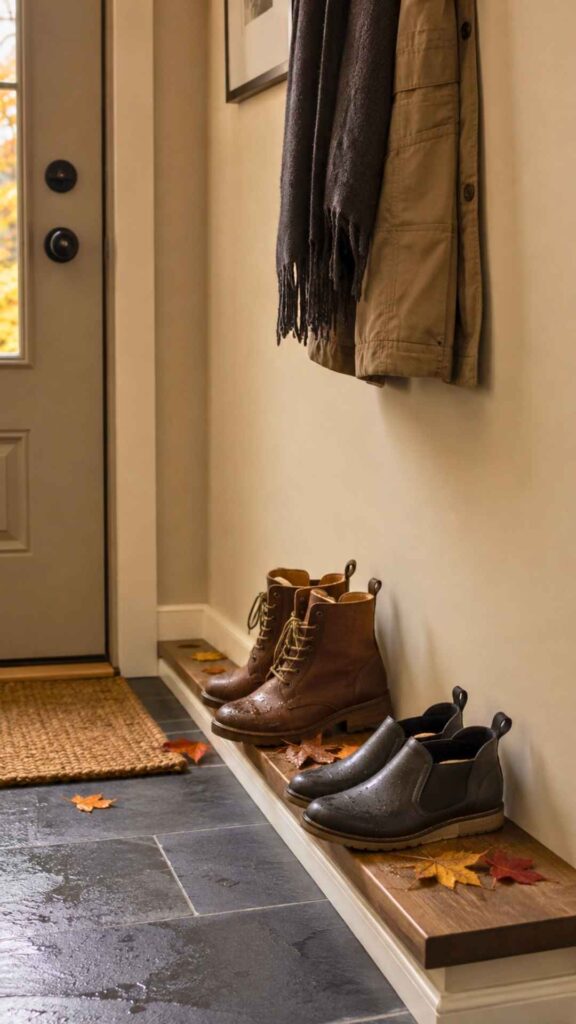
That airflow can help damp footwear dry more quickly and reduce the chance of lingering odours. You do not need a full shoe cabinet; a narrow ledge can be enough for the pairs currently in rotation.
For compact homes, this is one of those Entryway Storage Ideas for Small Spaces that improves both organization and everyday practicality without introducing bulky furniture.
10. Make the Last 18 Inches Before the Door Work Harder
The narrow section of wall beside the door frame often goes unused because it seems too small to matter.
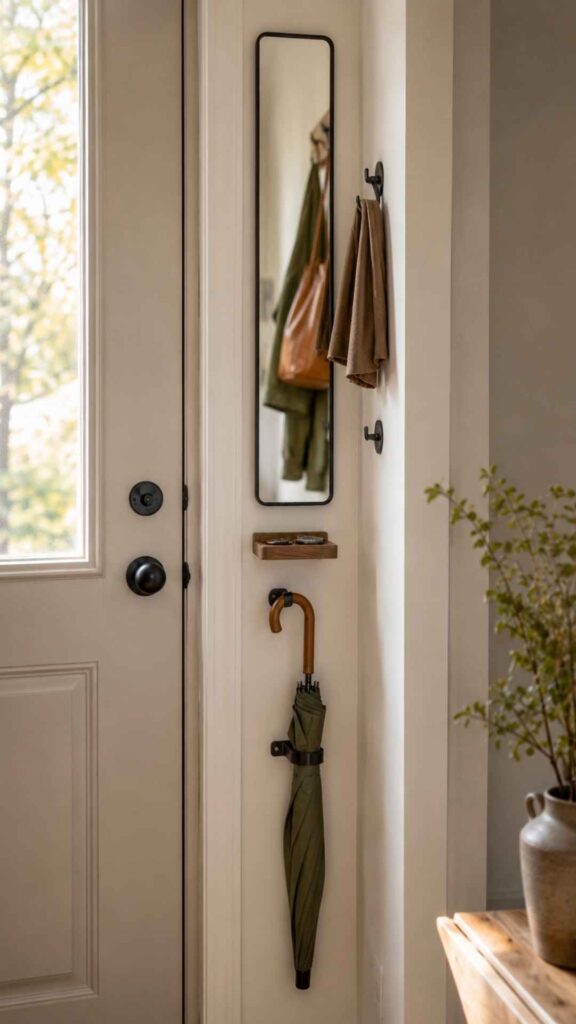
Install shallow hooks, clips, a narrow shelf, or a slim wall pocket for keys, lightweight bags, mail, or other small accessories. Choose fixtures that sit close to the wall so they do not interrupt movement or interfere with the door.
The best Entryway Storage Ideas for Small Spaces make use of awkward areas without making the room feel crowded, and this small zone can be surprisingly productive.
Final Thoughts: Entryway Storage Ideas for Small Spaces That Work in Real Life
The most effective entryway storage is not simply about squeezing in as many items as possible.
A useful way to organize the space is to divide belongings into three groups: items used every day, items waiting to leave the house, and seasonal items that do not deserve prime storage year-round. Once you separate those categories, it becomes much easier to decide what should stay by the door and what can be moved elsewhere.
Entryway Storage Ideas for Small Spaces work best when they keep walkways clear, make daily essentials easy to grab, and stop temporary clutter from spreading into the rest of the home. A small entryway does not need to hold everything. It simply needs to support the routine of coming home, heading out, and keeping the essentials in order.