
Struggling with rainy-season clutter? Discover 10 practical small space storage ideas for wet shoes, umbrellas, raincoats, bags, laundry, and more.
Rainy weather can make a home feel messy very quickly, especially when space is limited. Wet shoes, dripping umbrellas, damp raincoats, soaked bags, and piles of laundry often collect near the entrance and spread clutter throughout the house.
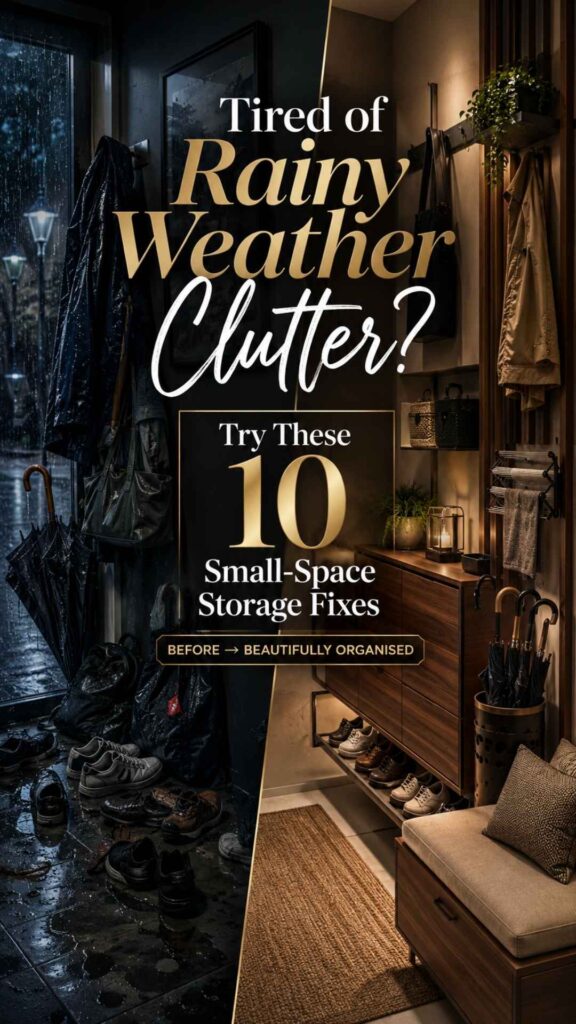
The problem becomes even more difficult in apartments and compact homes where there is little room for additional furniture. Fortunately, effective small space storage does not always require large cabinets or expensive renovations.
With a few practical storage solutions, you can organise wet items, prevent moisture from spreading, and keep your home clean throughout the rainy season. Here are 10 useful small space storage fixes for common monsoon problems.
1. Use a Drainage Tray for Wet Shoes
Wet and muddy shoes are one of the biggest rainy-season problems. They take a long time to dry and can leave water, mud, and dirt across the entryway.
A simple small space storage solution is to place a shallow tray filled with stones near the entrance. Set wet shoes on the stones so that excess water can drain into the tray. Once the water collects, you can empty the tray and wipe away the mud easily.
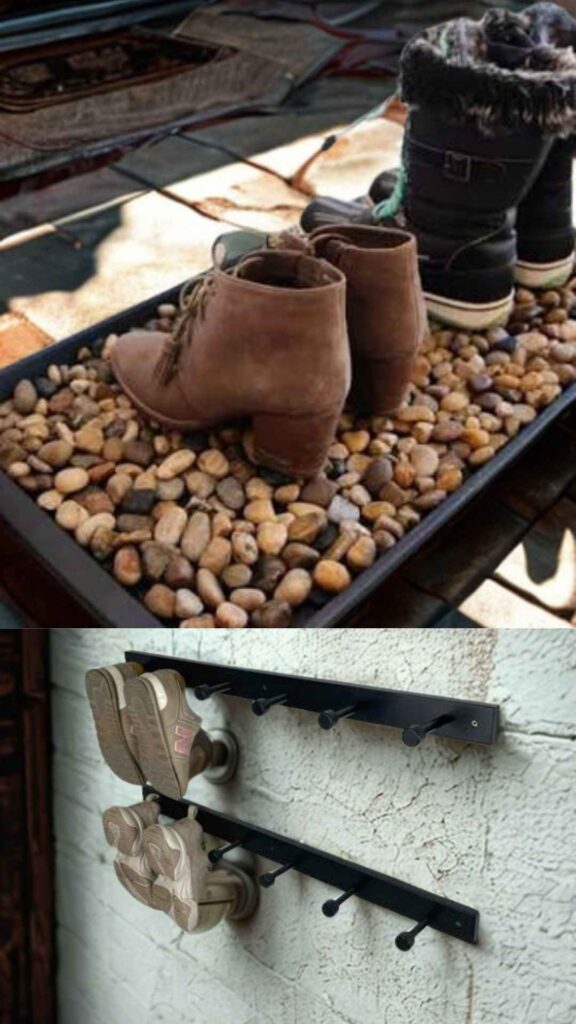
When there is not enough floor space for a tray, install a tension rod and use hooks to hang wet shoes. Vertical storage keeps the floor clear and allows air to circulate around the shoes.
It is also helpful to keep at least two pairs of shoes available during the monsoon. One pair can dry while the other is being used.
2. Store Dripping Umbrellas Vertically
An umbrella is essential during the rainy season, but storing it after use can be difficult. A wet umbrella may continue dripping for a long time, leaving puddles near the door.
Use a compact umbrella stand with a removable drip tray. Metal and plastic stands are widely available and occupy very little floor space. The tray collects excess water and can be emptied later.
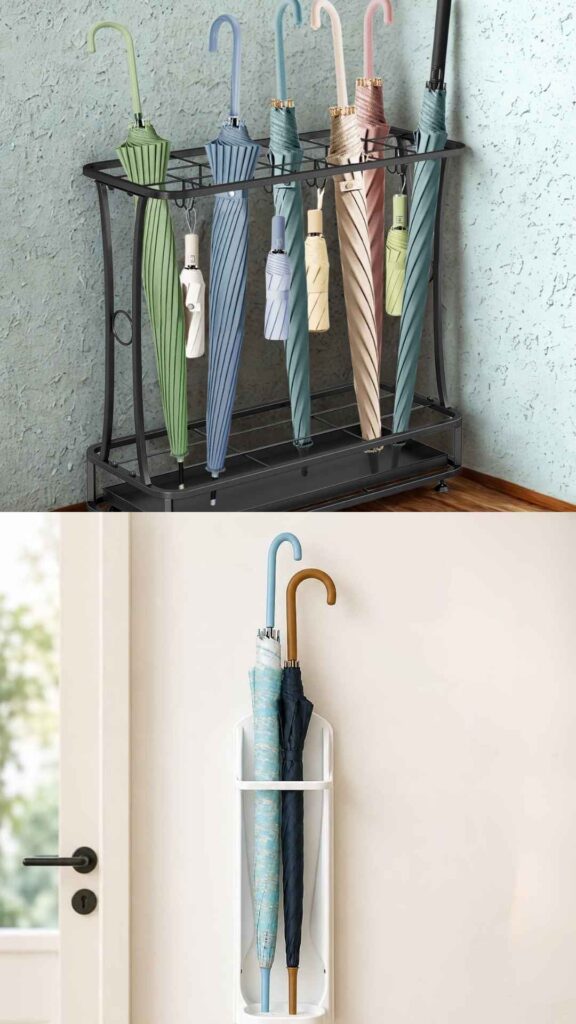
For an even more compact small space storage option, choose a wall-mounted umbrella holder. It keeps umbrellas organised without using valuable floor space.
Always leave umbrellas open in a ventilated area until they are completely dry before folding and storing them.
3. Install Foldable Hooks for Raincoats
Raincoats are useful for travelling by bike, shopping, commuting, or dropping children off at school. However, a wet raincoat should not be folded immediately because trapped moisture can cause dampness and unpleasant odours.
Hang the raincoat in a well-ventilated corner until it dries completely. Foldable wall hooks or collapsible hangers are particularly useful in compact homes because they can be closed when they are not in use.
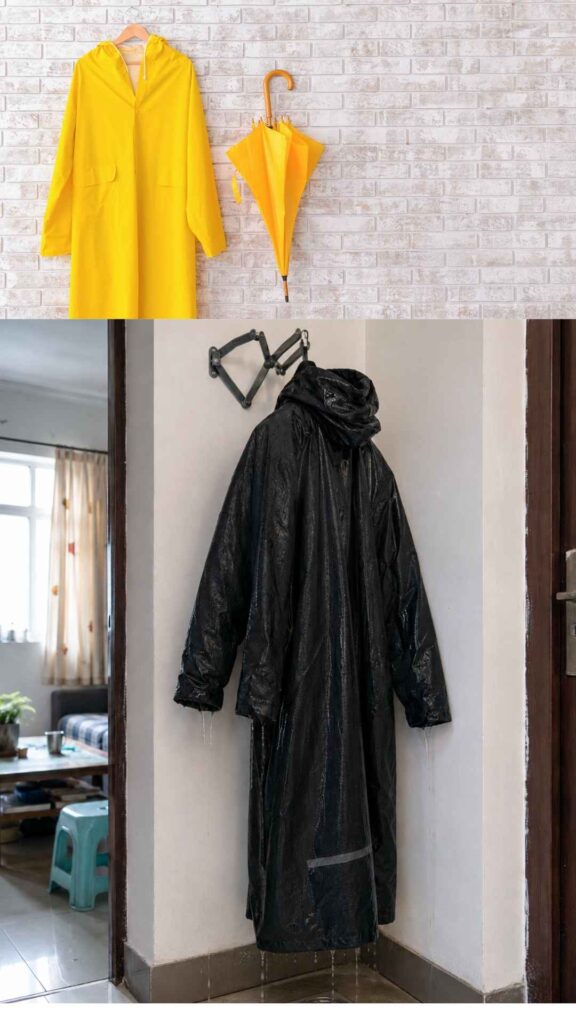
Install them near a floor drain, bathroom entrance, balcony, or exterior wall where dripping water can be managed easily.
You can also wipe the raincoat with a dry towel before hanging it. This removes excess water and helps it dry faster.
4. Create a Drying Zone for Wet Bags
School bags, office backpacks, handbags, and grocery bags often become wet during heavy rain. Placing them directly on beds, sofas, or tables can transfer moisture to furniture.
A pegboard provides practical small space storage for damp bags. Install one near a window, balcony, utility area, or kitchen wall where air can circulate freely.
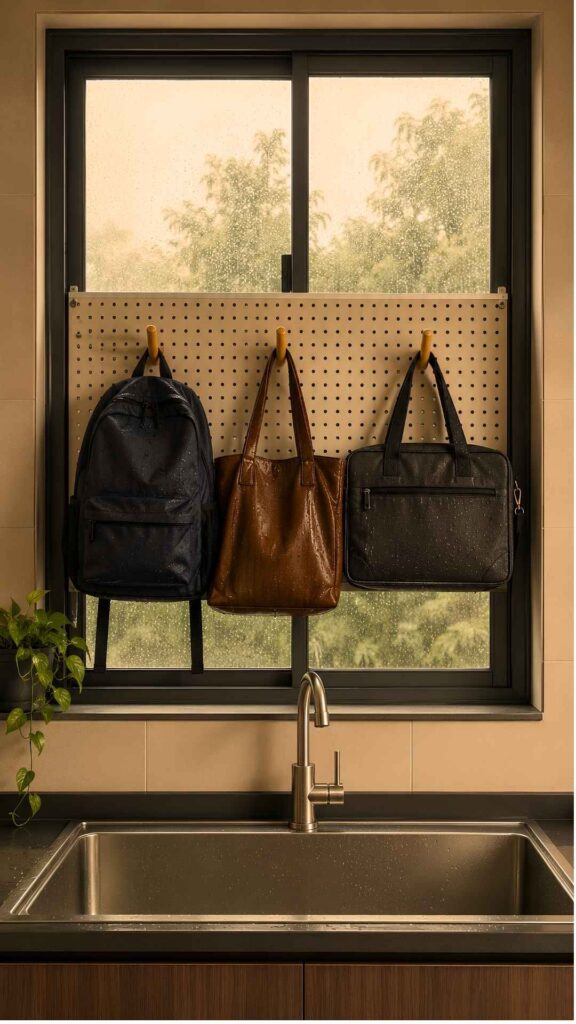
Hang bags separately using sturdy hooks. Empty each bag before drying it, including pockets and smaller compartments.
Drying methods should also depend on the material. Fabric bags need good ventilation, plastic bags can usually be wiped dry, and leather bags require more careful handling to prevent cracking or discolouration.
5. Use a Foldable Electric Clothes Dryer
Drying laundry during the rainy season can be difficult because clothes may remain damp for several days. Indoor drying racks also occupy valuable floor space in compact homes.
A foldable electric clothes dryer can be a practical solution. It allows clothes to dry regardless of the weather and can be folded away after use.
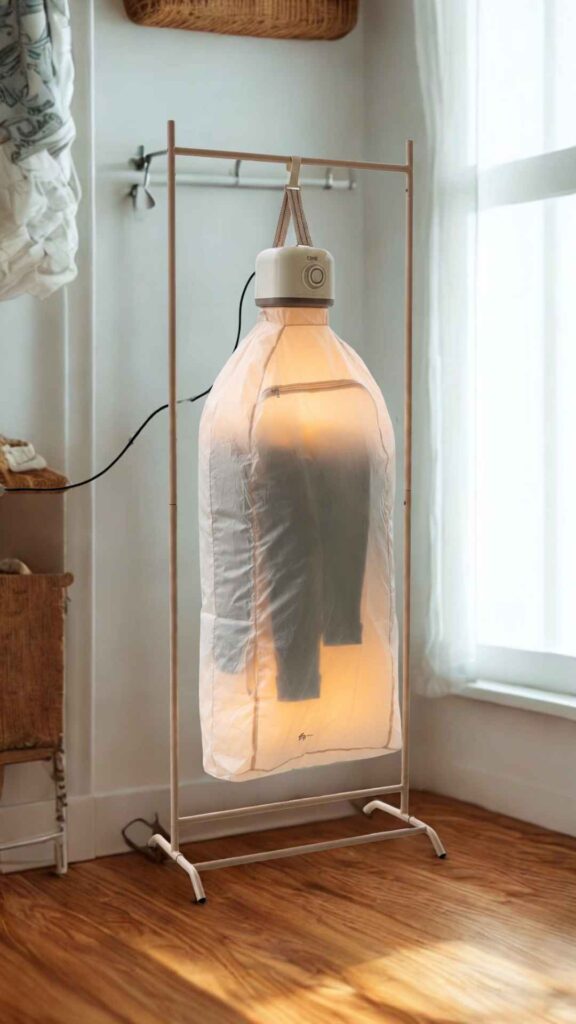
Its compact design makes it suitable for apartments, small rooms, offices, and rented homes. Many models also include timers and automatic shut-off functions, making the drying process more convenient.
Because the dryer is portable, it can be moved between rooms or carried while travelling. This makes it a flexible small space storage and drying solution for households with limited space.
6. Organise Small Rain Accessories in One Place
Rainy-season accessories often include shoe covers, waterproof phone covers, compact umbrellas, bag covers, gloves, and retractable clotheslines. These small items are easy to misplace.
Store them in a narrow cabinet, basket system, or compact rack near the entrance. Assign a separate basket, hook, or compartment to each family member.
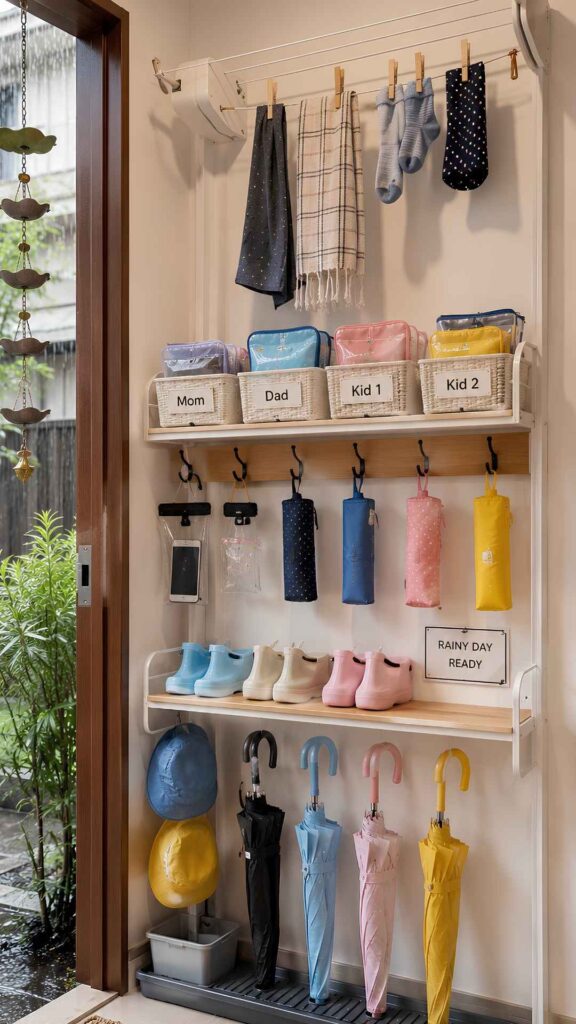
Clearly separating each person’s belongings prevents confusion and saves time when leaving the house.
A labelled organiser is especially useful for children because it encourages them to return their rain accessories to the correct place after use.
7. Mount a Wall Holder for Helmets and Jackets
Wet helmets, gloves, and jackets often end up on chairs, tables, or kitchen counters. Besides creating clutter, this prevents them from drying properly.
A wall-mounted helmet holder is an effective small space storage solution for bike commuters. Helmet holders are available in metal, wood, and stainless steel designs.
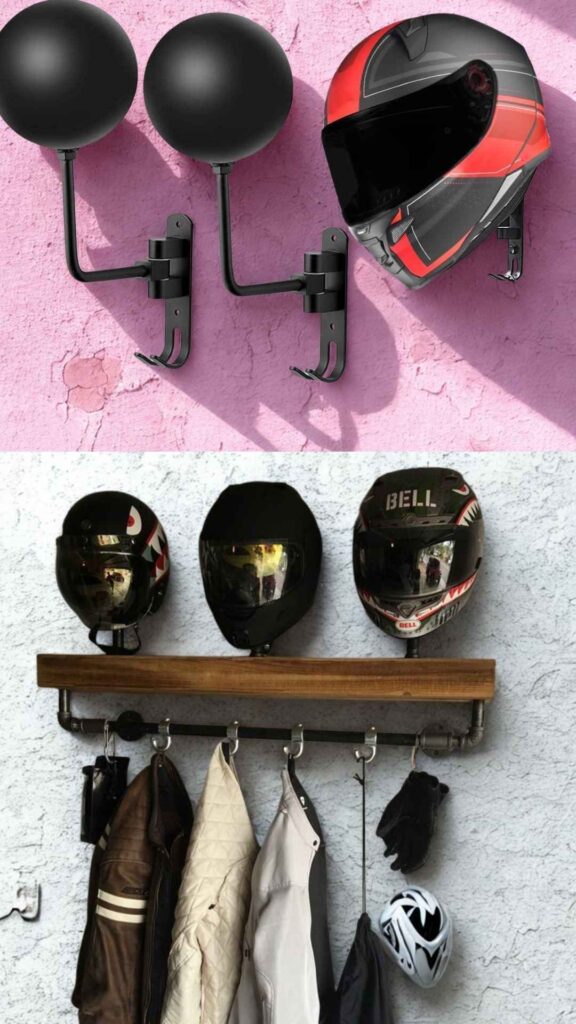
Many models include additional hooks for jackets, keys, gloves, bags, or raincoats. Installing one near the entrance creates a dedicated storage zone without occupying floor space.
Choose an open holder rather than an enclosed cabinet so that air can circulate around the wet helmet.
8. Separate Wet and Dry Towels
Rainy weather increases the need for towels, cleaning cloths, and old clothes. These are used to dry shoes, bags, raincoats, floors, and other wet items.
Keep two separate containers near the entrance or utility area. Use one for clean, dry towels and the other for used or wet cloths.
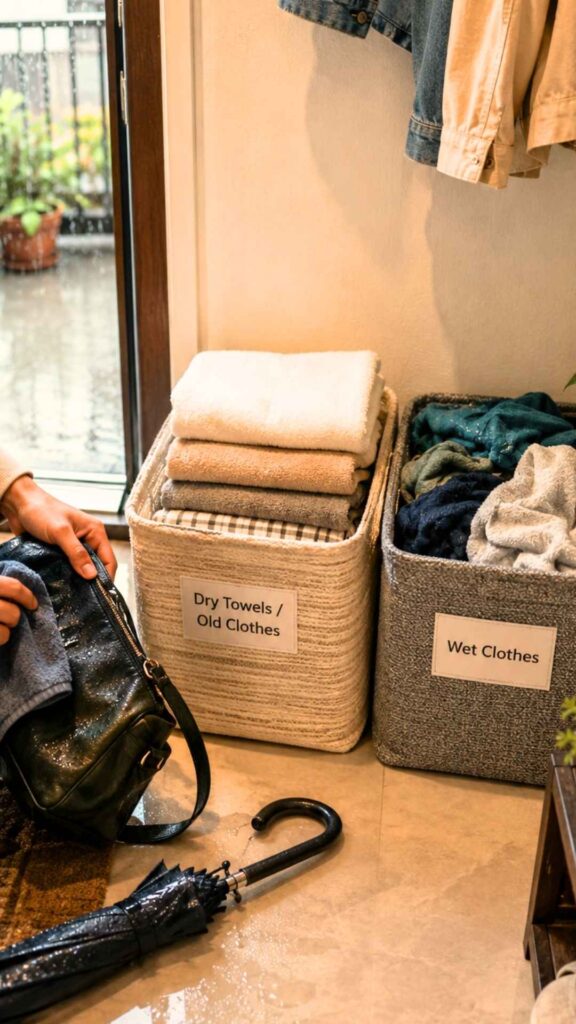
This system prevents clean and damp items from getting mixed together. It also reduces the chance of mould, odour, and moisture spreading.
Choose stackable or narrow containers to improve small space storage. Ventilated baskets are particularly useful because they allow wet cloths to breathe until they can be washed.
9. Add a Foldable Rack for Wet Deliveries
Groceries, milk packets, water bottles, newspapers, and delivery packages can arrive wet during heavy rain. Placing them directly on furniture may cause moisture stains and damage.
Install a foldable waterproof rack near the entryway. Wet items can be placed on the rack temporarily while they are wiped, unpacked, or allowed to dry.
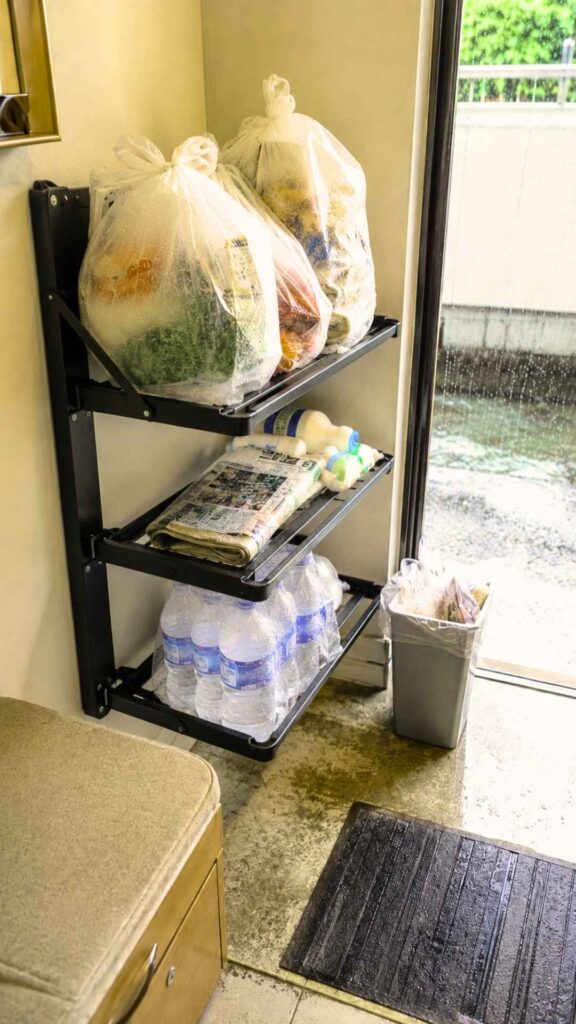
Once the items are organised, fold the rack against the wall to free up space.
Remove wet cardboard, paper, or plastic packaging quickly and place it in the dustbin. Leaving damp packaging indoors can create unpleasant odours and attract insects.
10. Protect Balcony Items with Hidden Storage
Storms and heavy rain can damage balcony furniture, gardening tools, cushions, decorative items, and wooden accessories.
A waterproof storage bench is a useful multifunctional solution. It provides seating while also offering hidden storage for balcony items.
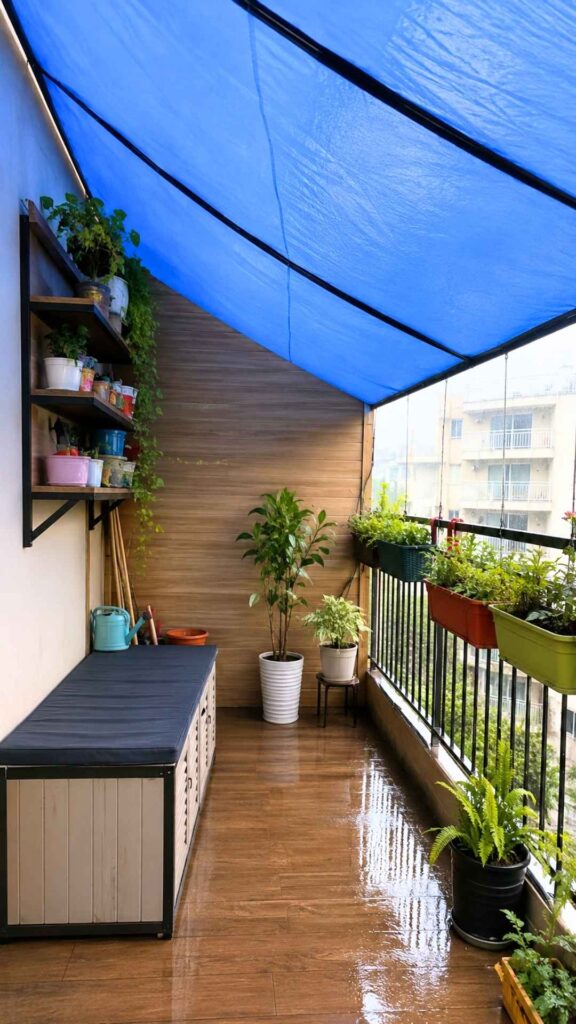
During severe weather, move the storage bench into the nearest room when possible. When indoor space is unavailable, install wall-mounted storage in a sheltered section of the balcony.
You can also protect larger items with a securely fastened waterproof tarpaulin. Make sure the covering does not allow water to collect on top.
Final Thoughts
Rainy-season clutter can be frustrating, but effective small space storage can make a compact home feel cleaner and more organised.
Simple additions such as waterproof trays, wall-mounted hooks, foldable racks, pegboards, vertical holders, and multifunctional furniture can provide dedicated spaces for wet shoes, umbrellas, raincoats, bags, helmets, and laundry.
The most useful small space storage solutions are compact, accessible, moisture-resistant, well-ventilated, and easy to clean.
Start by identifying the area that causes the most inconvenience every day. Once that problem is under control, introduce the remaining storage solutions gradually.
A practical rainy-weather storage system will protect your home from moisture while helping every room feel cleaner, safer, and more spacious.