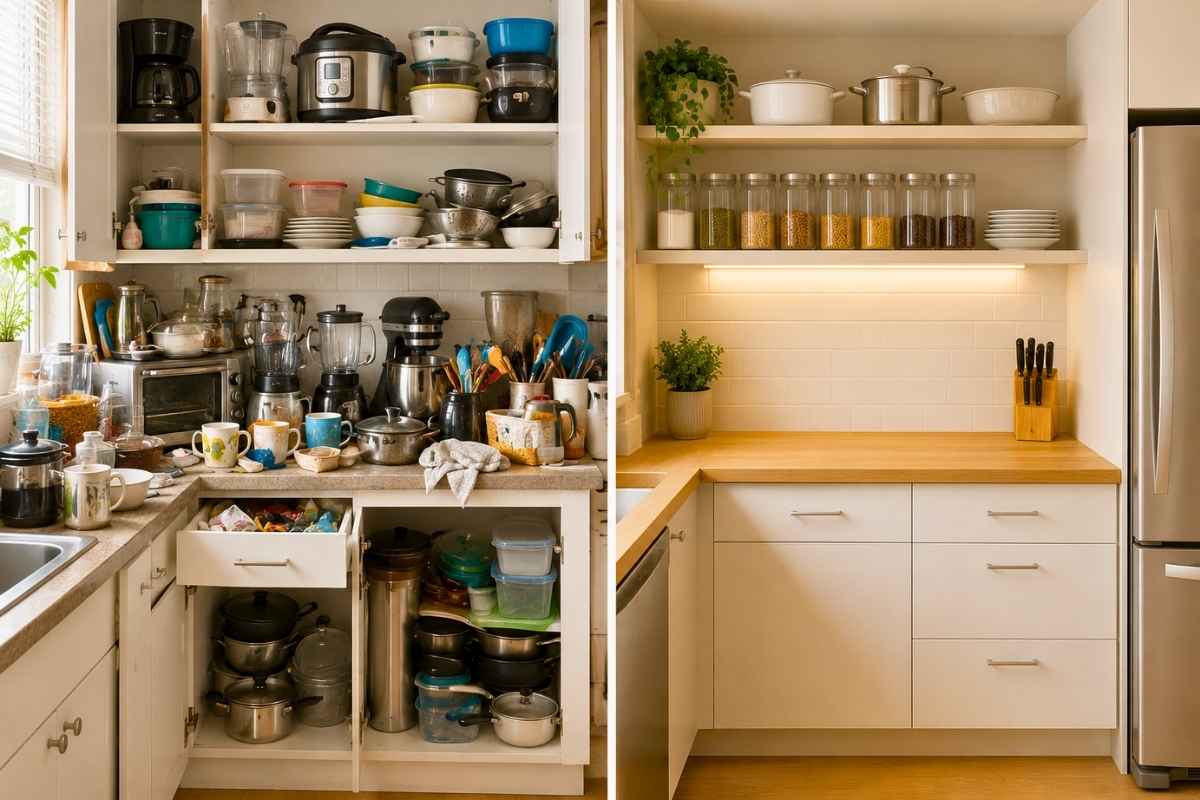
Discover practical small kitchen organization ideas to reduce clutter, maximize usable storage, and make cooking, cleaning, and maintaining your kitchen easier.
The problem isn’t always the cabinets or drawers; disorganization often happens because valuable space is occupied by items that don’t belong there.
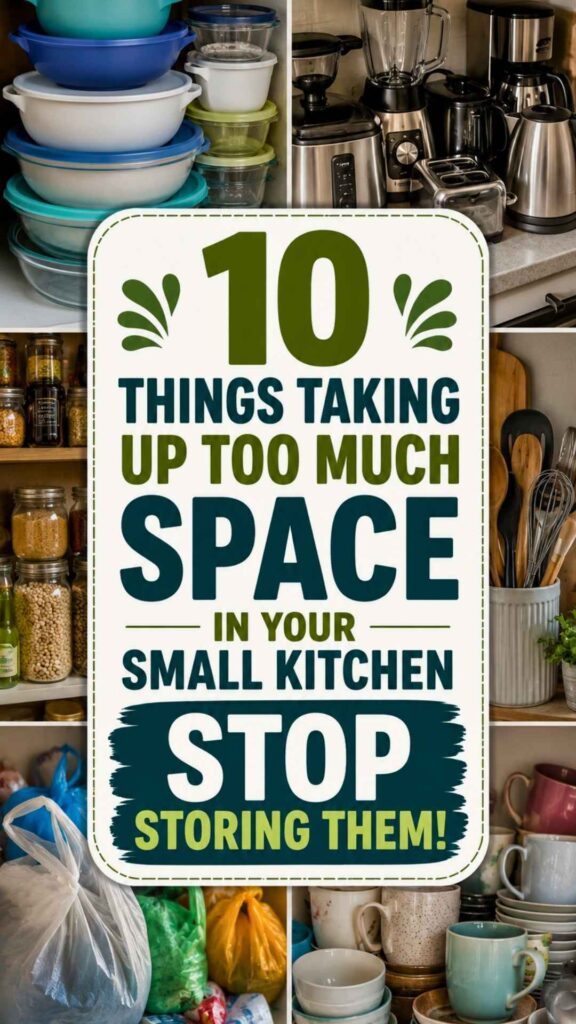
Frequently used appliances end up cluttering the countertop, extra groceries are difficult to arrange, and bulky containers take up more room than necessary. As a result, managing, cleaning, and maintaining the kitchen becomes increasingly difficult.
You might be tempted to buy more organizers, but adding more storage products doesn’t solve the problem when the real issue is unnecessary clutter. Instead, identify the items you’re storing that you don’t actually need. Removing these sources of clutter can free up valuable, usable space and make your kitchen easier to manage. In this article, we’ve covered 10 common kitchen issues and practical ways to make small kitchen organization easier.
1. Stop Storing Small Appliances You Rarely Use
Small kitchen appliances that aren’t used daily, such as blenders, sandwich makers, or juicers, often end up permanently occupying valuable counter space simply because retrieving them repeatedly is a hassle. A practical solution is to categorize them into three levels based on usage: daily, weekly, and occasional.
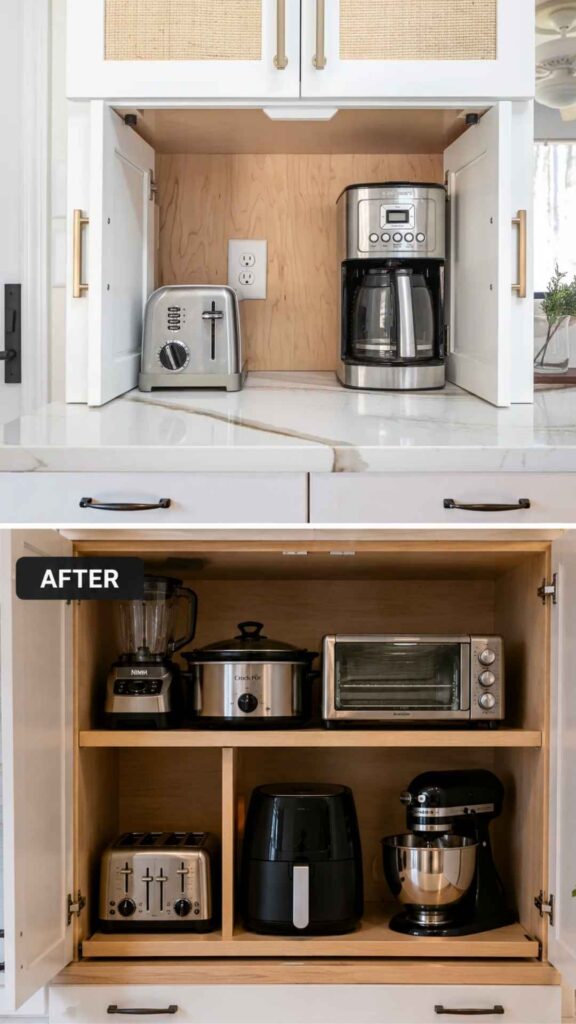
Keep daily-use appliances on the counter or in easily accessible cabinets, while storing the others in upper cabinets or secondary storage areas. Owning an appliance doesn’t mean it needs a permanent spot on the counter. Accessories such as appliance shelves, cabinet risers, and pull-out appliance trays can also help you store them more efficiently.
2. Stop Storing Duplicate Utensils “Just in Case”
When you have multiple items of the same type, such as spoons, peelers, forks, or whisks, finding the one you need can become a hassle. They often get tangled together, especially when replacements are purchased but the older items are never removed.
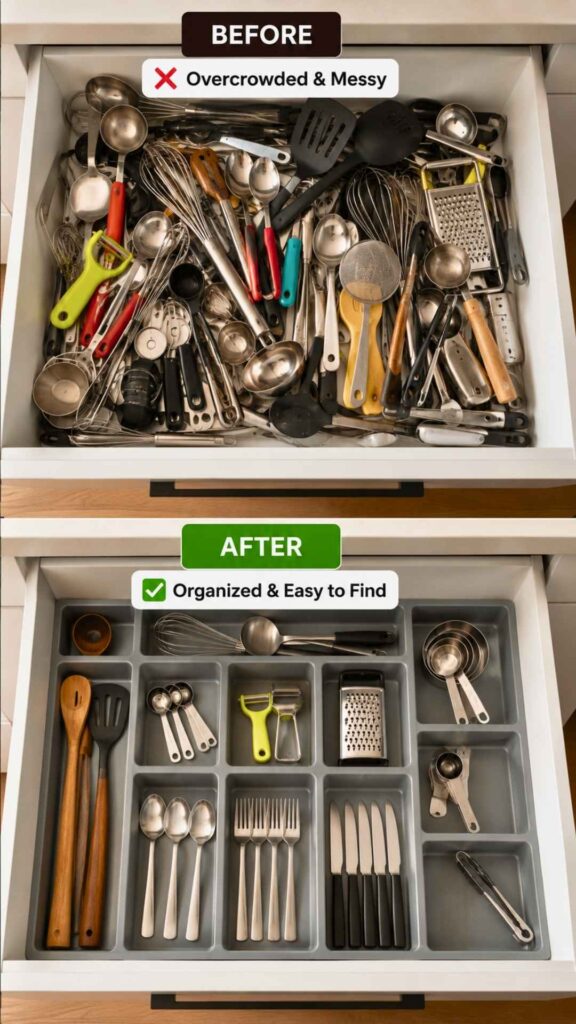
To tackle this, conduct a “duplicate audit.” Keep your favorites, the items you use frequently, and those in good condition, while removing broken, duplicate, or unused items. Keep only what you actually need—items that are comfortable to use and suit your cooking habits and kitchen style.
Organizing a kitchen, especially a small one, isn’t about adding more drawers. Helpful accessories such as drawer dividers and utensil organizers can make the space you already have work better.
3. Stop Using Your Counter as Permanent Food Storage
It’s easy for a countertop to gradually become an unofficial pantry. Grocery bags and food packets keep piling up, reducing your cooking space and leaving little room for meal preparation.
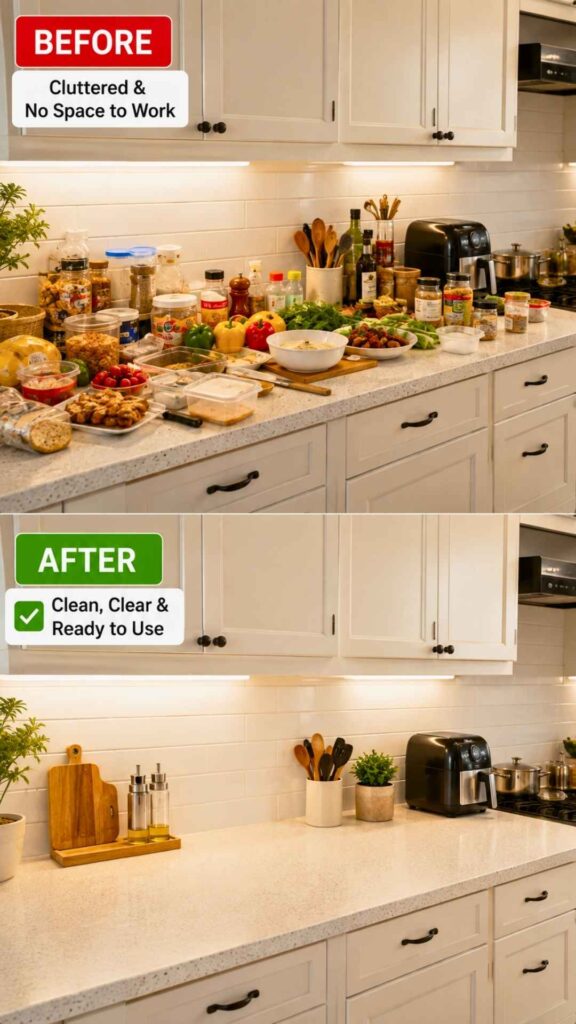
A cluttered kitchen can disrupt your cooking workflow. To avoid this, keep only items you use daily or access frequently on the counter. Store backup groceries and bulk purchases in cabinets or the pantry.
Remember, a countertop is primarily a functional workspace designed to make cooking easier, not a permanent storage area.
4. Stop Saving Empty Jars and Containers Without a Specific Purpose
Throwing away empty containers can feel like discarding kitchen treasure, but mismatched lids and scattered food containers can quickly clutter cabinets.
Before deciding to keep a container, ask yourself a few questions: What is its purpose? Does it have a lid? Is it stable? Will I actually use it?
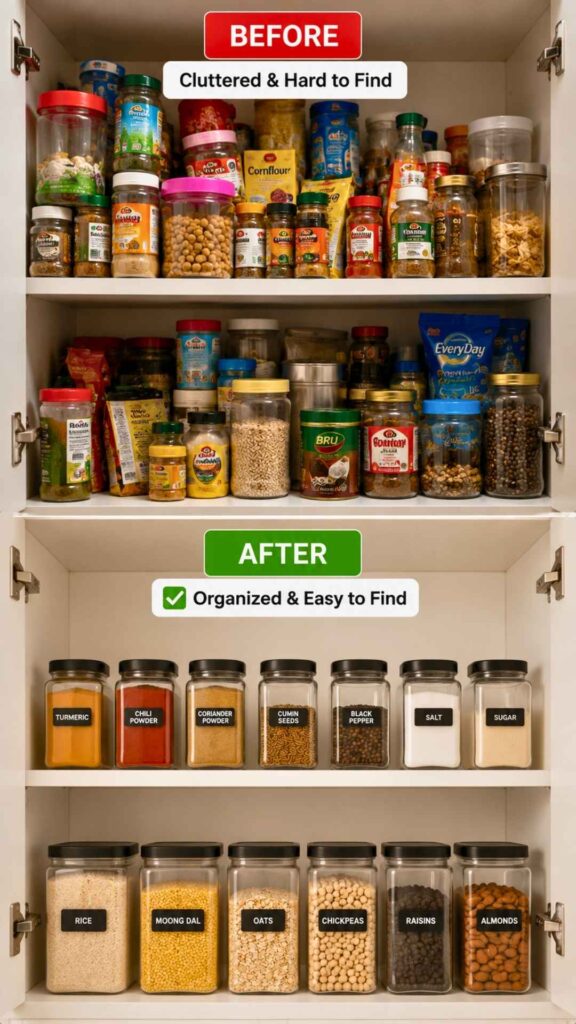
Consider its size and shape as well. If it fits your needs, keep it. However, if it has an awkward shape, is an unnecessary duplicate, or lacks a lid, it’s probably time to let it go. Containers take up valuable space, especially in a small kitchen.
A more organized kitchen starts with having fewer unnecessary items to manage.
5. Stop Giving Expired and Forgotten Pantry Items Prime Space
We often forget about items stored in the kitchen. When new supplies arrive, they’re usually placed at the front, leaving older products hidden behind them. Sometimes, this also leads to duplicate purchases because we assume we’re out of something without checking our existing stock.
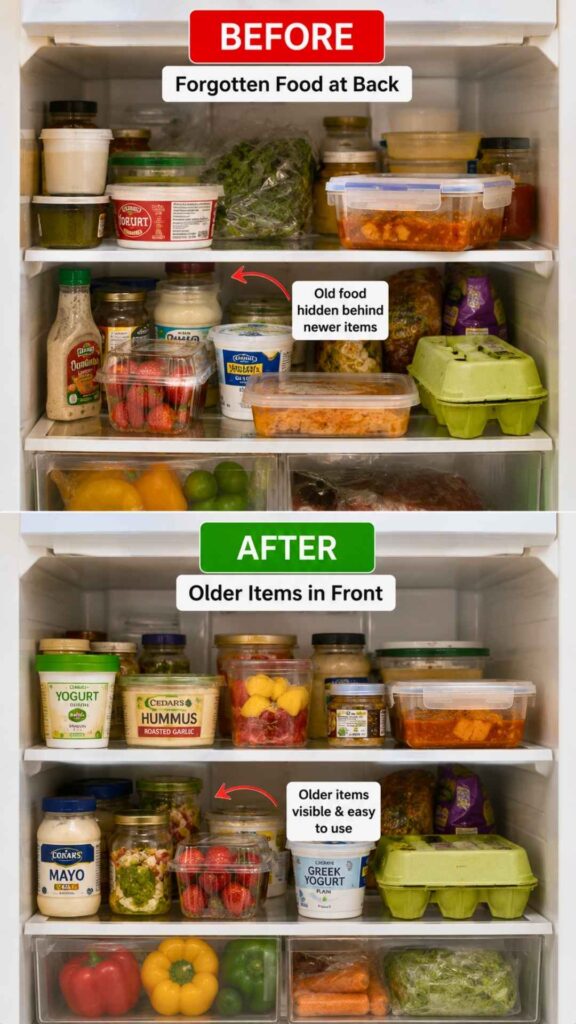
To avoid this, keep older and opened items at the front so you can easily see what you already have. This approach, known as “visibility-based storage,” makes it easier to track your supplies instead of letting them disappear into the back of a cabinet.
True organization isn’t just about grouping things together; it also depends on visibility and logical sequencing.
6. Stop Stuffing Oversized Food Containers Into Small Shelves
A common misconception when buying storage containers is that a larger container automatically provides more storage. In reality, oversized containers can consume valuable cabinet space, make awkward gaps harder to use, and leave little room for smaller containers.
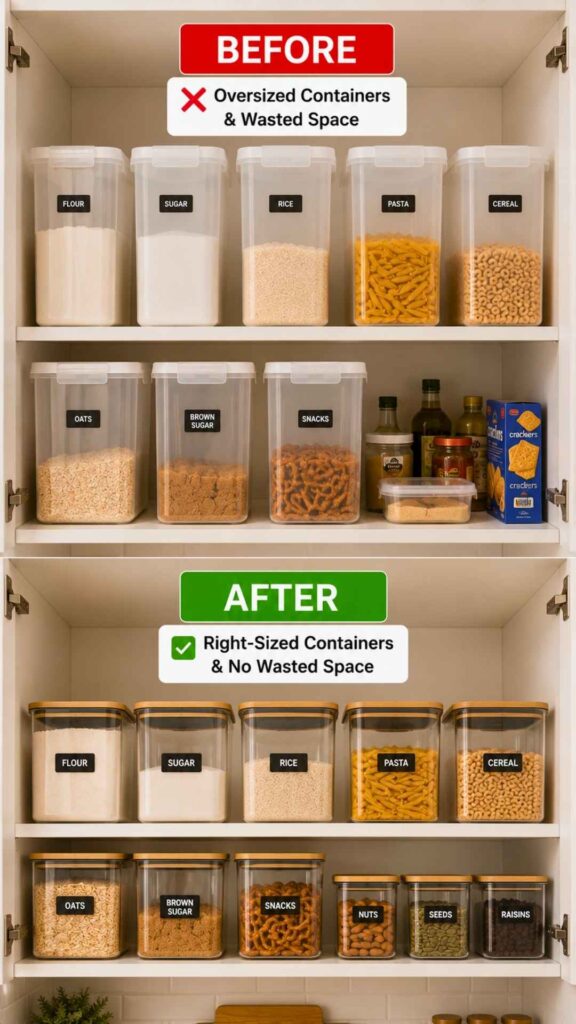
Before purchasing containers, measure the height of your cabinets and shelves and check the dimensions of the containers. Avoid buying more storage than you actually need.
This is an often-overlooked part of small kitchen organization because product dimensions can have a significant impact on how effectively your storage space is used.
7. Stop Storing Every Serving Dish in the Easiest Cabinet
When rarely used serving dishes occupy prime cabinet space, everyday plates, bowls, and casseroles can get pushed to the back, making them harder to reach.
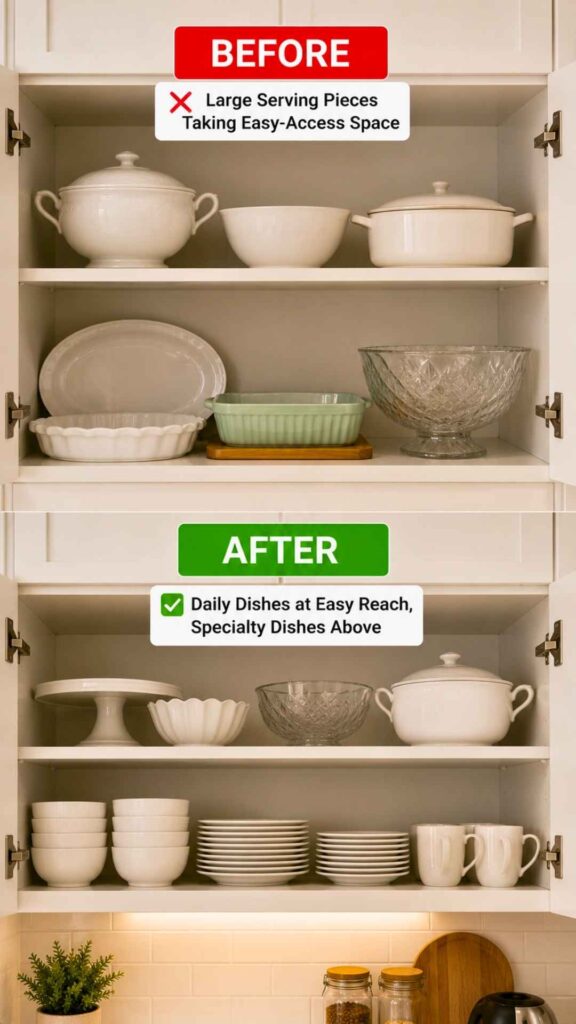
Instead, reserve the most convenient cabinet spaces for items you use frequently. Keep everyday dishes in accessible cabinets, move occasional serving pieces to higher or secondary storage, and place holiday items in less frequently used or harder-to-reach areas.
Simply put, the items you use most often should have the most convenient storage locations.
8. Stop Turning Cabinet Corners Into “Maybe Later” Storage Zones
Every kitchen has deep cabinet corners that are easy to overlook. Items placed there can quickly become forgotten simply because they’re difficult to see and reach.
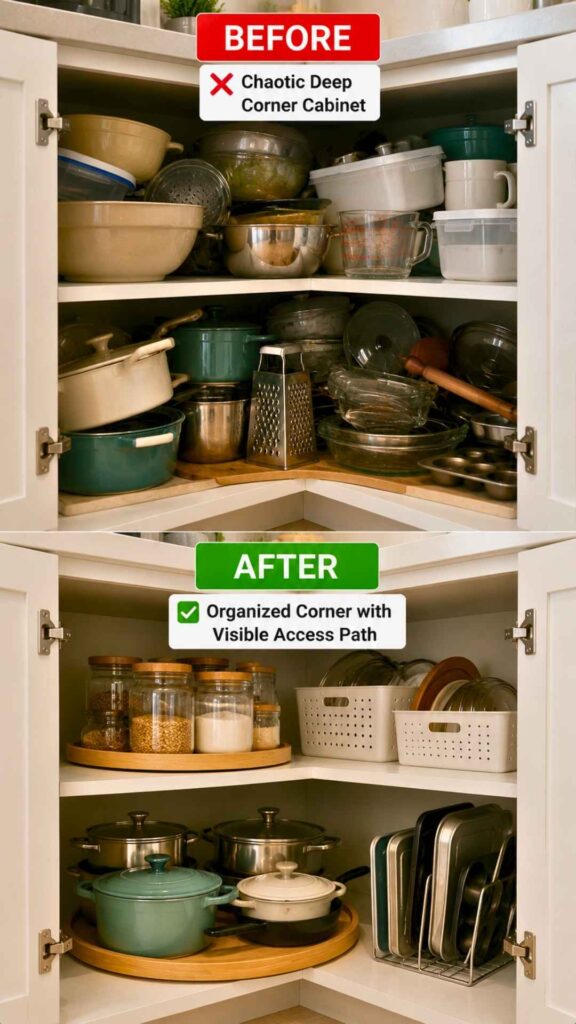
Since these are awkward storage areas, avoid keeping frequently used items at the very back. Place them toward the front where they’re easier to access. Alternatively, rotating organizers can make some corner spaces more practical.
You don’t need to fill every inch of a cabinet corner. Accessibility matters more than maximizing every available inch, because hard-to-reach storage offers little practical value.
9. Stop Storing Backup Supplies Where You Can’t See Them
Keeping backup supplies is sensible, but problems arise when they become invisible in storage. When duplicate or unopened items are hidden away, you can easily lose track of what you already have while grocery shopping.
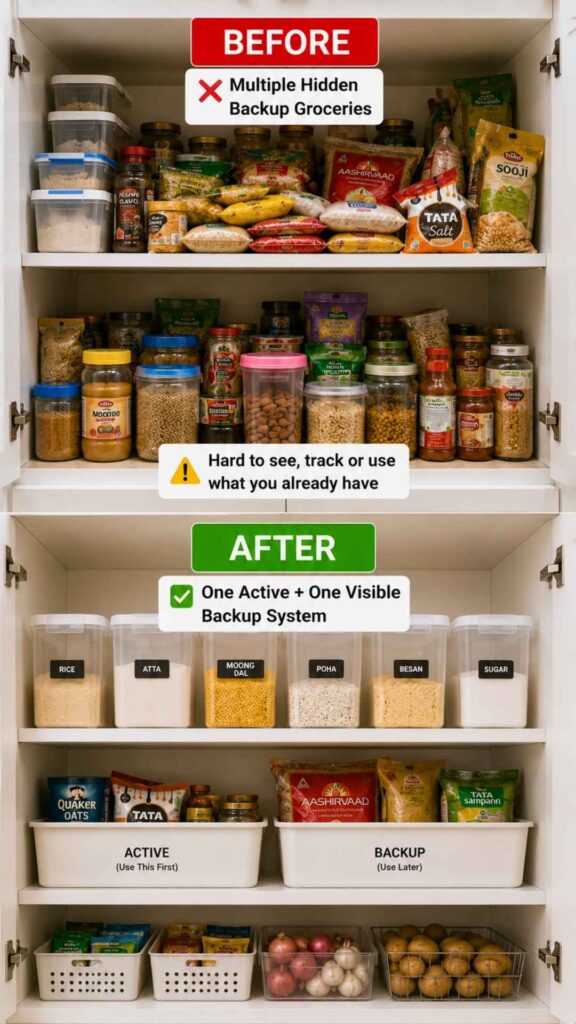
A simple solution is to keep active items at the front and backups behind them. Minimize duplicate inventory and create a clear system that separates items currently in use, backup stock, and items that need to be purchased only after the backup is used.
Keeping backups isn’t the problem; the problem is having backups that remain out of sight.
10. Stop Buying an Organizer the Moment You See Empty Space
Buying an organizer or bin as soon as you notice an empty shelf isn’t always the best solution. Organizers can take up usable cabinet space themselves, so it’s important to understand the problem before adding another product.
Try the “7-day observation test.” During this period, notice which items repeatedly get pushed to the back or end up on the counter, which bottles don’t fit, which shelves are awkward to use, and which items need to be moved before you can reach others.
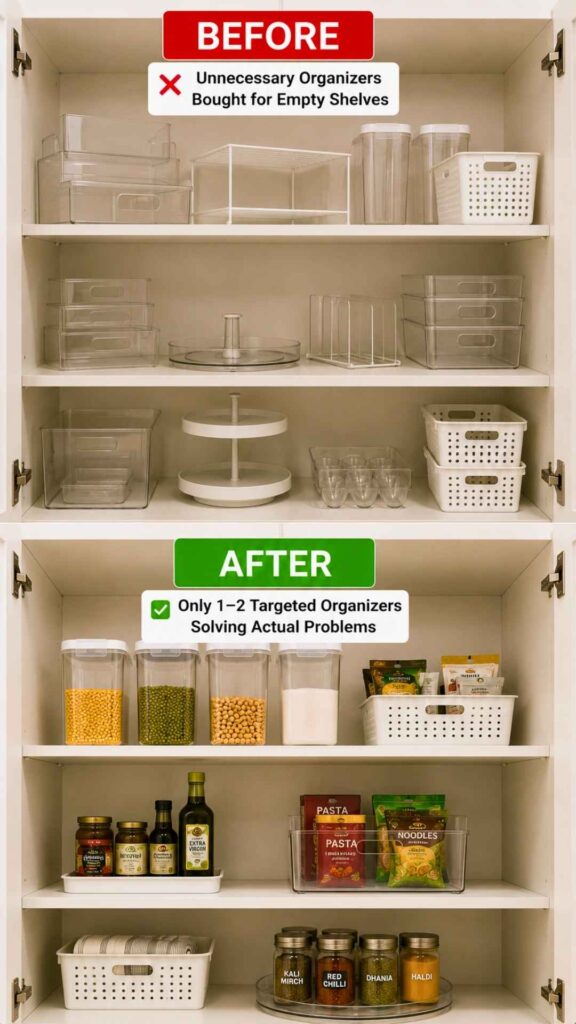
Only then should you choose a solution that fits your specific needs, whether that’s a bin, shelf riser, divider, or bottle holder. An organizer isn’t an automatic fix for a space problem; you first need to identify what’s actually causing it.
Final Thoughts
If poor storage habits persist, a kitchen can never be truly organized. The problem in a small kitchen isn’t always a lack of space; it often comes from storing items in the wrong places or making them difficult to see and access.
To create a more functional kitchen, identify the habits and storage mistakes that are causing clutter, then choose solutions that prioritize usable storage over maximum storage. The goal of small kitchen organization is to make cooking easier, keep everyday items accessible, simplify kitchen routines, and make the space easier to maintain over the long term.