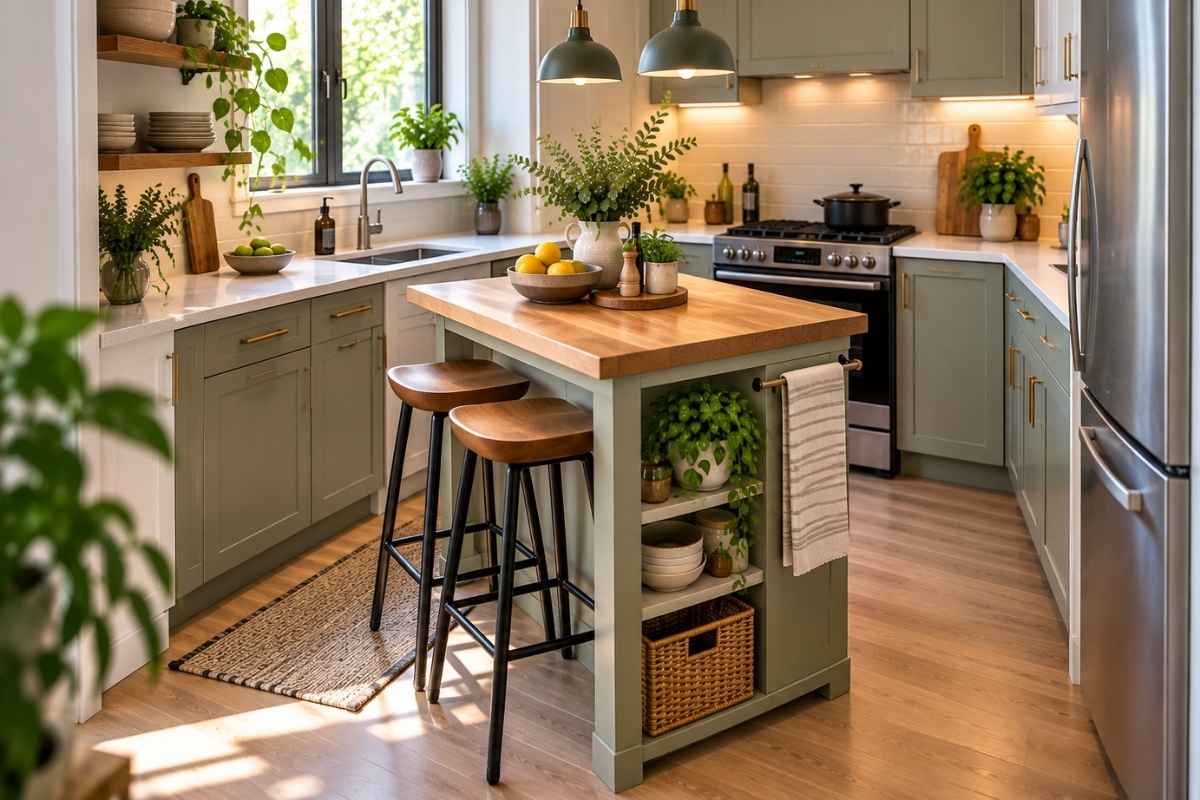
Discover 10 small kitchen island ideas for tight spaces, from micro islands and peninsulas to smart storage, flexible seating, slim designs, and movable options.
A kitchen island serves as an extra countertop that aids in cooking, provides storage, and offers space for appliances. However, the first thing to understand is that having a small kitchen does not mean you cannot have an island. If designed according to your kitchen’s size, it can be a valuable addition.
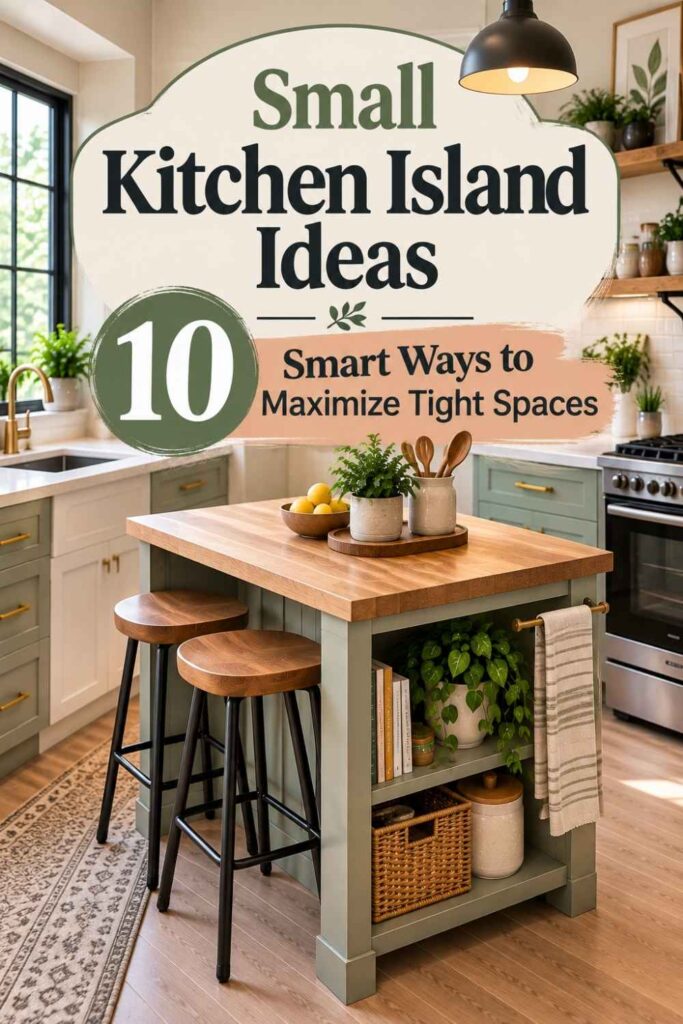
Simply fitting an island into the kitchen isn’t enough; it should actually improve the space. An oversized island in a small kitchen can create problems, such as making it difficult to open the refrigerator, blocking the dishwasher door, restricting movement, making cooking uncomfortable, or creating a cluttered feel.
Therefore, the ideal small kitchen island is one that maximizes utility within a compact footprint, offering benefits such as extra prep space, storage, seating, or a flexible work area. In this article, we look at 10 ideas that address the specific needs of small kitchens where an island is desired.
1. Choose a Very Small Micro Island
If there isn’t enough space in the kitchen for a large island, don’t try to replicate a full-sized one. Instead, consider a micro island—a small central unit designed for essential tasks. It might feature a compact countertop, a few drawers, or lower shelving.
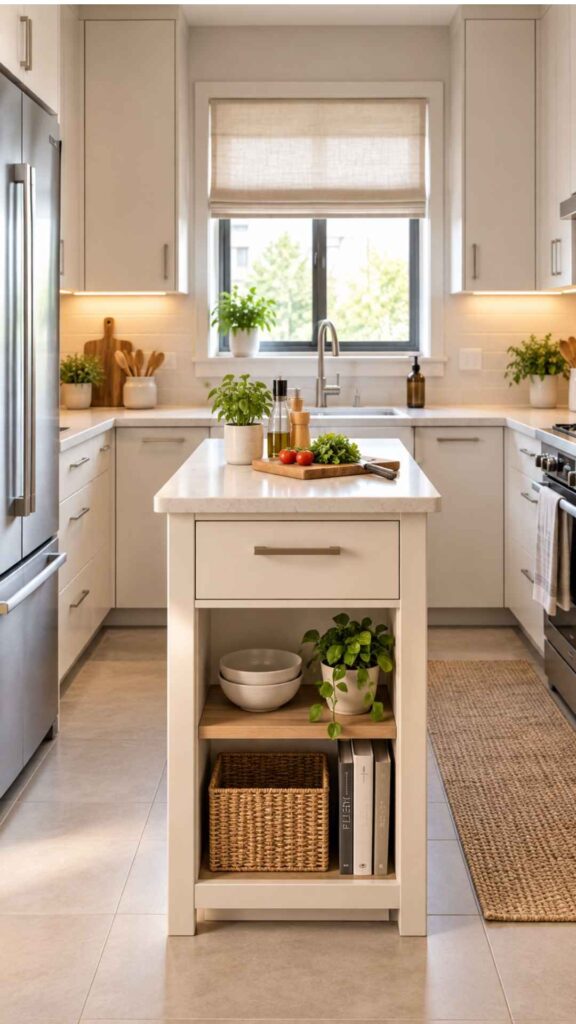
The goal isn’t to fill the kitchen with more furniture. If you simply need a little extra space for chopping vegetables, food preparation, or serving, a compact surface may be enough. Ultimately, the size of the island should be determined by the kitchen’s layout, not the other way around.
2. Choose a Peninsula Instead of a Freestanding Island
If your kitchen is too narrow to allow comfortable movement around an island, consider a peninsula. A peninsula connects to existing cabinetry or a counter, providing extra surface area similar to an island without requiring a separate, freestanding unit in the middle of the kitchen.
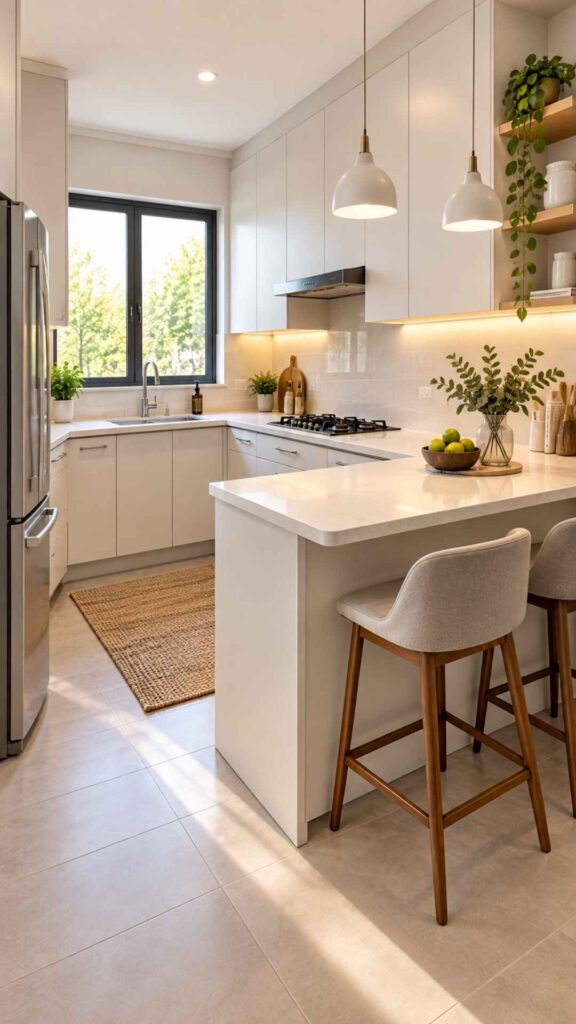
It can be used for food preparation, serving, additional storage, or casual seating, making it particularly useful in narrow or open-plan kitchens. Sometimes, you don’t actually need an island itself—you simply need the functions an island provides.
3. Turn the Island Into a Compact Storage Center
A countertop isn’t the only benefit of a small kitchen island. If the design allows, storage can also be incorporated. Drawers, cabinets, and shelves can be used to store cookware, cutting boards, baking supplies, and everyday kitchen essentials.
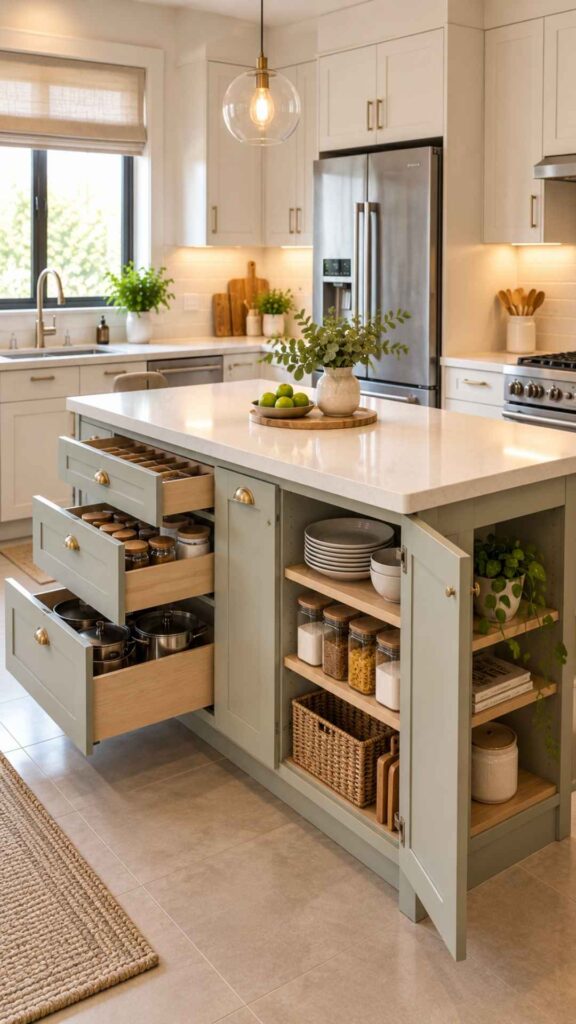
However, adding too many items to a small kitchen island can be counterproductive. If appliances, jars, baskets, and decorative objects constantly occupy the countertop, the island can look visually heavy. The goal is to increase storage without adding visual clutter.
4. Keep Seating to One Side
If you want seating at the island, you don’t need to place cabinets on all sides. Creating a small overhang on one side allows for one or two compact stools.
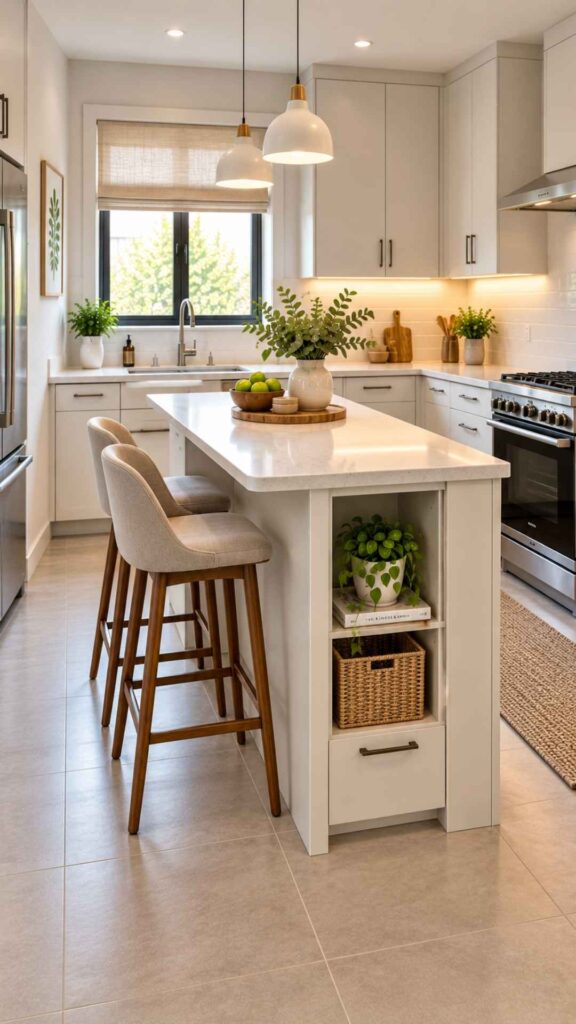
This can turn the island into a spot for breakfast, coffee, quick meals, homework, or work. However, the seating arrangement should not interfere with the kitchen’s traffic flow. If the stools make movement difficult, it is wiser to skip the seating.
In a small kitchen, comfortable movement is more important than adding extra seating.
5. Use a Two-Level Island for Two Functions
A multi-level kitchen island can feature different heights, with one section used for food preparation and another for casual dining or serving. This can help save space in a smaller kitchen by combining two functions within one footprint.
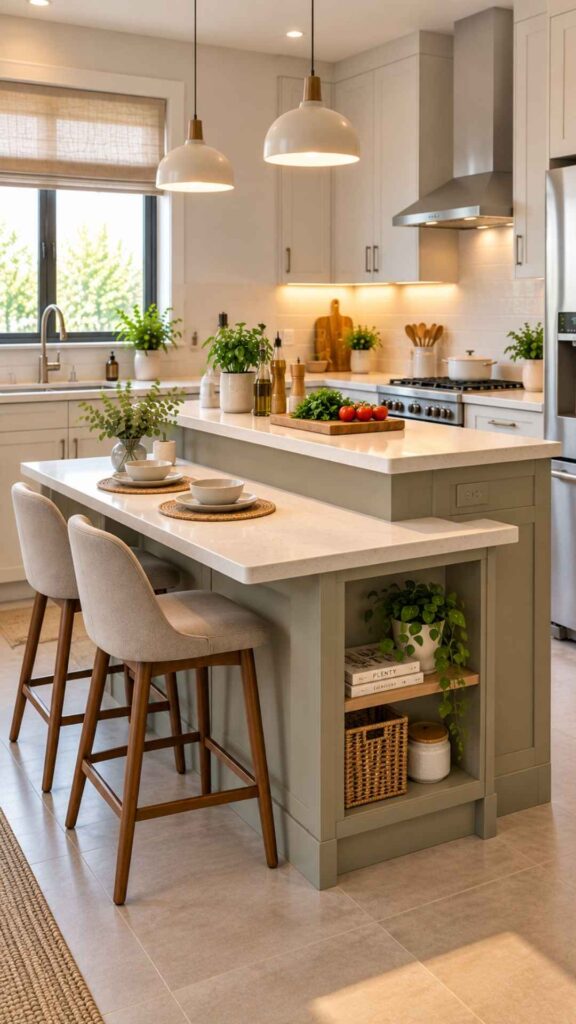
Still, don’t choose a two-level design simply because it looks modern. A standard single-level counter may be more practical and comfortable for everyday use.
6. Use a Flip-Up Counter to Expand the Island When Needed
Instead of keeping the entire island large, add a flip-up or fold-down extension. This keeps the island compact and saves floor space when the extension is closed, while providing additional surface area when needed.
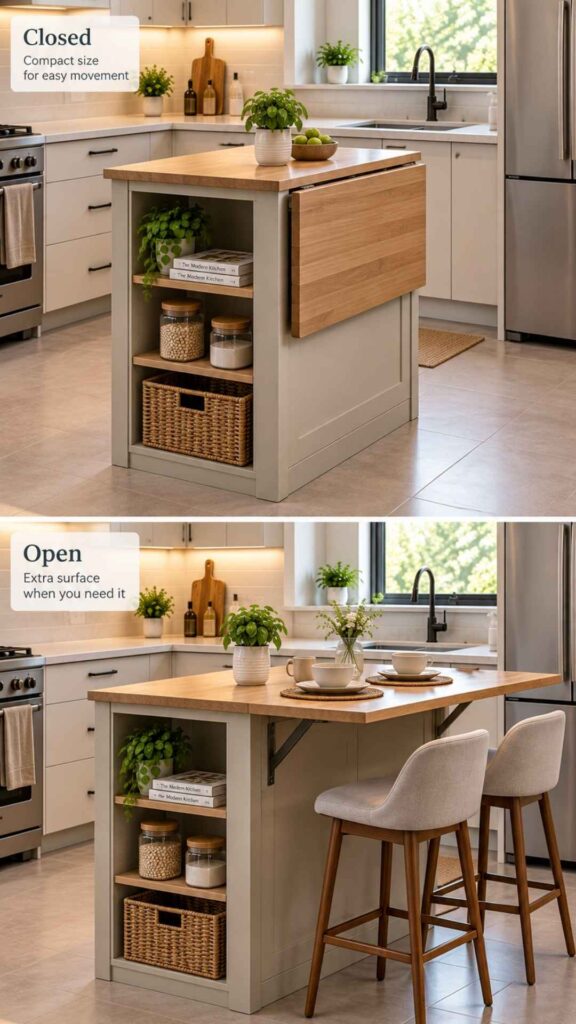
The extra surface can be used for serving breakfast or food preparation. The advantage is that the island’s footprint doesn’t remain permanently large—you expand the surface only when you need it.
7. Choose a Wheeled Island and Give It a Parking Spot
When using a movable island, consider where it will go when it isn’t needed. Essentially, give it a specific parking spot.
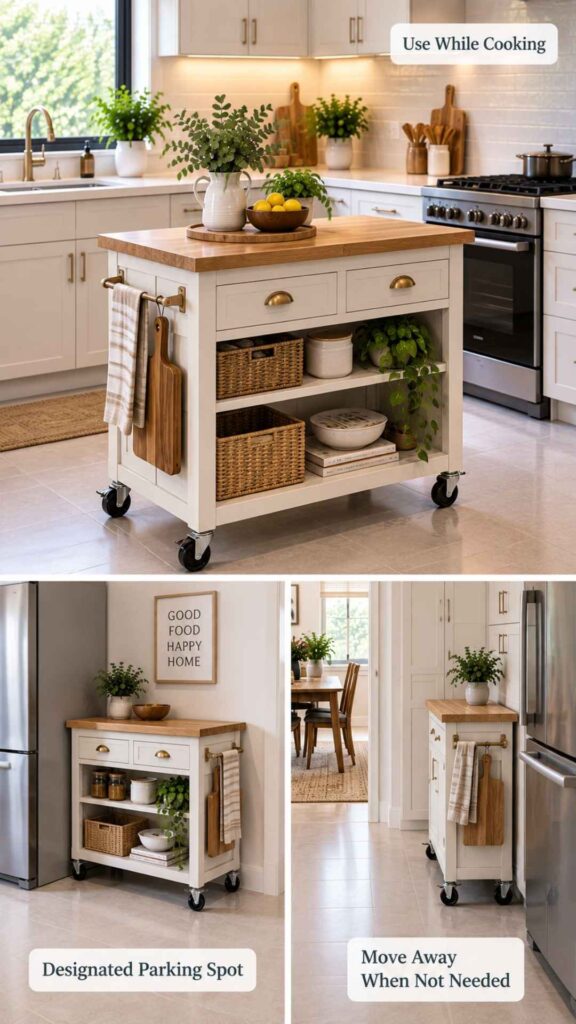
It can be brought closer to the counter while cooking, moved against the wall when cleaning or when more floor space is needed, or shifted out of the kitchen if necessary. This prevents a movable island from becoming a permanent obstacle.
8. Use a Slim Island in a Galley Kitchen
Galley kitchens are typically long and narrow, so a traditional island is often impractical. However, if there is sufficient space, a slim or narrow island can provide useful functionality.
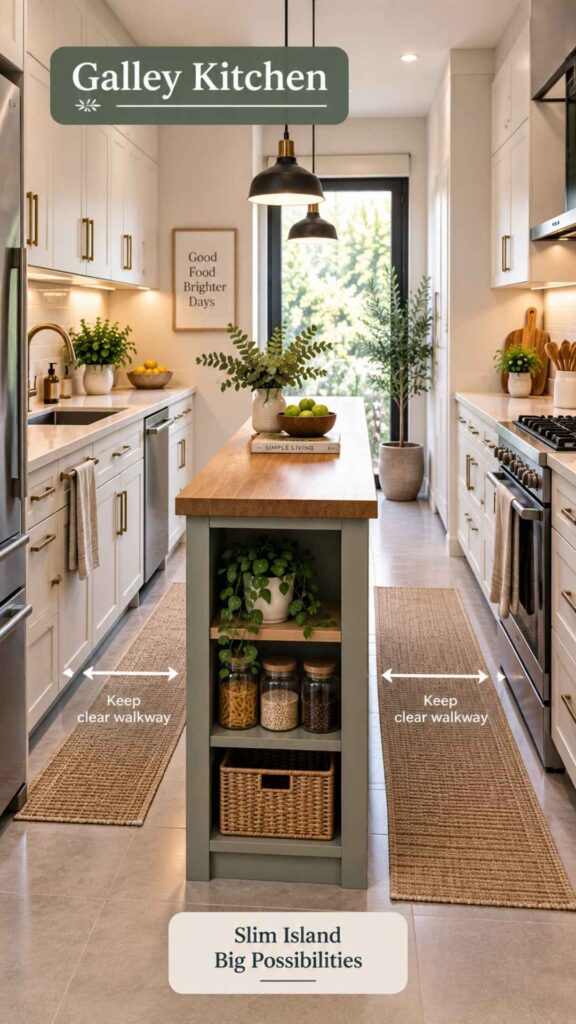
It can serve as a food-preparation area, baking station, coffee station, breakfast surface, or additional storage. That said, don’t place an island in the center simply because there is some open space. It should only be included if it adds a useful work surface without obstructing movement between the parallel countertops.
9. Turn an Existing Table Into a Kitchen Island
This is a practical option for budget-conscious homeowners. Before purchasing a new kitchen island, consider whether an existing piece of furniture—such as a study table, dining table, or console table—could serve the purpose.
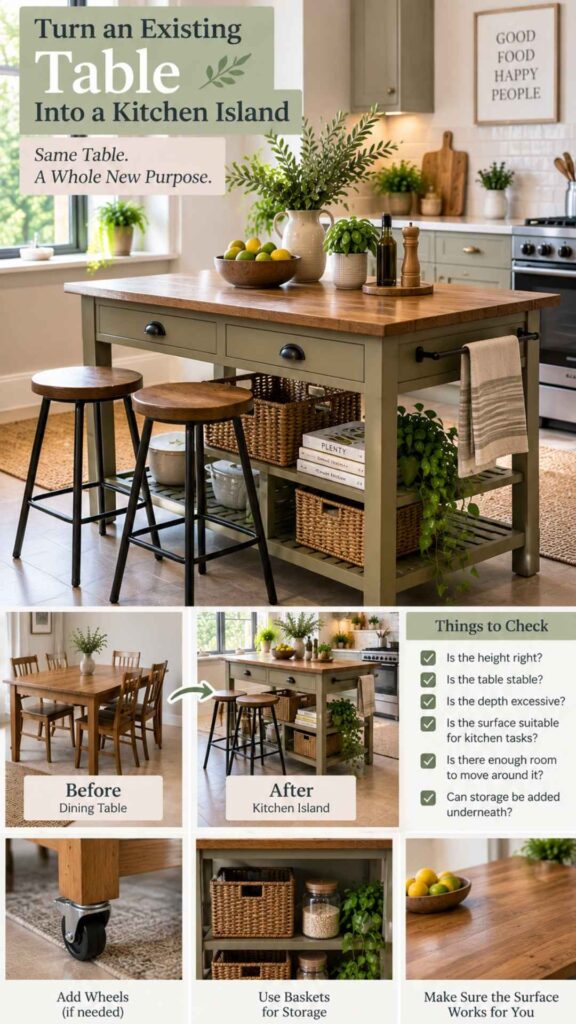
You’ll need to check several factors: Is the height right? Is the table stable? Is the depth excessive? Is the surface suitable for kitchen tasks? Is there enough room to move around it? Can storage be added underneath?
Buying new furniture specifically for use as a kitchen island isn’t always necessary. An existing table may function perfectly well and prove to be the more sensible choice.
10. Create a “Ghost Island” Without a Permanent Structure
Don’t think of a “ghost island” in the same way as a traditional, permanent kitchen island. The idea is to enjoy the utility of an island without necessarily having a fixed structure in the middle of the room.
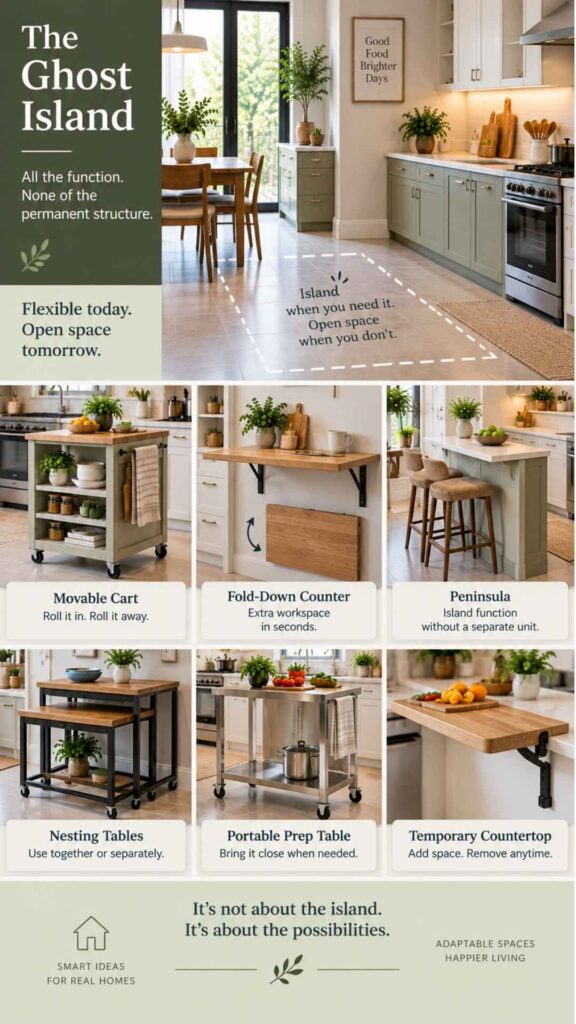
Instead, you can use compact movable units, retractable temporary countertops, peninsulas, or fold-down work surfaces. For example, a movable surface can be brought near the main counter while cooking to create extra workspace and then tucked away when the task is complete.
The key is not to fixate on the traditional island structure itself, but to focus on the functionality an island provides.
Final Thoughts
In one kitchen, a small island might be the best choice, while in another, a peninsula could make more sense. Sometimes a movable surface works well, whereas in other cases, a narrow table might be enough. For some kitchens, the wisest decision may be to skip a permanent island altogether.
Before installing one, consider whether the kitchen will remain practical. Is there comfortable walking space? Can the refrigerator and dishwasher doors open easily? Are cabinet doors being blocked? Is movement easy while cooking? Can two people use the kitchen at the same time? Do the stools get in the way?
The best small kitchen island isn’t one that simply fills the available space. It’s one that improves functionality—making it easier to move, cook, and live in the kitchen without making the area feel cluttered or cramped.