A small bedroom for two presents a slightly different design challenge from a small bedroom for one. You are not simply trying to squeeze in a double bed. There are two sets of clothes, two phones charging at night, different sleeping habits and, usually, twice as many little things looking for somewhere to live.
The best small bedroom ideas for couples living are therefore not just about making a room photograph well. They are about making limited space comfortable, organised and pleasant for two people to use every day.

Good small-bedroom design starts with a simple question: what genuinely needs to be in the room, and what can work harder than it currently does? Thoughtful storage, better furniture proportions and more flexible lighting can often make a bigger difference than adding decorative features.
Here are ten practical small bedroom ideas for couples that are worth considering.
1. Build Storage Around the Bed Instead of Adding More Furniture
In a couple’s bedroom, storage seems to disappear surprisingly quickly. In a small bedroom, another cabinet can sometimes solve one problem while creating another by reducing the space available to move comfortably around the room.
That is why storage beneath the bed starts to make much more sense for a couple. Spare sheets, less-used clothes, luggage and seasonal items can disappear underneath without taking away valuable walking space.
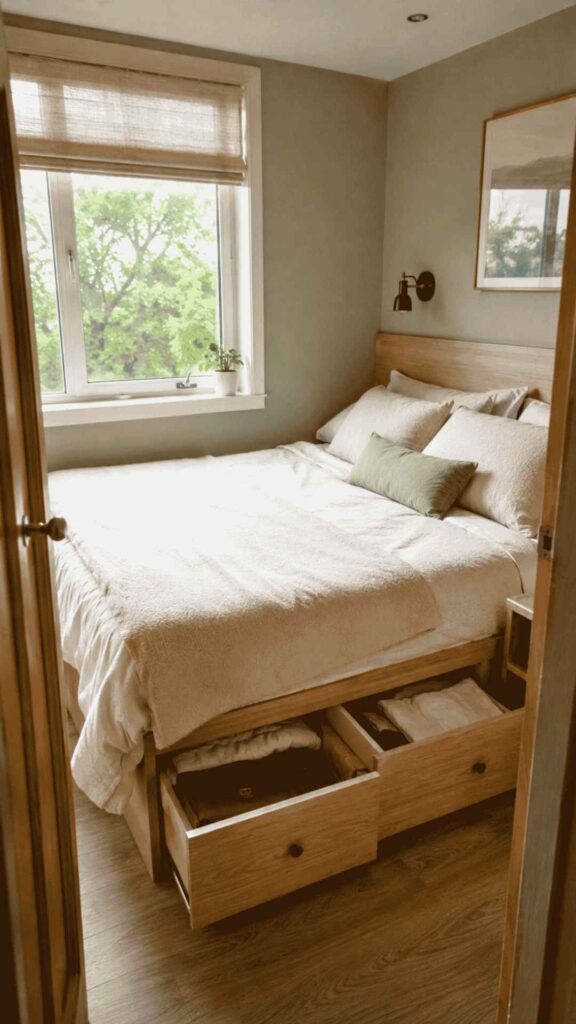
Among the most practical small bedroom ideas for couples layouts, integrated bed storage is particularly useful because it makes use of an area that would otherwise remain largely wasted. Drawer beds, hydraulic storage beds or built-in platforms can all work, depending on the room layout and how frequently the stored items need to be accessed.
The aim is not to fit in as much storage as possible. It is to place storage where it interferes least with everyday movement.
2. Build Storage Around the Bed
The wall above the bed is often treated as purely decorative space, but in a compact bedroom it can provide useful storage.
Built-in cabinets, shallow shelves or cupboards extending towards the ceiling can take pressure off the main wardrobe. They are especially useful for items that are needed occasionally rather than every day.
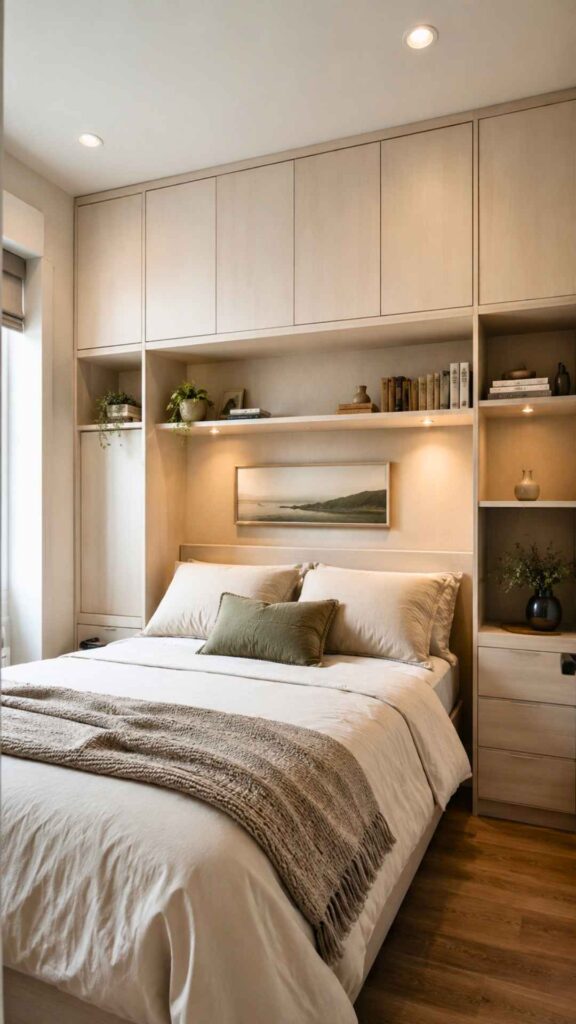
There is a balance to find, though. Too much cabinetry may make a tiny bedroom feel enclosed, particularly when deep cupboards surround the bed on every side.
Leaving some open shelving and keeping the finishes relatively light usually gives the storage a quieter presence instead of allowing it to dominate the whole room. If possible, keep the central area directly above the headboard visually simpler and concentrate deeper storage towards the sides or ceiling.
3. Replace Bulky Bedside Tables With Floating Ones
Two conventional bedside tables sound reasonable until they are placed beside a double bed in a narrow room. Suddenly, the remaining walkway can feel annoyingly tight.
Floating shelves or slim wall-mounted bedside tables solve that problem neatly. They provide enough surface space for everyday essentials without the visual or physical bulk of traditional furniture.
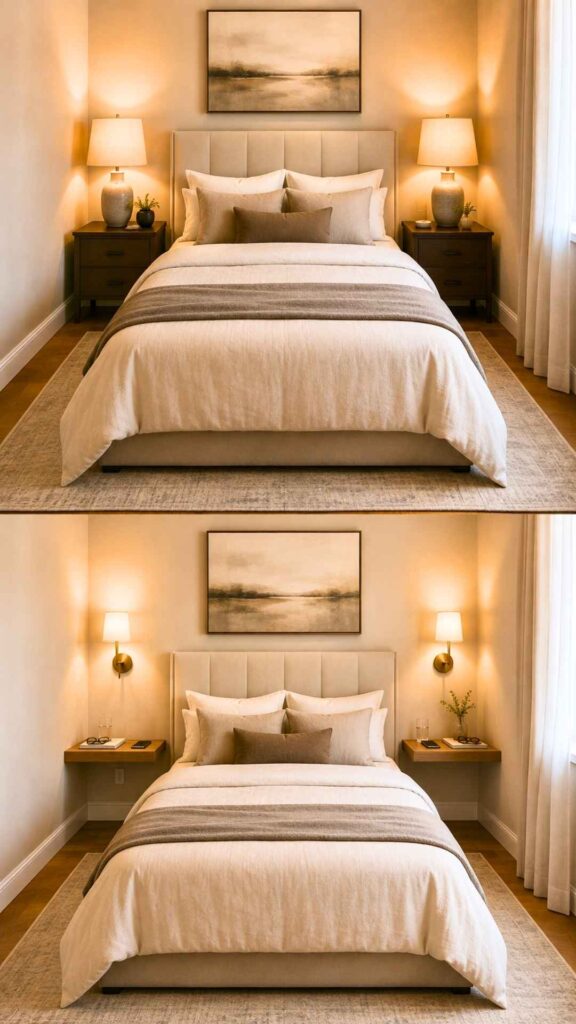
Wall sconces can also remove the need for large table lamps, freeing even more bedside space.
What is actually needed beside the bed anyway? Usually a phone, water, perhaps glasses and a book. A compact surface is often more than enough.
For couples, the important point is to provide each person with a small amount of personal bedside space rather than forcing both people to share one overcrowded table.
4. Choose a Sliding Wardrobe, Then Think About Mirrors
Wardrobe doors need more space than people often realise. Hinged doors require a clear area in front of the wardrobe every time they are opened, which can become inconvenient when the bed is positioned close by.
Sliding wardrobes avoid that little daily annoyance, making them one of the more useful small bedroom ideas for couples homes where circulation space is limited.
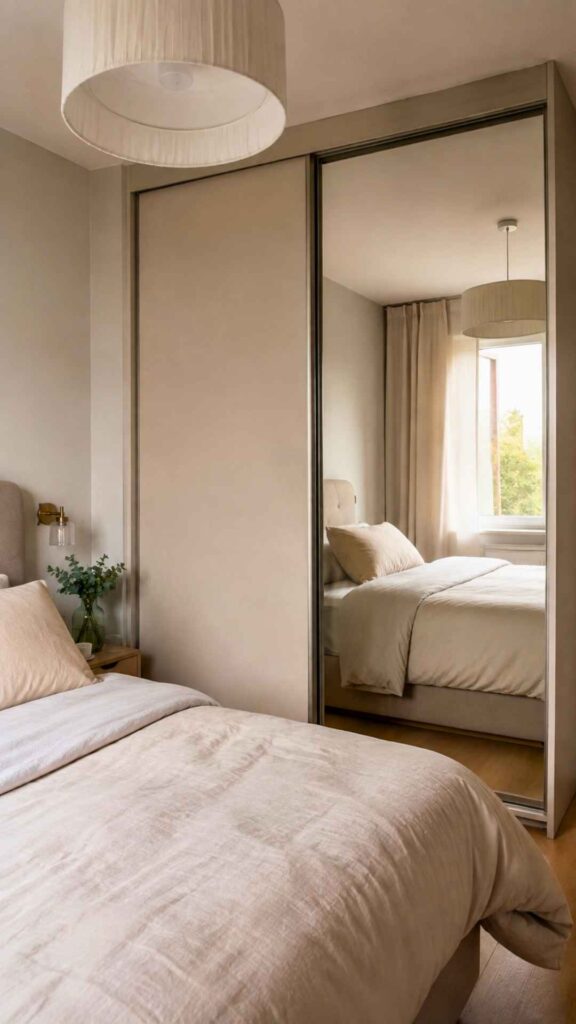
Mirrored panels can also reflect the room and available daylight, helping a large wardrobe feel visually less dominant.
Still, an entirely mirrored wall is not automatically the right answer. Some couples may find it too glossy or impersonal. Combining one reflective panel with quieter neutral doors can create a softer result while retaining the practical advantage of a full-length mirror.
5. Keep the Palette Calm, but Don’t Make Everything White
Small rooms are frequently painted entirely white because it is assumed to make them appear larger. Light colours can certainly help, but an all-white bedroom is not the only solution.
The better question is not whether dark colours are allowed, but where they should appear.
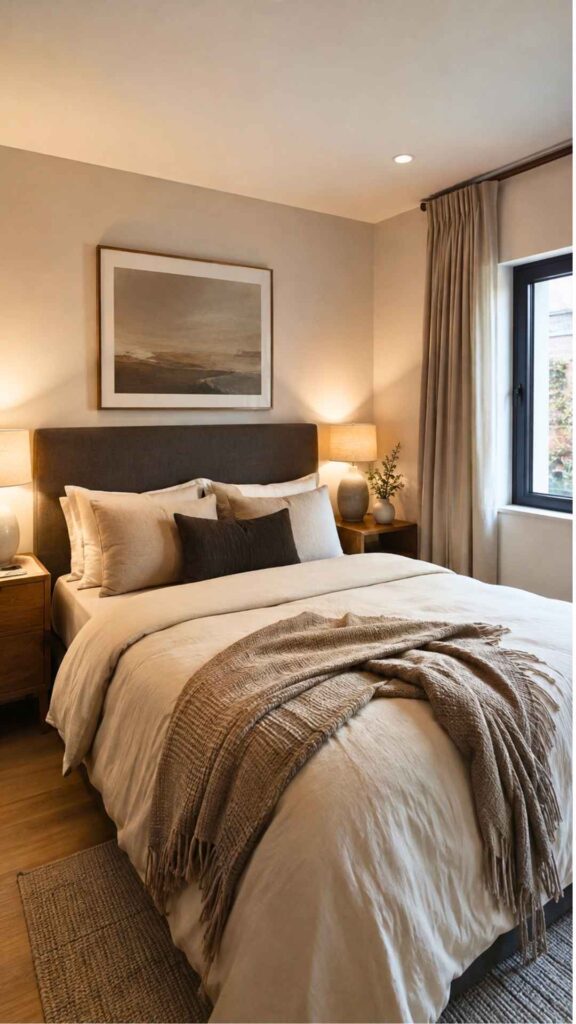
A darker cushion, headboard, artwork, bedside detail or throw can add depth without visually shrinking the whole room. Softer neutral walls then provide a calm backdrop that prevents the smaller space from becoming visually busy.
Texture matters here as much as colour. Bedding, curtains, upholstery and natural materials can give a restrained palette more character without introducing unnecessary clutter.
Soft lighting then gives those layers much more warmth.
6. Turn the Window Area Into Something Useful
The area beneath a bedroom window is often left unused, particularly when standard furniture does not fit comfortably there.
A narrow built-in bench beneath the window can become a reading spot, somewhere to put on shoes or even additional hidden storage.
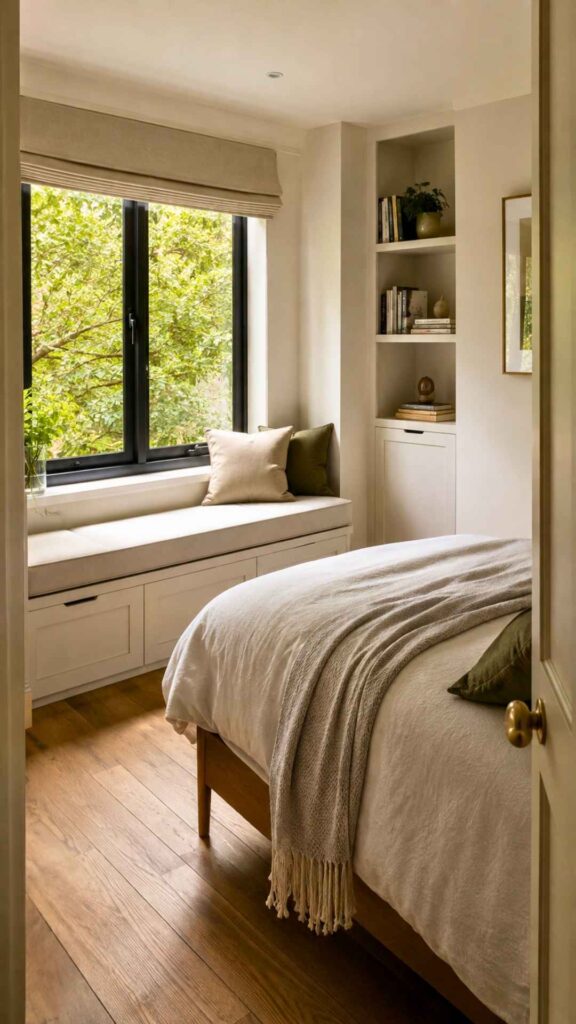
This type of seating can fit naturally beside the sleeping area without requiring enough space for a separate armchair.
For a couple, having somewhere other than the bed to sit can make a surprisingly noticeable difference. One person can read, work briefly or get ready while the other uses the bed without the entire room revolving around a single piece of furniture.
If the bench includes drawers or lift-up storage, it becomes even more useful.
7. Make One Piece of Furniture Do Two Jobs
A separate desk, dressing table, bookshelf and storage unit would be lovely, but where exactly would they all go?
In a small bedroom, furniture that performs two jobs begins to feel much more sensible.
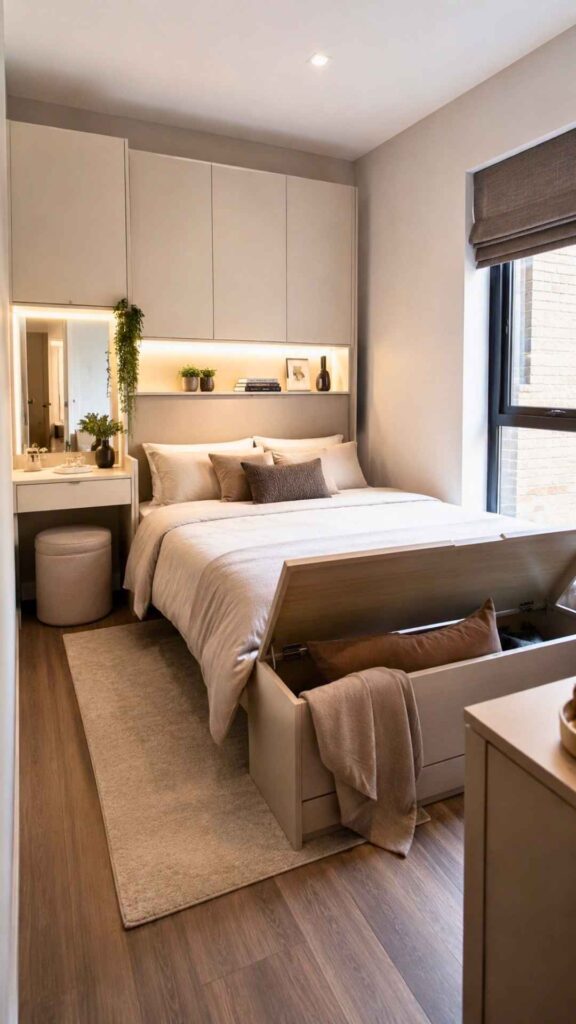
A slim desk might double as a dressing table. A window bench can hide blankets or extra bedding. A wall-mounted shelf may serve as both a bedside table and a small display surface.
This principle sits at the heart of many successful small bedroom ideas for couples layouts. Rather than asking how many pieces of furniture can fit into the room, consider how many functions each piece can perform.
Fewer, better-chosen pieces usually make a small room easier to move through and easier to keep tidy.
8. Take Curtains Higher Than the Window
Curtains can influence the proportions of a small bedroom more than expected.
Instead of fitting the curtain rail immediately above the window frame, taking it closer to the ceiling can make the wall feel taller. Allowing the curtains to fall almost to the floor strengthens that vertical effect.
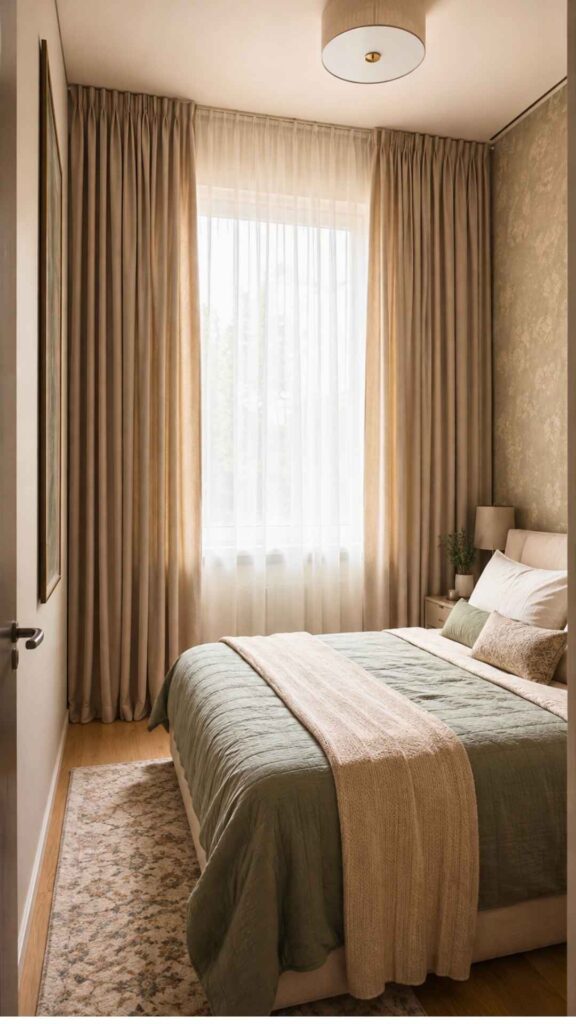
Long, softly falling curtains also add warmth without requiring another decorative object. Full-height fabric can frame the window and give the walls a stronger vertical feeling.
For couples wanting privacy as well as daylight, combining sheer curtains with a heavier outer layer can be particularly practical. During the day, the sheer layer maintains privacy while allowing natural light into the room. At night, the heavier curtain provides greater privacy and helps create a more restful sleeping environment.
9. Create a Small Shared Work or Getting-Ready Corner
Not every couple has the luxury of a separate study or dressing room. That can make a bedroom desk unavoidable, but it does not need to dominate the space.
A shallow wall-mounted surface with one chair can work for a laptop in the evening and toiletries or a mirror in the morning.
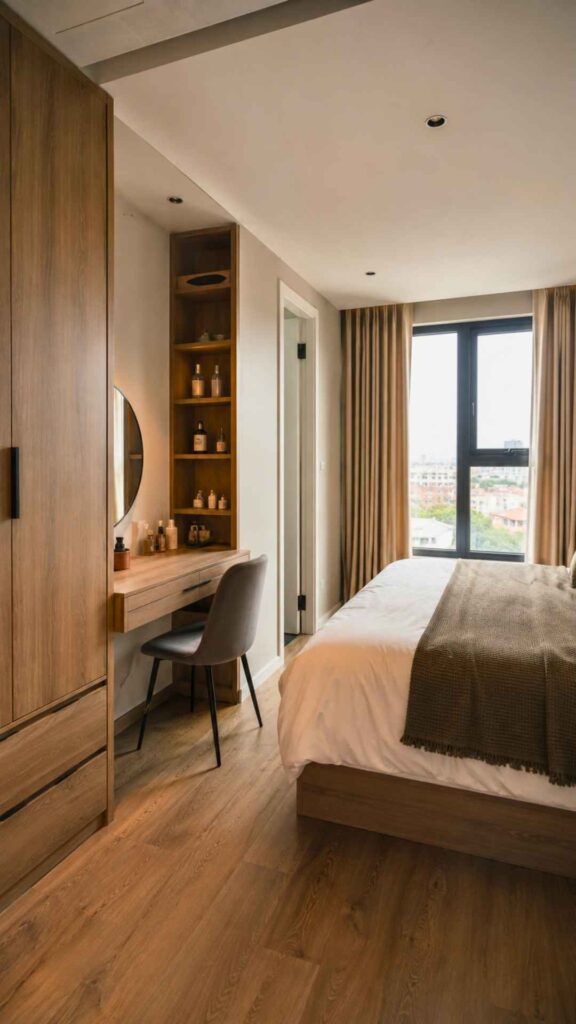
Rather than adding a full-sized desk as another separate piece of furniture, try integrating the workstation alongside existing storage. A desk surface extending from the wardrobe, for example, can create a more cohesive layout.
Keep cables, chargers and small accessories organised so that the surface can switch easily between uses.
For couples sharing a compact room, this flexibility matters. The same corner may need to support work, grooming, charging devices and occasional storage throughout the day.
10. Layer the Lighting Instead of Depending on One Ceiling Light
Reading, getting dressed and winding down before sleep all require different kinds of light. Depending on one bright ceiling fixture rarely serves all three activities particularly well.
Small bedrooms can actually benefit from several compact light sources, including wall-mounted reading lamps, concealed lighting around cabinetry and one softer general light.
Layered lighting is also a particularly useful option for couples sharing a small bedroom because the two people may not follow exactly the same routine.
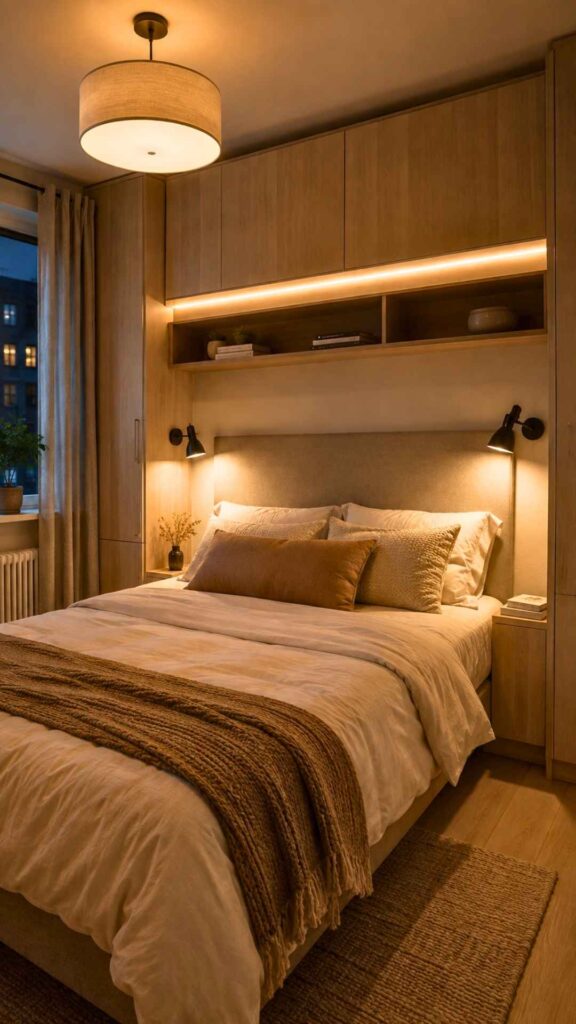
One person may want to read while the other is ready to sleep. Separate wall-mounted reading lights allow each person to control their side of the room without illuminating the entire bedroom.
This is one of those small bedroom ideas for couples spaces that improves the room not only visually but also practically. Good lighting responds to how two people actually use the bedroom at different times of day.
Final Thoughts: Making Small Bedroom Ideas for Couples Living Work in Real Life
The interesting thing about designing a bedroom for a couple is that square footage is only half the problem. The other half is deciding what deserves space.
Does each person really need a large bedside cabinet? Could seasonal clothes disappear underneath the bed? Would sliding wardrobe doors remove one everyday annoyance? Could a desk double as a dressing table? Would individual reading lights make different bedtime routines easier?
The most successful small bedroom ideas for couples living tend to answer these everyday questions rather than simply adding more furniture.
A small bedroom does not need to contain everything. It needs to contain the right things in the right places. Storage beneath the bed, better use of vertical space, slimmer furniture, flexible surfaces and layered lighting can make two people feel considerably more comfortable without increasing the room’s footprint.
When each design decision improves how the bedroom is actually used, a limited amount of space can begin to feel far more generous.