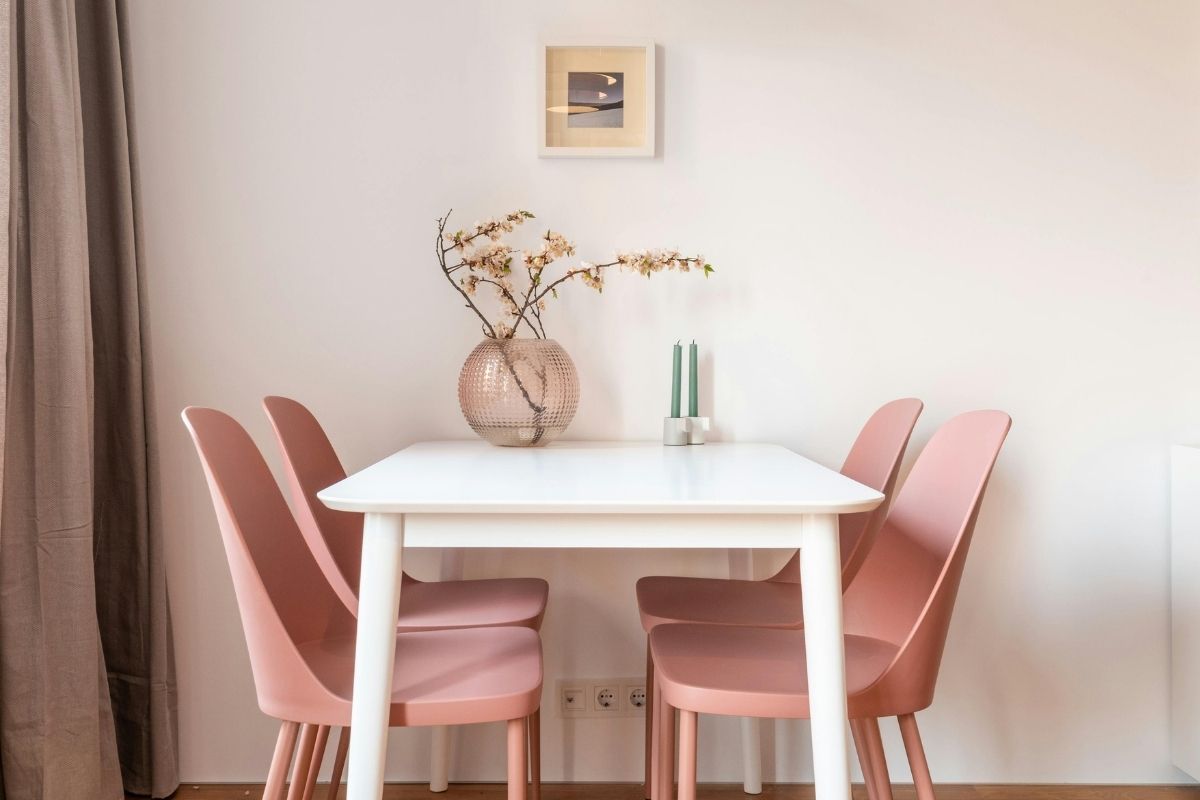
Explore 10 small dining room ideas and practical solutions for real-life homes, from choosing the right table size to improving circulation, storage, seating, and everyday functionality.
Living in a compact home brings challenges beyond simply fitting in a dining table: tight walking paths, the inconvenience of folding or moving furniture, a dining zone that disrupts the room’s flow, the challenge of balancing everyday needs with hosting guests, and clutter that constantly piles up. That’s why a small dining area needs to be practical for daily life, not just pretty. The ideas below focus on solving these common issues.
1. Choose the Right Dining Table Size for Your Needs
A common mistake in small spaces is buying a dining table that is larger than necessary. First, determine how many people actually dine together each day. If only two people live in the home, it is unwise to permanently dedicate valuable floor space to a large table that is used only occasionally. For a family of three or four, select a table size that adequately meets everyday needs.
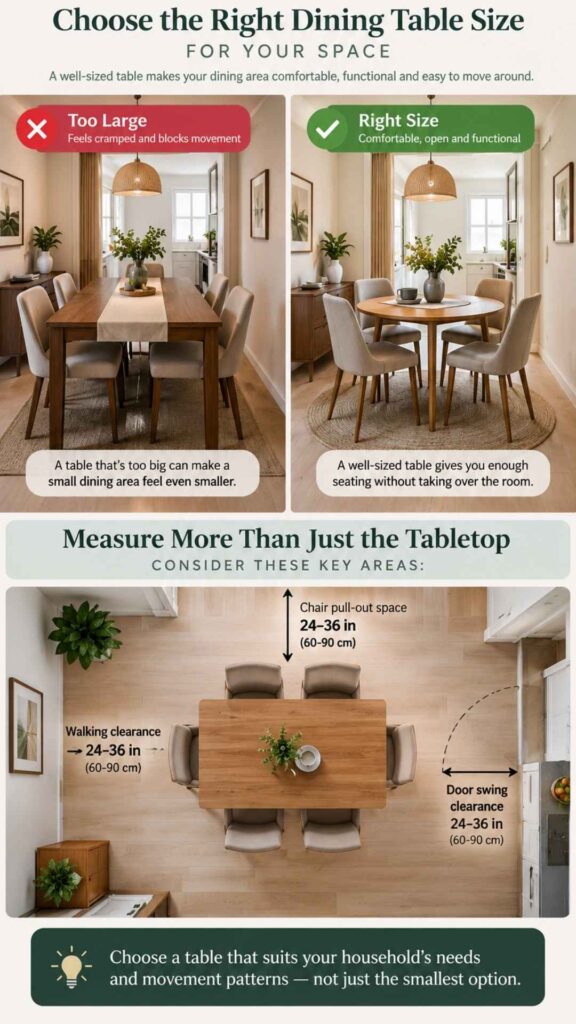
Before purchasing, don’t measure only the tabletop itself. Factor in the full depth of the chairs, the space required to pull them out, clearance for people walking behind them, and the swing of nearby doors or cabinets. This approach helps prevent buying an incorrectly sized table and makes better use of the available space. Instead of simply buying a small table, choose one that suits your household’s specific needs and movement patterns.
2. Plan Circulation Around the Dining Table First
In many dining spaces, a table might technically fit, but moving around it can become difficult. Finding that the walkway is blocked after purchasing chairs is a common issue. Before placing the table, identify the main walking paths in the room. Routes leading to the bedroom, kitchen, balcony, or living room should not be obstructed by dining furniture.
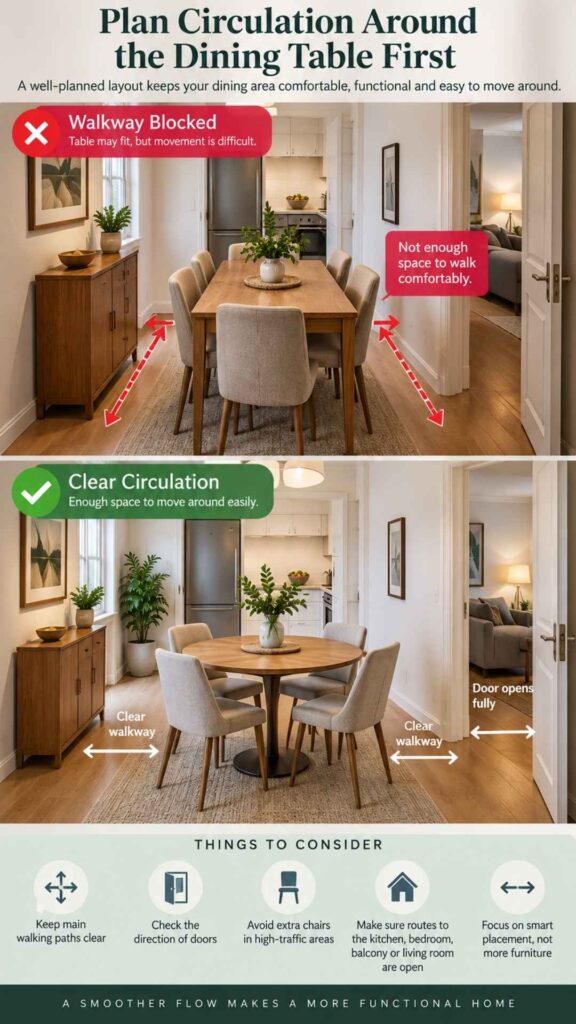
Avoid placing extra chairs in high-traffic areas, and pay attention to the direction in which doors open. If the dining area is situated in a main passageway, adjust the furniture placement to align with the flow of traffic. This creates a smoother experience and prevents people from constantly bumping into chairs or having to maneuver awkwardly around furniture. The focus should be on optimal furniture placement rather than simply having more furniture.
3. Incorporate the Space Near a Window Into Your Dining Setup
In many homes, the space near a window is used merely for decoration or placing plants. However, if there is a wide window sill or ledge, it can be incorporated into the dining setup. This can reduce the need for a separate dining area footprint.
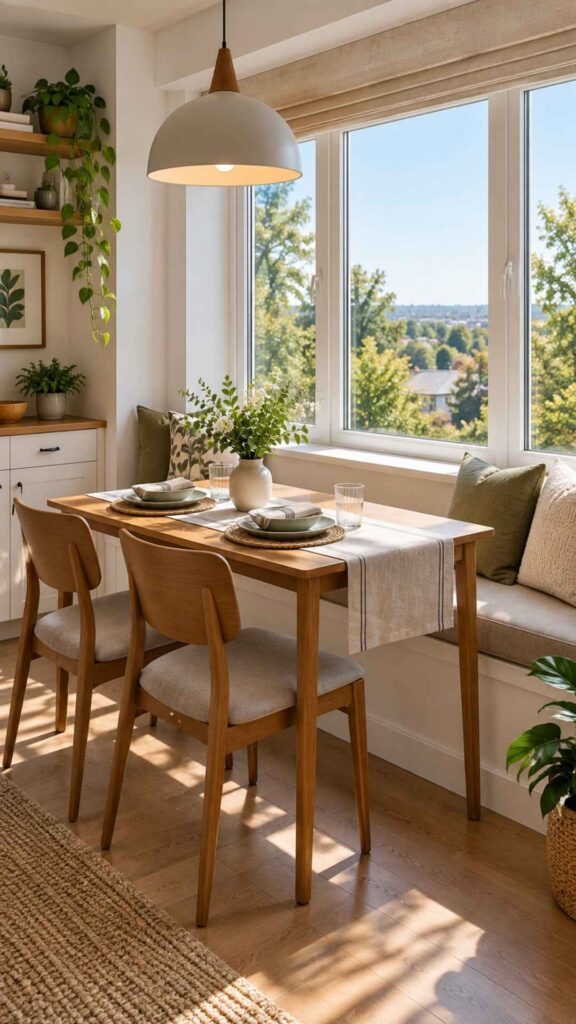
Placing a compact dining table in front of the window can create a naturally lit dining corner, provided the arrangement does not obstruct window operation or ventilation. If the sill itself isn’t suitable for seating, a slim bench or seating unit can be placed there instead. The primary benefit is that existing architectural space can be effectively used for dining.
4. Visually Separate the Dining Area From the Rest of the Room
In a small open-plan home, combining the dining and living areas can make the space feel cluttered. You don’t necessarily need physical partitions; the dining area can be subtly defined through elements such as a distinct pendant light, a unique wall treatment or artwork behind the table, and thoughtful furniture orientation.
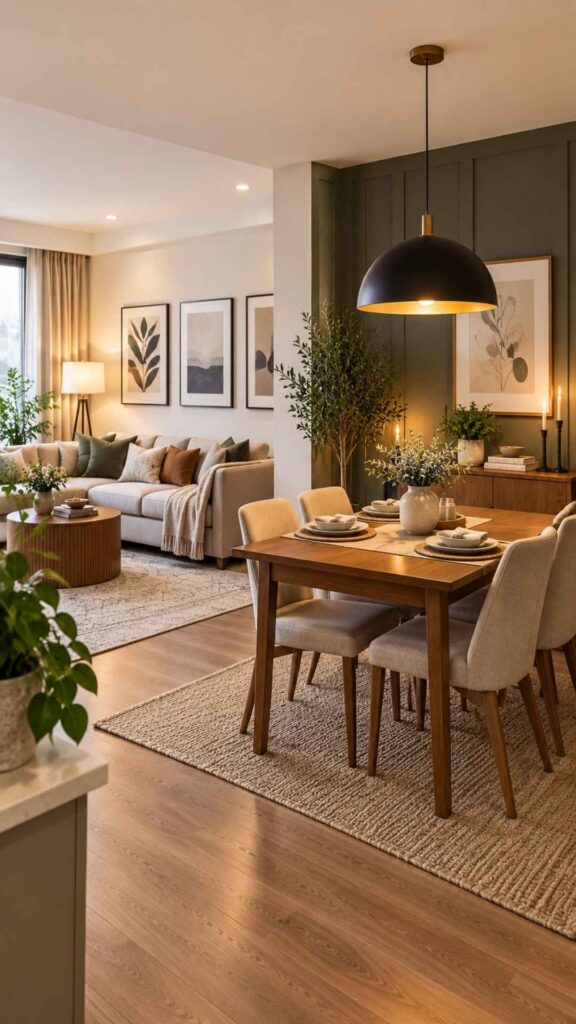
The goal is to create a visual boundary rather than enclosing the space. Instead of facing all the furniture in the same direction, arrange it according to specific zones. This can make even a small room appear more organized and intentional.
5. Keep Dining Essentials Close to Where You Need Them
Clutter in a small dining space often arises not from a lack of furniture, but from poor storage choices. If items such as plates, napkins, serving bowls, tablecloths, and dining accessories are kept too far from the kitchen, they can end up permanently cluttering the dining table.
Instead, use a small section of a sideboard or existing cabinet space near the dining area.
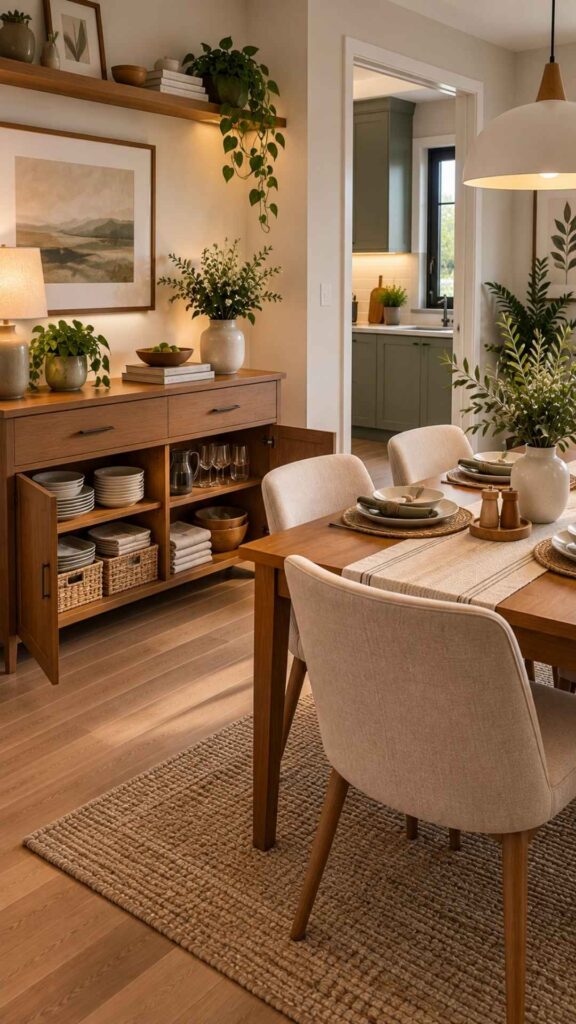
There is no need to store everything in the dining room; keep only those items that are frequently used during meals close at hand and store other items elsewhere.
The main advantage of this approach is that it prevents the dining table from becoming a dumping ground for storage. Simply buying another cabinet is not a universal solution; the focus should be on storage location and your daily routine.
6. Position the Table Correctly in a Long, Narrow Dining Space
A poorly positioned dining table can make a long, narrow room feel even more cramped. Deciding whether to place the table along the length or width of the room should not be based on appearance alone. Check which direction allows for better movement, makes it easier to pull out chairs, and provides clear access to doors and windows.
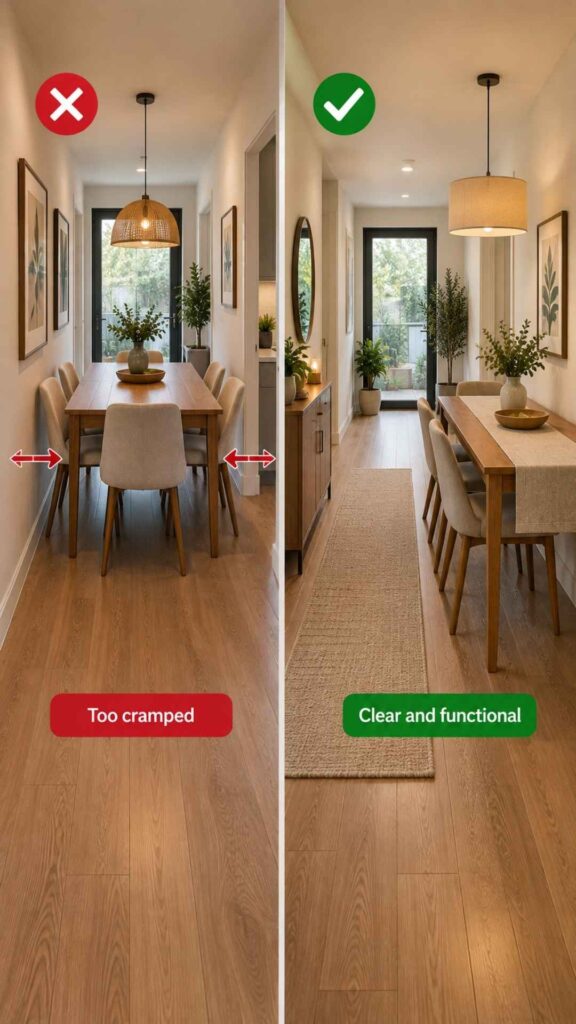
Leaving space on both sides of the table is not always necessary. If practicality demands it, position the table closer to one side. The primary benefit is that the dining area remains usable despite the awkward shape of the room.
7. Don’t Make a Dining Area for Two Larger Than Necessary
In many small homes, a permanent dining setup for four or six people occupies valuable floor space, even when only two people live there. If the daily requirement is for just two people, a compact setup is far more practical; a separate strategy can be used to accommodate guests.
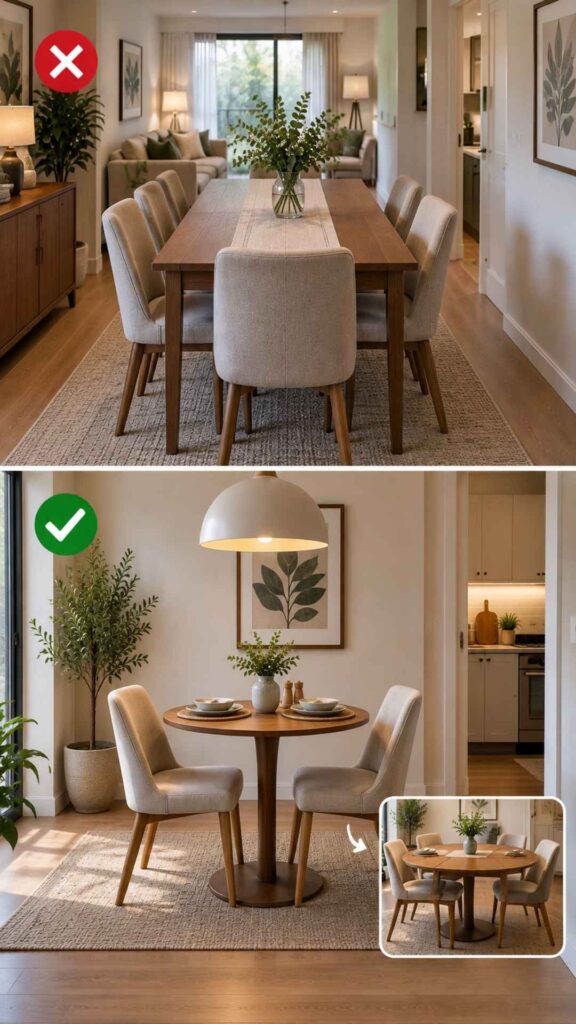
The dining area should be sized according to the household’s actual daily routine. The main benefit of this approach is that floor space is not wasted on furniture that isn’t used every day. This is particularly relevant for couples, studios, apartments, and compact homes.
8. Don’t Limit the Dining Area to One Purpose
In many homes, the dining table in a small space is already used for various activities, such as homework, laptop work, handling bills, crafting, or even food preparation. The problem arises when items related to these tasks permanently clutter the table.
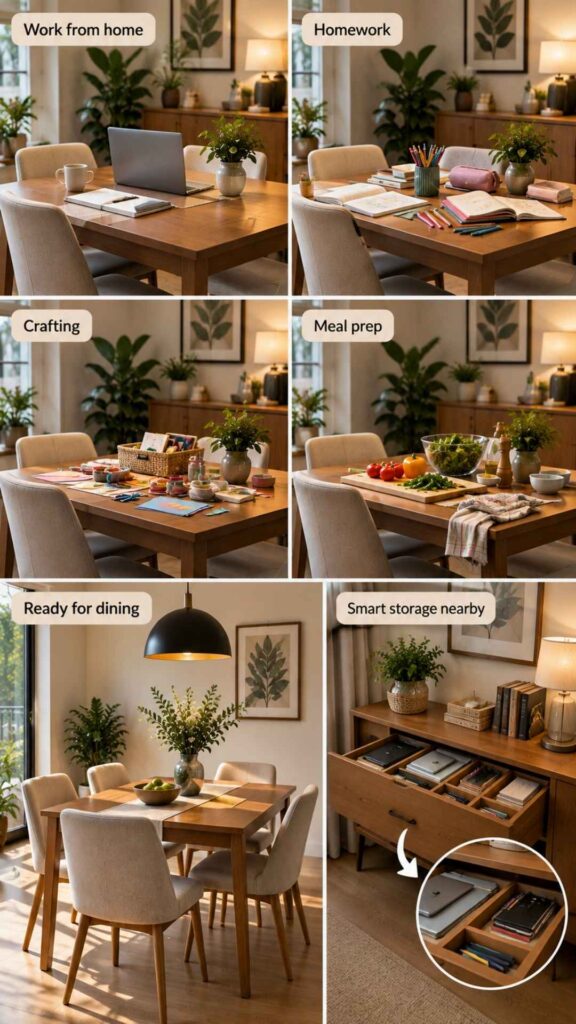
When designing a multifunctional dining surface, it is essential to plan a simple “reset routine.” Laptops, stationery, and paperwork should be put away in their designated storage, leaving the dining surface clear. A small nearby organizer or a dedicated storage spot can make this easier.
The key benefit is that a single piece of furniture serves multiple purposes without turning the dining area into a permanent workstation.
9. Consider Chair Footprint, Not Just Appearance
In a small dining room, chairs are just as important as the table. While large, comfortable chairs may look attractive, they can have a significant physical footprint. When buying chairs, consider their total depth, specifically how far they slide under the table and how much clearance remains for movement behind them.
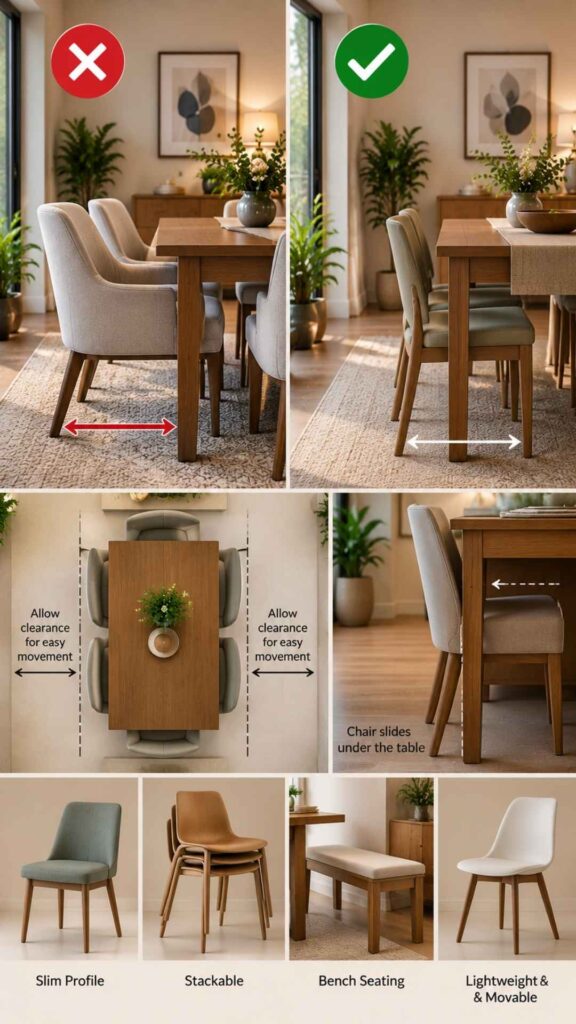
A practical chair is one that can be easily pushed under the table after a meal. Depending on your needs, stable yet easily movable seating can also be useful. The main benefit is that the usable space in the dining area won’t be unnecessarily consumed by oversized chairs.
10. Reduce Visual Clutter Instead of Adding More Decoration
A small dining room often feels cramped not because of the furniture itself, but because of visual clutter. Appliances, paperwork, bottles, and miscellaneous items constantly sitting on the table can make the space look crowded.
Keep decorations in the dining area minimal and ensure that surfaces remain usable. A single focal element, such as a piece of artwork, a mirror, a pendant light, or a plant, is often sufficient.
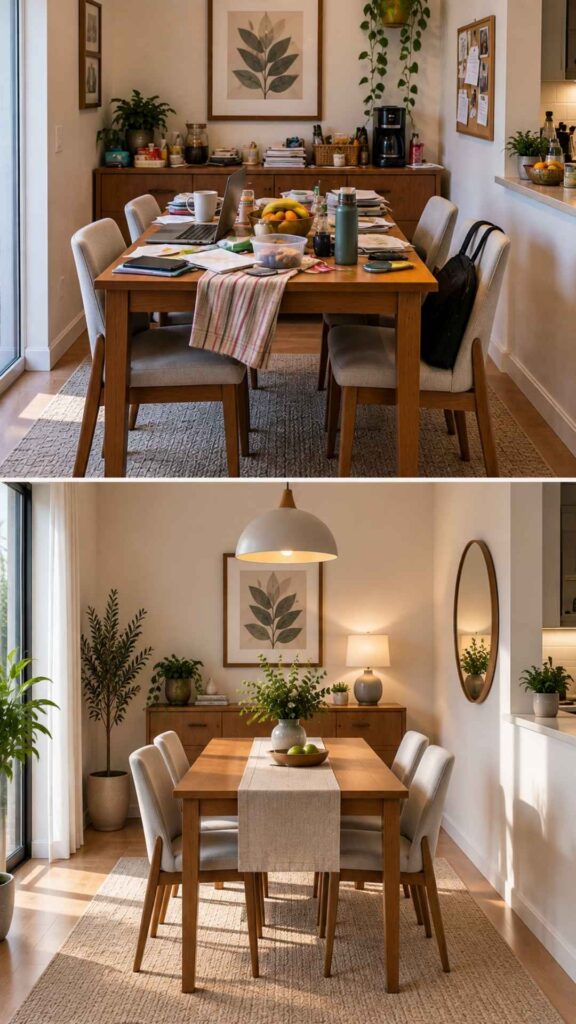
Instead of cluttering the space with numerous small decorative objects, choose a few purposeful pieces. Also, keep surrounding surfaces tidy so that the dining table stands out as a distinct feature.
The main benefit of this approach is that the dining area feels calmer, cleaner, and more open without the need for renovations or major furniture changes.
Final Thoughts
Making a small dining space work successfully isn’t just about buying a small table; it requires a smart approach that considers measurements, traffic flow, household needs, storage, and daily routines. Since every home faces unique challenges, a one-size-fits-all solution won’t work. Issues might range from awkward room shapes to seating constraints or a lack of storage.
The ideal setup is one that is easy to use, doesn’t obstruct pathways, meets daily needs, and keeps the home organized. Instead of trying to make a small space look bigger, focus on making the available space function more effectively.