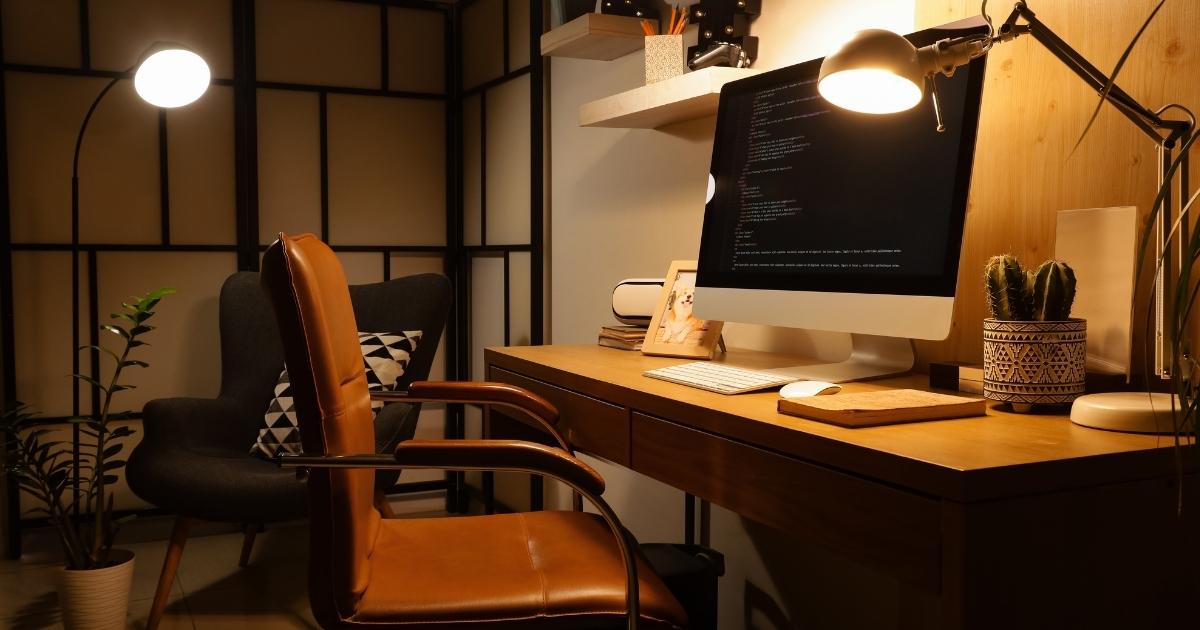
Discover 10 practical small home office storage ideas to reduce desk clutter, organize office essentials, and make the most of limited space.
A small home office often lacks a dedicated room. Instead, it might be a corner of a bedroom, a section of the living room, or a workspace set up against a small wall. This area usually includes a desk for a laptop, papers, chargers, a printer, stationery, and other office supplies—items that can quickly pile up.
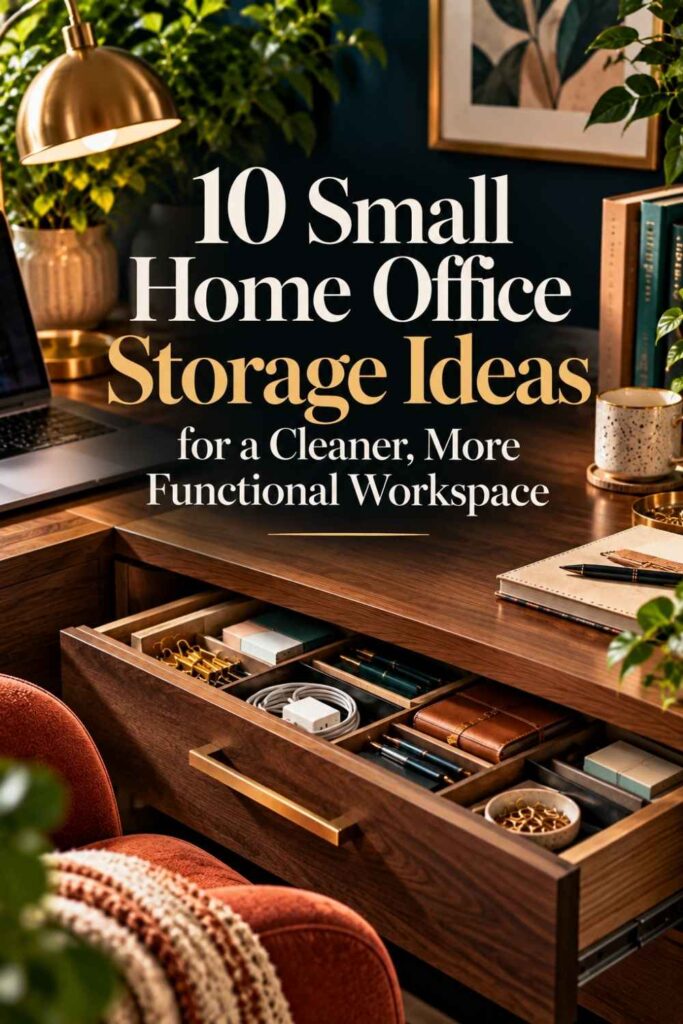
As things become mixed up, buried, or difficult to find, the workspace can feel as though it does not have enough storage. However, the issue is not simply a lack of storage space; poor storage placement and limited workspace can also contribute to clutter.
Adding large cabinets or extra furniture can further reduce walking space and usable floor area.
Here are 10 practical storage solutions that make better use of your existing home office space, helping you manage daily clutter while keeping your workspace functional.
Part 1 — Make Better Use of the Space Around Your Desk
The primary goal of Part 1 is to make better use of the space around your desk without making the workspace feel crowded. These ideas focus on using vertical and surrounding space, keeping frequently used items within easy reach, maintaining a clear desk surface, and choosing storage that does not interfere with chair movement or floor space.
1. Desk Is Small? Add Under-Desk Storage
On a small desk, there is often little room for storage once a laptop, notebook, and other work essentials are in place. Adding a side cabinet can also restrict chair movement and take up valuable floor space.
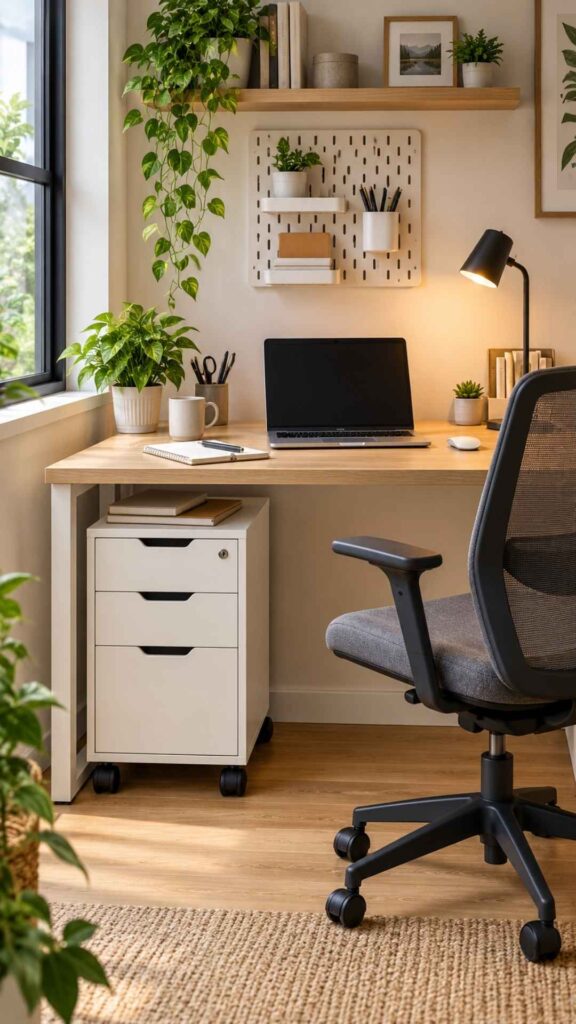
A better solution is to use slim under-desk drawers or a rolling under-desk cabinet that fits neatly beneath the workspace. The main benefit is that it keeps the desk surface clear while adding extra storage without increasing the overall footprint.
2. Instead of Putting Everything on the Desk, Create Vertical Side Storage
Notebooks, stationery, and small office accessories can quickly clutter a small desk, while the vertical wall space often goes unused. A practical solution is to install narrow vertical organizers or wall-mounted shelves to keep these items off the desk.
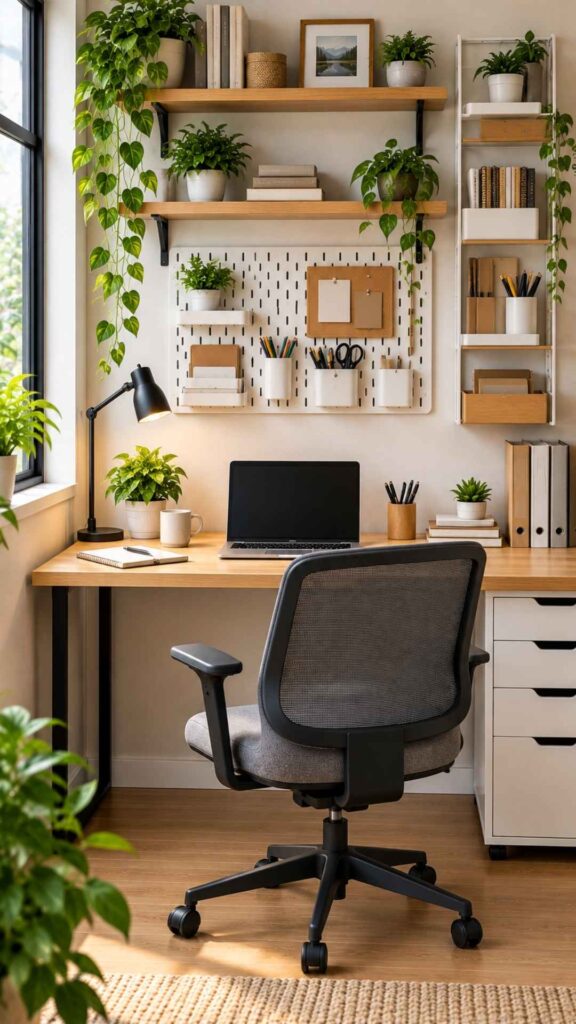
Place frequently used supplies at eye or hand level for easy access. The main benefit is that vertical storage keeps the workspace clear while making use of wall space instead of taking up valuable floor area.
3. Is the Printer Taking Up Valuable Desk Space? Give It a Compact Zone
Printers can take up a significant amount of space on a small desk, reducing valuable workspace even when they are not in use. Instead of giving the printer a permanent spot on the desk, use a rolling printer cart, nearby shelf, or dedicated printer shelf inside a storage cabinet.
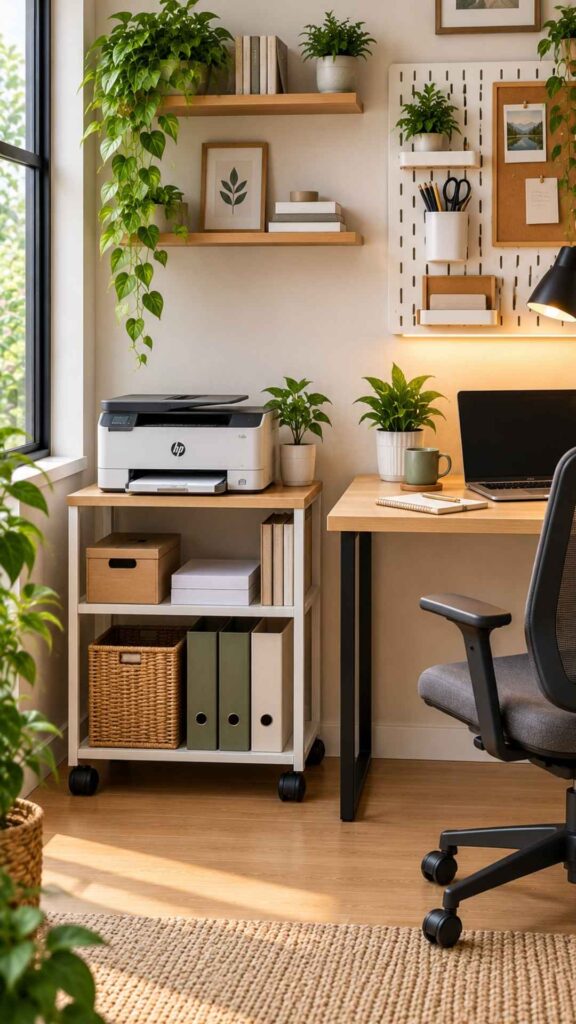
This keeps the main work surface clear and provides compact home office storage without adding another large piece of furniture.
4. Prioritize Clearance When Adding Storage Behind the Chair
In a small home office, the space behind the chair can provide useful storage, but deep cabinets may interfere with chair movement.
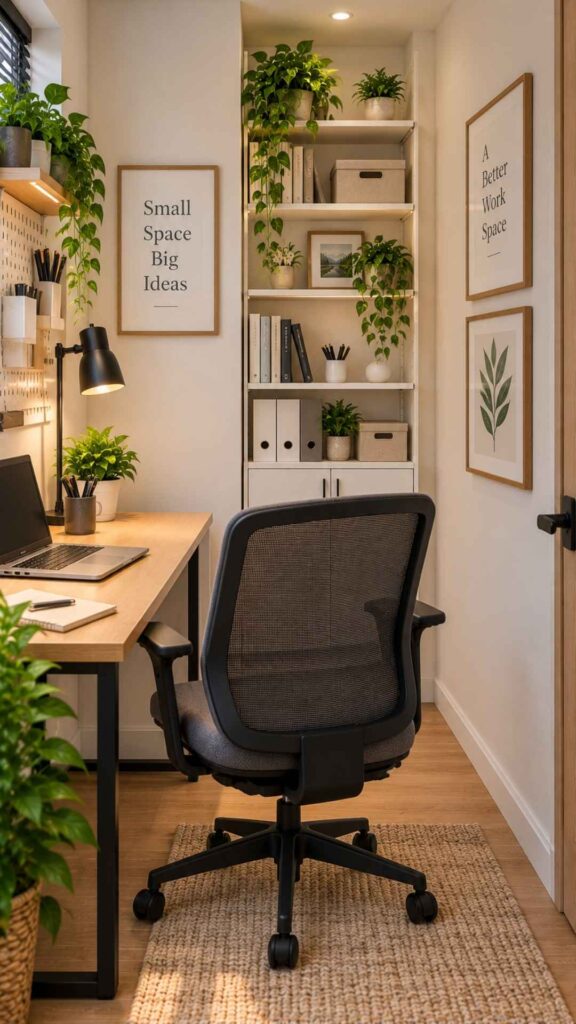
A better option is to use shallow cabinets or slim vertical shelving that fits neatly against the wall. This makes use of otherwise wasted space while providing extra storage without crowding the workspace or limiting the chair’s movement.
Part 2 — Organize Papers, Tech, and Small Office Items
Part 2 focuses on organizing the everyday items that can quickly create home office clutter, including cables, chargers, electronics, paperwork, and small accessories. The goal is to keep frequently used items easy to access, separate active documents from archived papers, and give small office supplies dedicated storage instead of leaving them scattered in drawers.
5. Create a Dedicated Tech Zone for Cable Clutter Behind the Desk
Cables for laptops, monitors, keyboards, phones, and chargers can quickly become tangled in a small workspace, creating a messy and cluttered look. A practical solution is to create a dedicated cable management zone behind or under the desk using cable trays, adhesive clips, cable sleeves, and a mounted power strip.
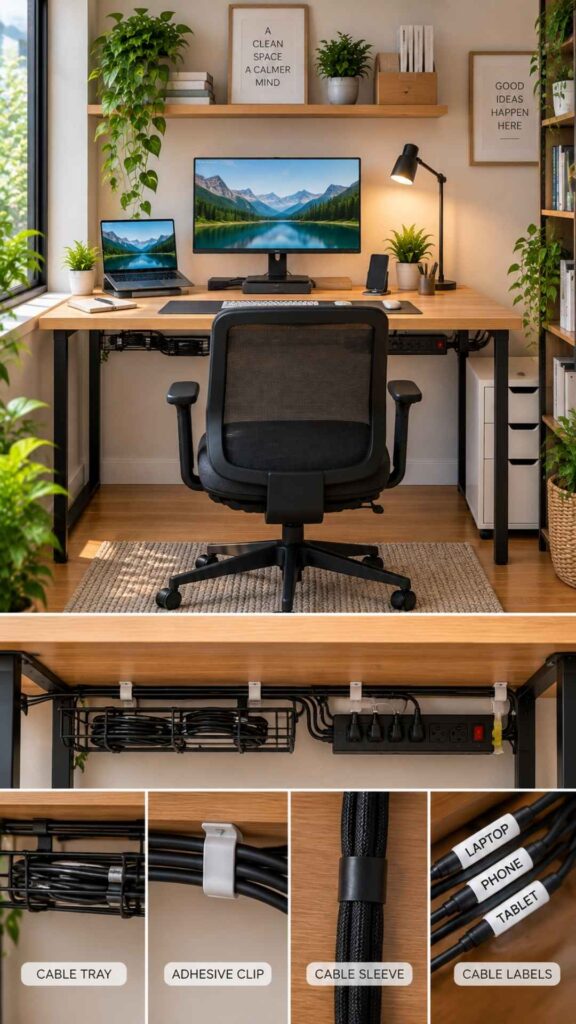
Use simple labels or loops to keep charging cables organized and easy to identify. This helps reduce cable clutter in a small home office and makes cleaning, troubleshooting, and finding the right cable much easier.
6. Keep “Active Paper” and “Archive Paper” Separate
Keep active and archival papers separate instead of storing them together. Documents, notes, and printouts can quickly pile up, making important papers harder to find when everything is kept in one place. Use a small file holder for current documents and a separate, enclosed box for papers you need to keep but rarely access.
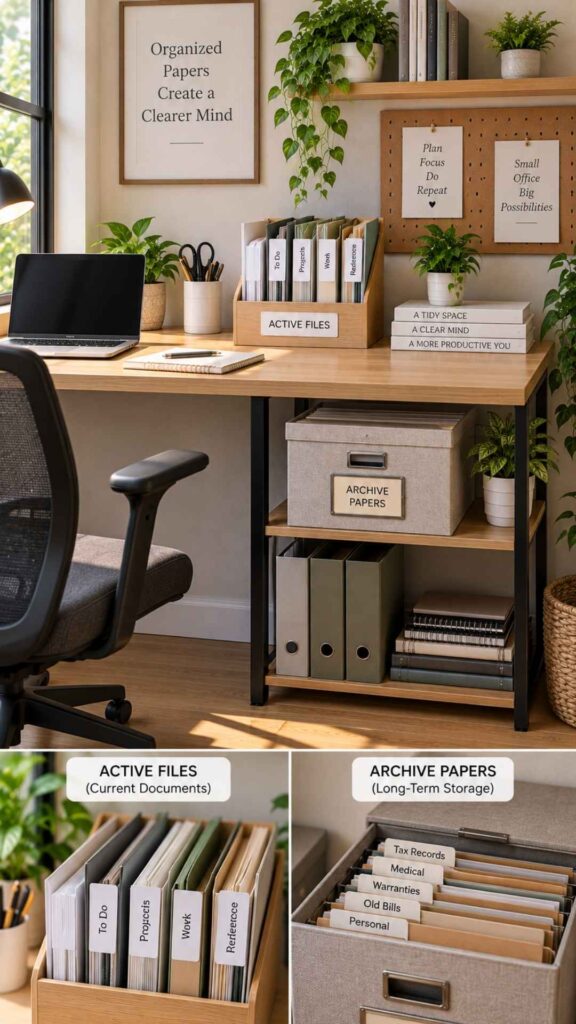
Keep frequently used files within easy reach so you can find what you need without digging through a stack. This simple system helps reduce paper clutter in a small home office and keeps essential documents easy to locate.
7. Use Drawer-in-Drawer Organization for Small Office Accessories
Tiny items such as sticky notes, USB drives, adapters, SD cards, memory cards, and small tools can easily get lost in a large drawer, making it harder to find what you need. A simple solution is to add a smaller drawer inside the main drawer or use adjustable dividers, shallow trays, and compartment boxes to separate smaller items.
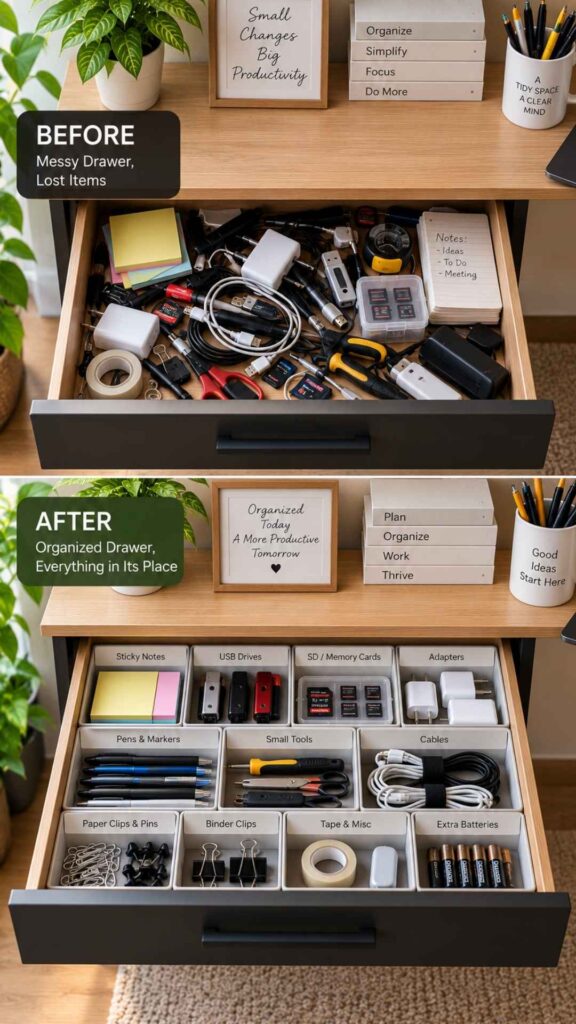
Giving frequently used office accessories their own designated spaces keeps them visible, organized, and easy to access without having to search through the entire drawer.
Part 3 — Keep the Home Office From Taking Over the Room
Part 3 focuses on keeping a small home office organized in a shared or multipurpose room, such as a bedroom or living room. These solutions help keep office equipment and paperwork contained, make it easier to reset the workspace after work, and use flexible storage that blends naturally with the rest of the room while remaining practical.
8. Create Hidden Home Office Storage Inside a Closet or Cabinet
Without a dedicated home office, work equipment can easily remain in the bedroom or living room, making the space feel like a permanent workspace. A practical solution is to create a hidden home office storage zone inside a closet or cabinet.
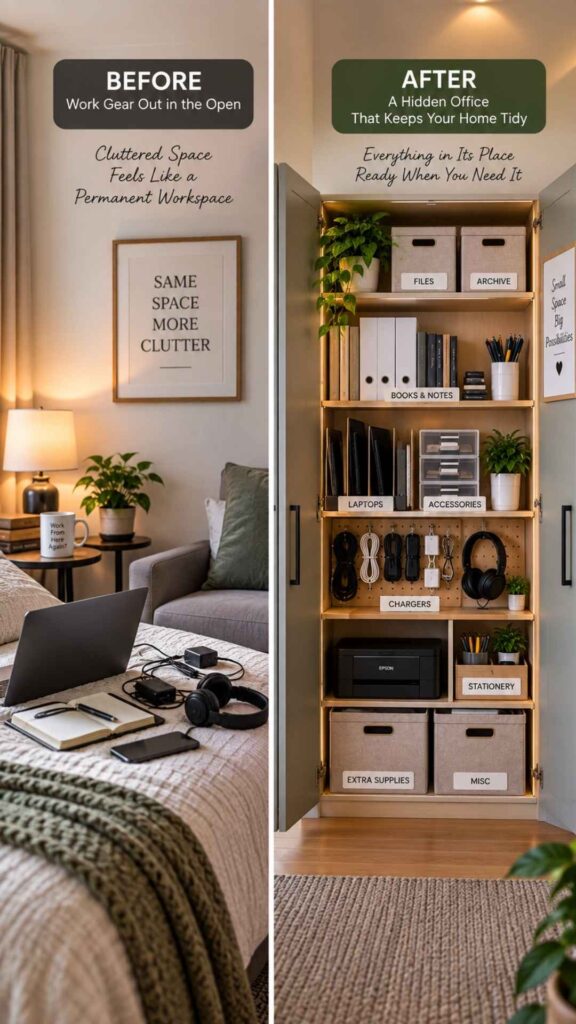
Use adjustable shelves and dedicated compartments to store laptops, files, chargers, and other office accessories. When the workday is over, simply close the doors to keep everything out of sight. This approach helps maintain a tidy shared space while keeping your small home office setup ready to use when needed.
9. Create a Portable Work-Reset Box
In a shared room, work essentials like notebooks, chargers, mice, headphones, and papers can easily end up scattered after you finish working. Putting each item away in a different spot every day can also be time-consuming. Instead, use a handheld storage box or portable caddy to keep these essentials together.
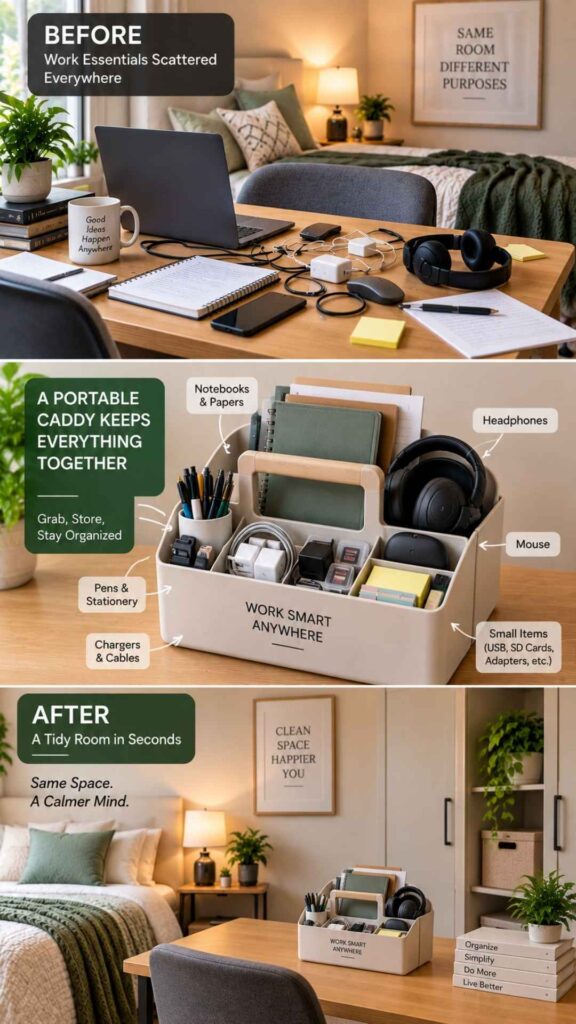
At the end of the workday, simply move the caddy to a designated storage spot and clear the workspace. This makes it easier to reset a multipurpose room while preventing small office items from cluttering desks, tables, and other surfaces.
10. Integrate Storage Furniture With the Room’s Existing Furniture
Adding new cabinets to a small home office can make the room feel crowded and may create a mismatch with the furniture already in the space. A better solution is to integrate office storage into existing furniture, such as bookshelves, wardrobes, or built-in cabinets.
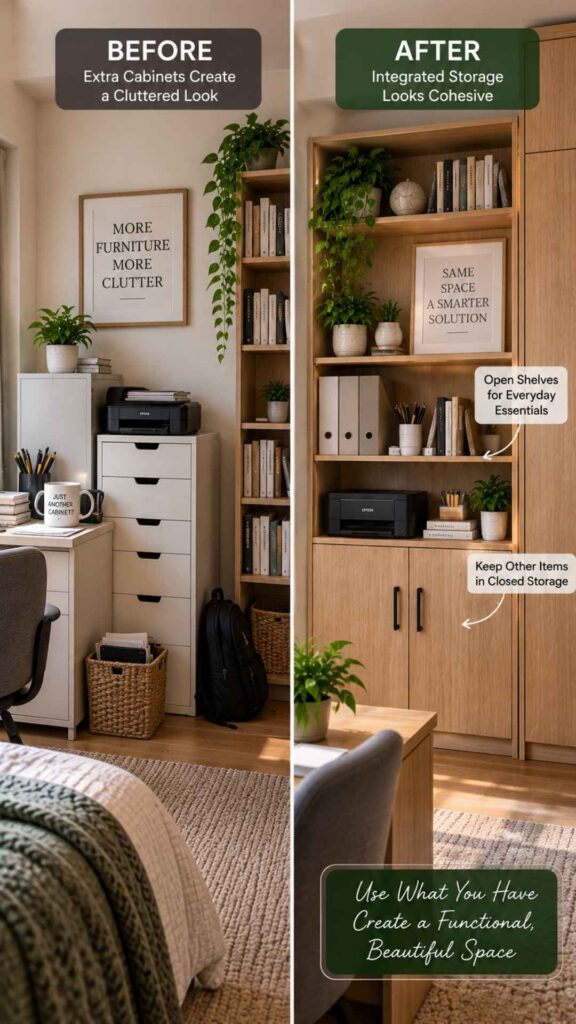
Use open shelves for frequently used items that are neat enough to display, while keeping less attractive or rarely used supplies in closed compartments. Making use of existing storage instead of adding more furniture helps keep the small home office organized without making the room feel overcrowded.
Final Thoughts
To keep a small home office organized, start by identifying where clutter builds up most often. Instead of using the desk surface for everything, make better use of vertical and hidden storage spaces.
Keep technology, paperwork, and small office accessories in separate storage areas so they are easier to find. In a shared bedroom or living room, portable and concealed storage can be especially useful.
Rather than adding too many organizers, choose only the solutions that make your daily work easier. The goal is not simply to add more storage, but to create a small home office that feels open, functional, and easy to maintain.