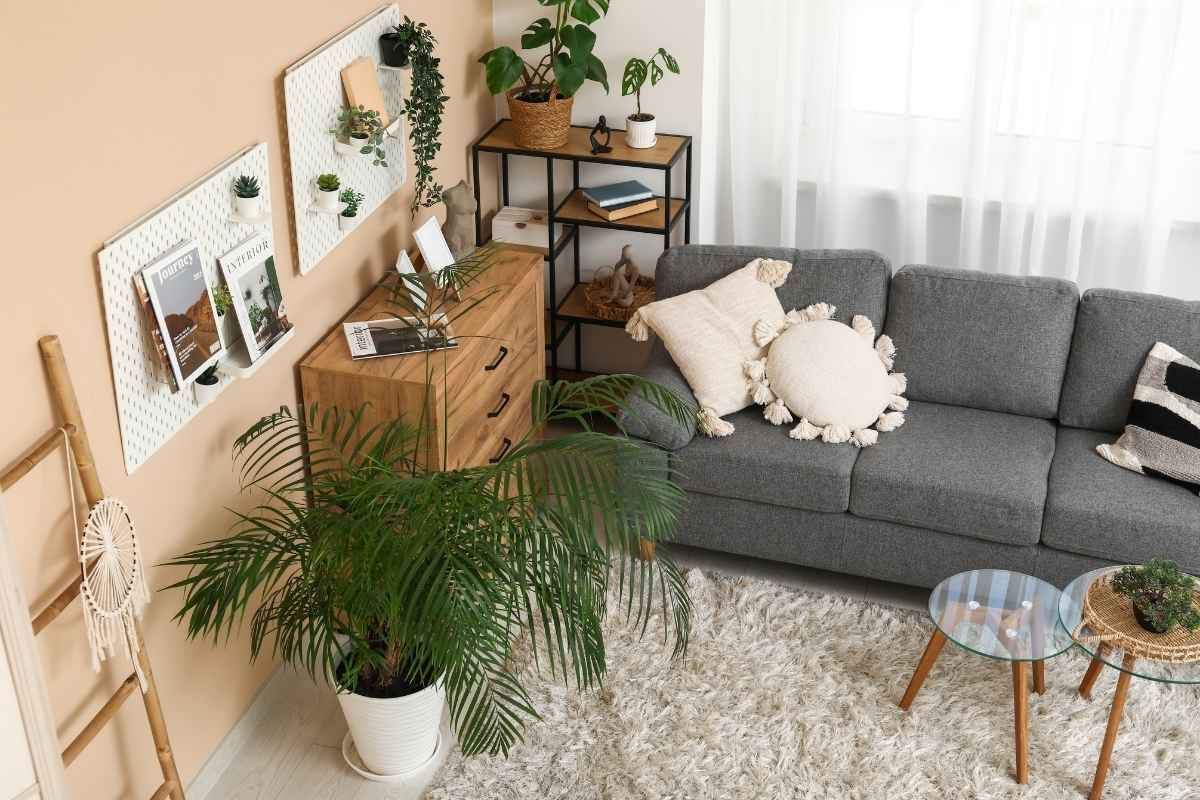
Discover 10 small living room storage ideas that reduce clutter, use overlooked spaces, and add practical storage without taking up valuable floor space.
Small living rooms have limited floor space but still need to accommodate everyday belongings. In a small space, simply adding furniture can make the room look cluttered and difficult to organize.

The solution isn’t just buying more storage units, but rather utilizing overlooked areas—such as the space behind the sofa or narrow gaps—and choosing furniture that serves multiple purposes.
In this article, we highlight common clutter-related issues in small living rooms and offer solutions that save floor space while making it easy to organize everyday items.
Part 1 — Turn Wasted and Hidden Space Into Storage
Our primary focus is to identify unused storage opportunities in the room that are often overlooked. Whenever possible, keep storage concealed or integrated into the walls. Since compact living rooms have limited space, make the most of the areas you already have instead of adding more furniture.
1. Turn the Empty Space Behind the Sofa Into a Hidden Storage Zone
There is often a narrow, unused space between a sofa and the wall behind it. Standard cabinets or furniture do not fit into such tight spaces, yet in small rooms, even a few inches of space are valuable.
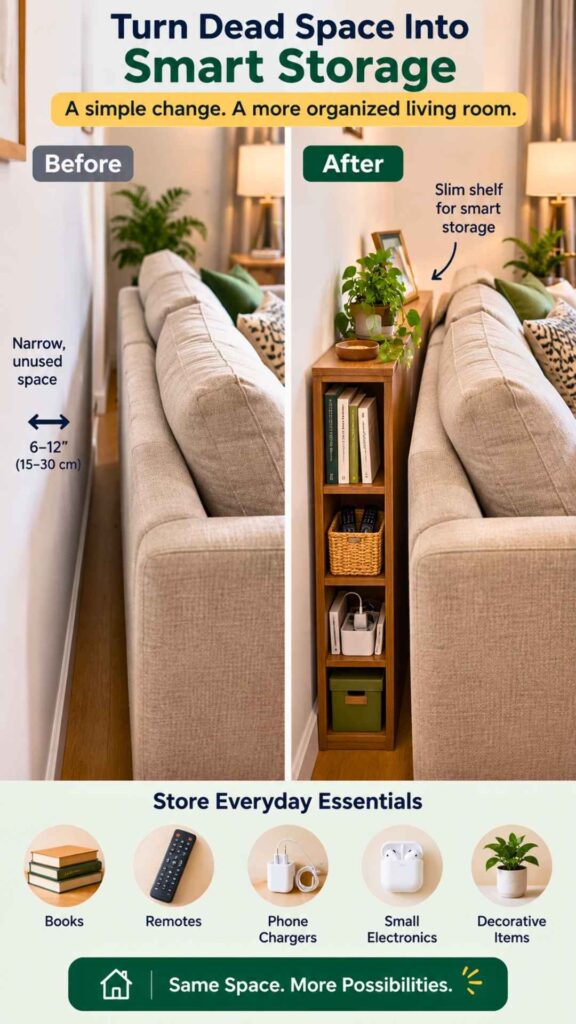
By pulling the sofa slightly forward, you can install a slim console or a narrow shelf behind it to store books, remotes, phone chargers, small electronics, or decorative items. Creating a custom, ultra-narrow storage unit here allows you to utilize otherwise wasted dead space. This eliminates the need for a separate bulky storage unit and preserves valuable floor space.
2. Turn the Sofa Arm Into a Mini Storage Station
The sofa already occupies space, so make the sofa itself contribute to storage rather than adding another piece of furniture. Choose a sofa that incorporates a mini storage compartment in the armrest. You can store small items like remotes, phones, glasses, and magazines in the armrest.
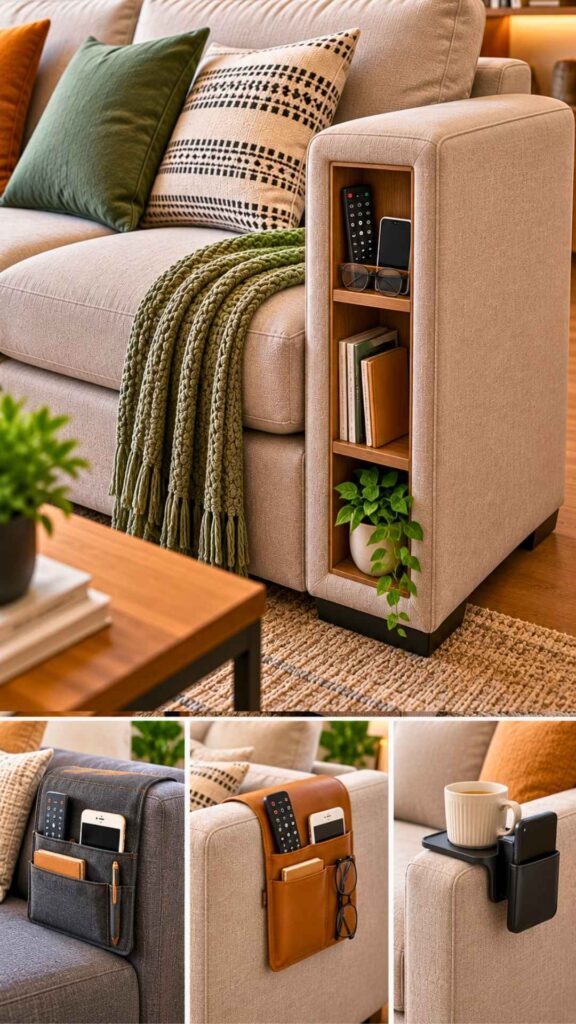
Alternatively, you can use armrest organizers, hanging side pockets, or clip-on holders to keep daily essentials within easy reach without occupying extra floor space, which also helps reduce clutter around the sofa.
3. Turn a Living Room Architectural Alcove or Recess Into Storage
Recessed wall sections often remain unused because standard furniture or cabinets do not fit well, and placing units on the floor can make the room feel cluttered. The solution is to use the full height of the recess by installing closed cabinets or drawers, creating a seamless, integrated look with the wall.
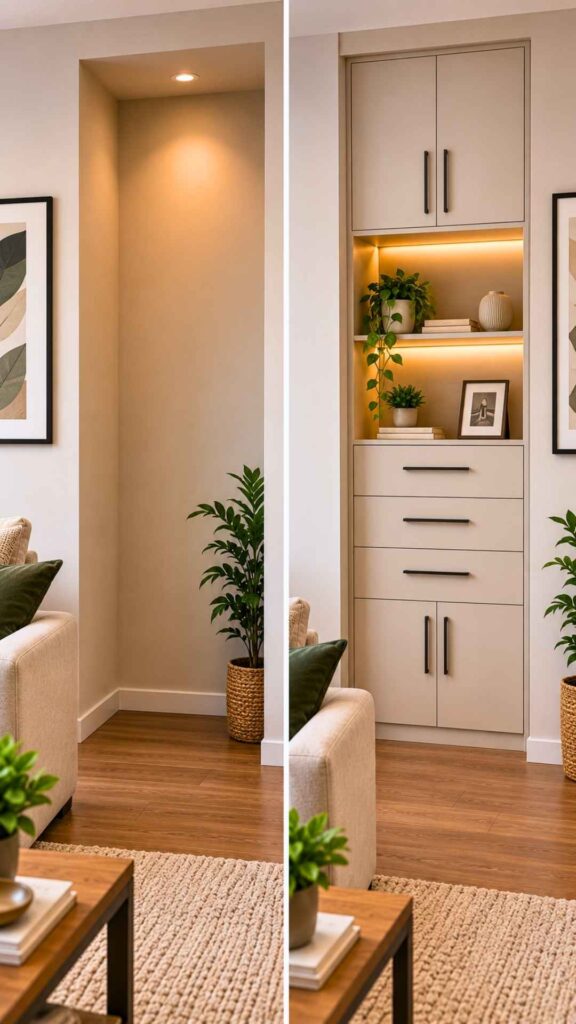
This approach transforms an awkward architectural space into a functional storage area, eliminates the need for freestanding furniture, and makes better use of vertical space.
4. Control Floor-Cluttering Cables With Hidden Cable Storage
Items like TVs, routers, speakers, lamps, phone chargers, and laptop chargers often result in visible, unsightly tangles of cords and cables on the floor.
To avoid this visual clutter, you can use solutions such as adhesive cable clips, raceways, cable channels, or cable management boxes. Additionally, routing wires behind furniture or along the edges of walls helps the living room look much more organized.
Part 2 — Make One Piece of Furniture Serve Multiple Functions
The primary goal in this section is to avoid needing separate furniture for every activity in a small living room. Instead, choose pieces that serve two or three functions, making better use of the space you already have.
Look for furniture with concealed storage and a practical balance of open and closed compartments. The goal is to increase functionality without increasing the furniture footprint or making the room feel crowded.
5. Add Hidden or Lift-Top Storage to a Coffee Table
Items like TV remotes, electronic gadgets, and accessories tend to clutter the coffee table, yet there is often no dedicated space to keep them organized. To address this, you can opt for a lift-top coffee table or one with hidden compartments, such as drawers or storage beneath the tabletop.
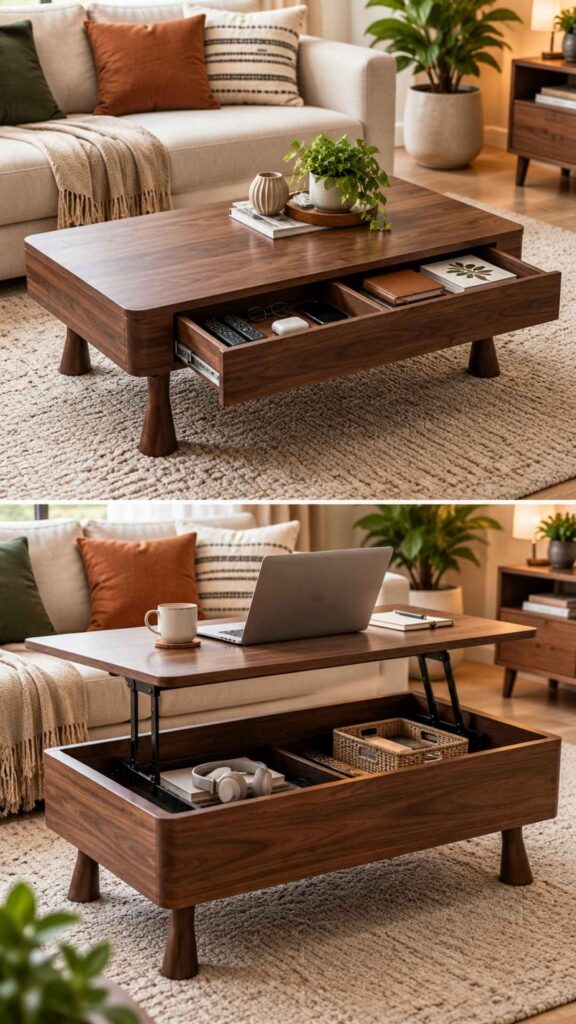
These solutions allow you to keep frequently used items out of sight while keeping the table surface tidy. A single piece of furniture can therefore provide both a functional tabletop and convenient storage.
6. Use Closed and Open Modular Storage on the TV Wall
The TV area often becomes cluttered with game consoles, remote controls, chargers, and decorative items. Filling the entire wall with closed cabinetry can make the room feel heavy and disrupt the living room’s interior aesthetics. The solution lies in modular wall units that combine open shelves with closed compartments.
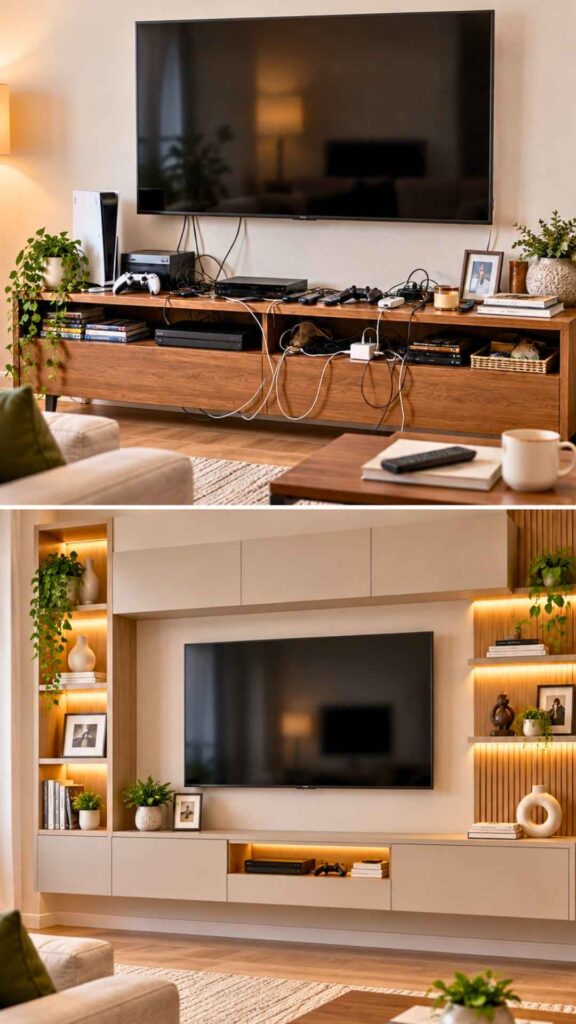
An asymmetrical yet flexible arrangement can provide visual balance while allowing you to display selected items and conceal everyday essentials. Incorporate storage wherever possible to increase functionality while keeping the floor area free of bulky furniture.
7. Turn a Storage Ottoman Into a Mobile Storage Hub
Living rooms need both built-in and hidden storage for items like blankets, remotes, and magazines. However, adding extra cabinets can clutter the space with too many furniture pieces. Instead, opt for a mobile storage unit with casters, allowing you to reposition it as needed.
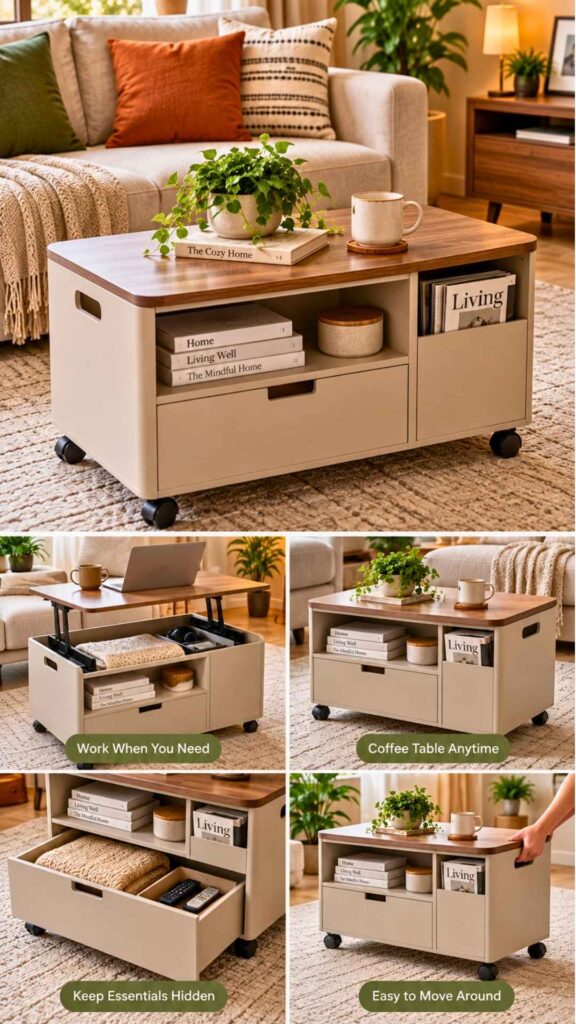
Choose a design with a tabletop so it can serve as both storage and a temporary table—a single piece that fulfills multiple needs. You can easily move it around the room according to your requirements, reducing the need for fixed furniture.
8. Use Nesting or Stackable Seats to Keep Extra Seating Compact
You don’t need extra seating every day; additional seats are usually required only when guests visit. Keeping extra chairs out all the time takes up valuable floor space in the living room.
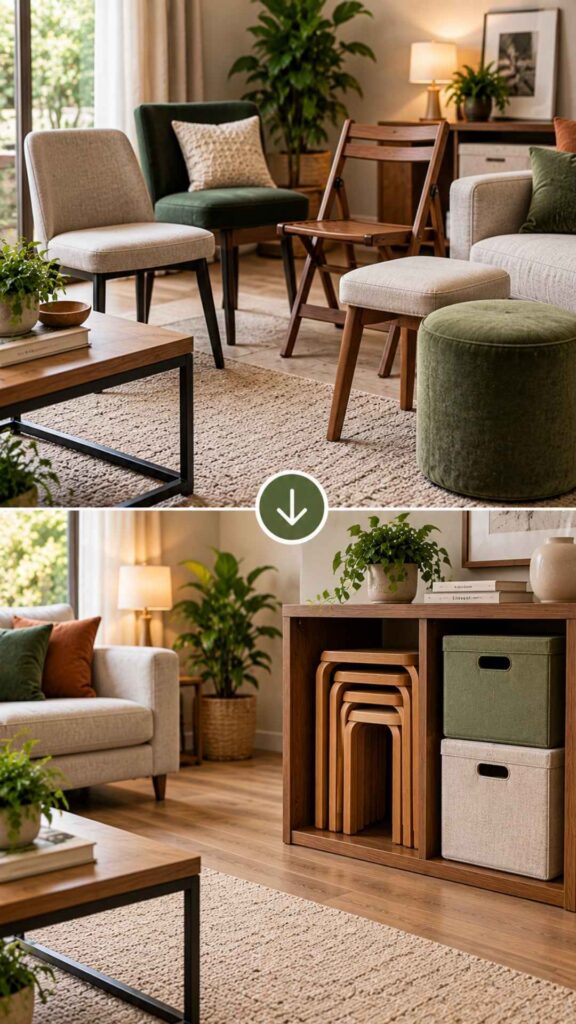
The solution is to use compact, stackable, or nesting stools, or storage cubes that can be tucked inside or stacked on one another when not in use. This approach keeps extra seating compact, allows for quick setup when guests arrive, and ensures that the daily walking space remains open and uncluttered.
Part 3 — Control Everyday Clutter
The focus here is on the small everyday issues that can make a room look cluttered and messy, even when the storage itself is adequate. There are three key aspects: designate specific spots for small, everyday items; control the accumulation of visible clutter; and separate frequently used items from those used less often. Create a system that is easy to maintain every day—one where you don’t have to wonder where an item belongs when you see it.
9. Use a Charging Station to Control Electronics Clutter
Phones, tablets, earbuds, power banks, and chargers often lie scattered around, while charging cables themselves create a tangle of clutter. A dedicated charging station can keep these items organized, with the power strip concealed inside and separate compartments for different devices.
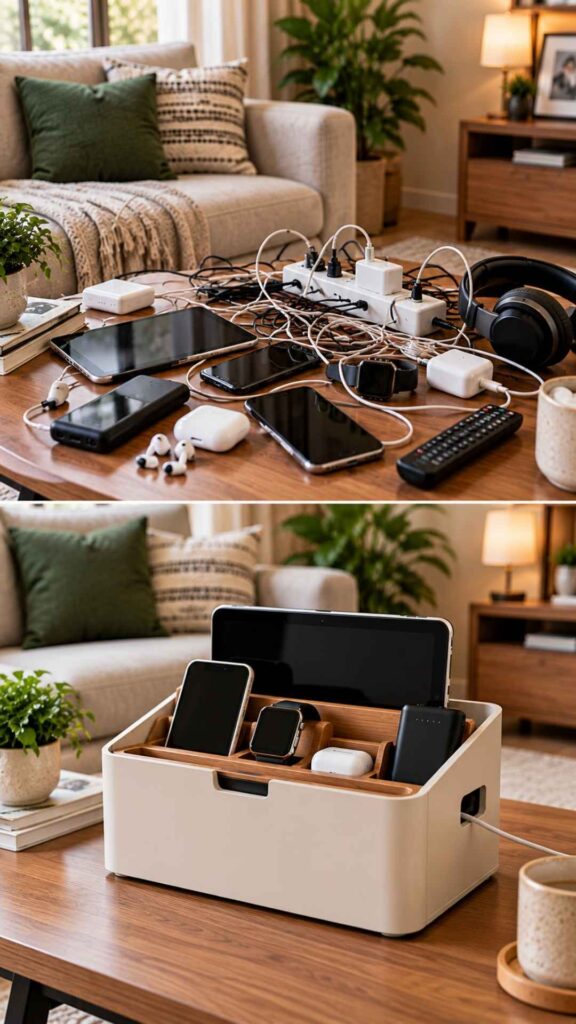
This keeps electronics together in one place, minimizes visible cables, and eliminates the need for a separate charging table or surface.
10. Create a Display and Conceal System for Sentimental Clutter
Deciding how to display family photos, gifts, and souvenirs isn’t easy; you can’t display everything, and doing so can make the living room look cluttered. The solution is to display only your favorite memories while storing the rest in closed cabinets or decorative boxes.
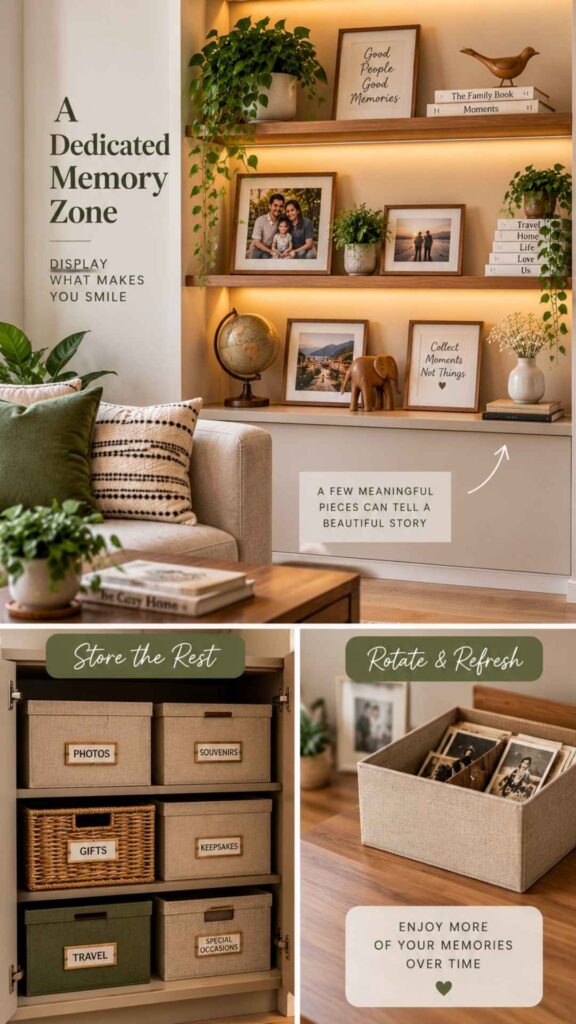
Create a dedicated “memory zone” and rotate the displayed items periodically so you can enjoy more of your keepsakes without filling every surface. This keeps sentimental items organized and allows you to display meaningful objects without making the room look crowded.
Final Thoughts
You don’t necessarily need to buy large new furniture to solve storage issues in a small living room; instead, make use of existing space and identify the actual causes of the clutter.
Look at the side of the sofa, the space behind it, wall areas, spaces around seating, and narrow gaps, and choose storage options that are practical and do not obstruct movement.
Prioritize three types of storage: hidden, multifunctional, and compact storage. Avoid trying to implement all solutions at once, as this could lead to even more clutter; focus on the room’s biggest problem and select solutions accordingly to create an organized, comfortable, calm, and clutter-free living room.