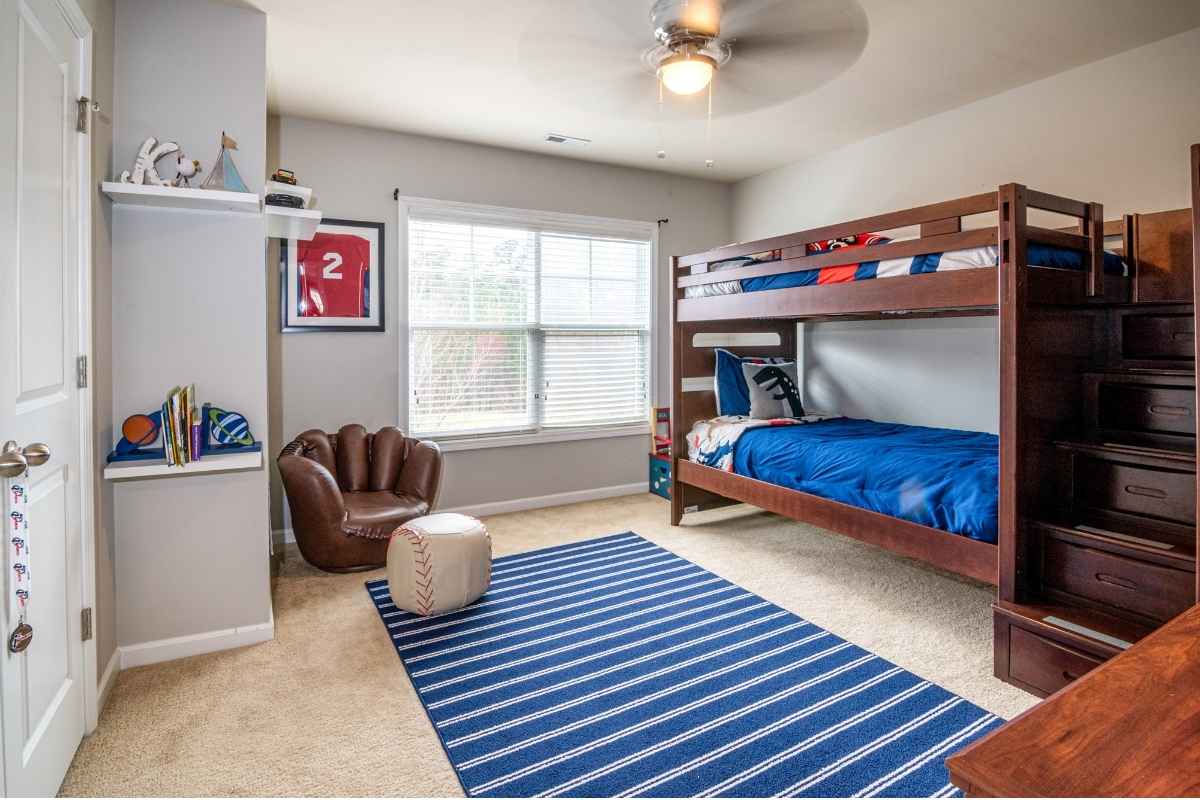
A child’s small bedroom is more than just a place to sleep; it is their entire world—a space where they play, store their clothes and toys, keep their books, and keep all their essentials. Cramming the room with furniture to accommodate these items makes little sense, as it leads to clutter and makes the room feel even smaller.
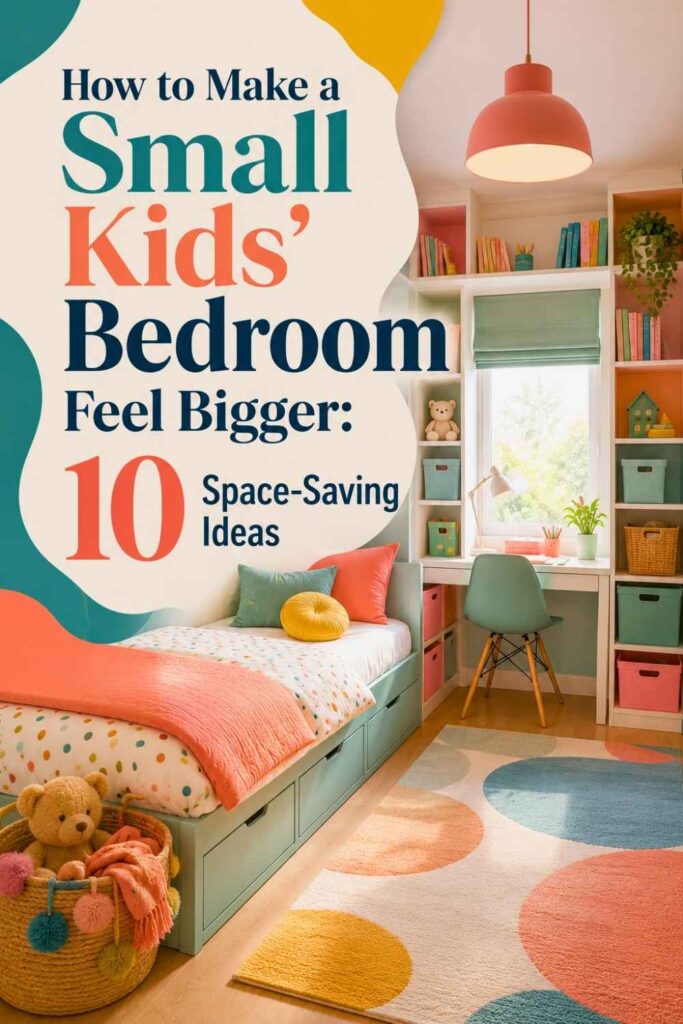
However, there are many smart small bedroom ideas for kids, such as utilizing wall space, corners, and the areas above or below the bed to organize their belongings effectively. Through the use of multifunctional furniture and proper zoning, a compact room can serve multiple purposes. In this article, we present 10 practical solutions that not only maximize space but also enhance functionality.
1. Loft Beds That Free Up Floor Space
How can a loft bed give a child more usable floor space?
Standard beds take up a significant amount of floor space, leaving the area underneath unused. In contrast, loft beds or high beds allow that space to be used more effectively. The area below can be converted into a study corner, a small play area, or a storage zone.
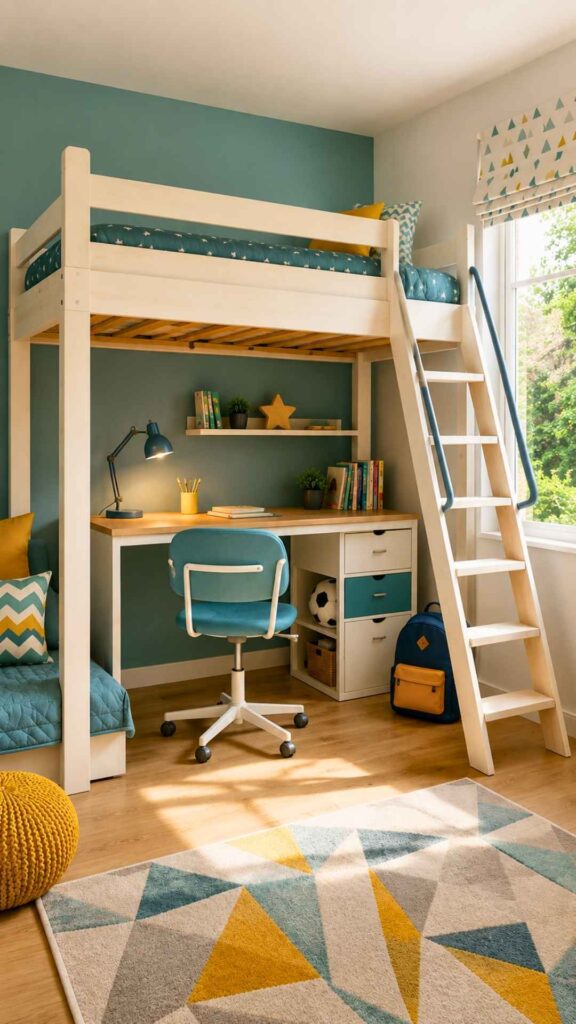
This setup allows the same room to accommodate sleeping and other activities. However, avoid overcrowding the space underneath, and consider the child’s age and practical needs before choosing a loft bed. A loft bed is a practical space-saving solution that many kids enjoy.
2. Vertical Wall Storage
Where can you add storage for kids when there isn’t enough floor space?
Children need plenty of space for their activities, so placing another floor-standing wardrobe or cabinet can make the room feel cramped. The solution is to utilize unused wall space by installing floating shelves or wall-mounted storage units.
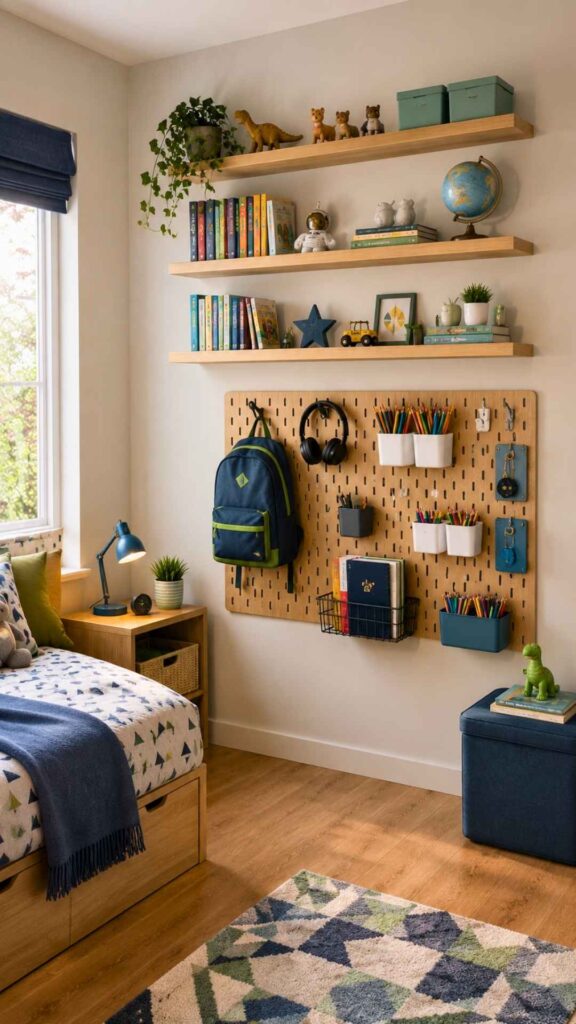
You can also use an adjustable pegboard for school supplies, ID card holders, bags, and other small items. This type of storage can make everyday belongings easier to organize. The pegboard can also be adjusted as the child’s storage needs change, allowing shelves, hooks, or small holders to be rearranged easily.
Keep frequently used items within easy reach while storing less-used objects higher up.
3. Smarter Toy Storage
How can you organize children’s toys in a small room without making it look cluttered?
Children’s toys can quickly clutter a room, making tidying up a difficult task. Using a storage bench or basket helps organize them and allows you to quickly gather the toys and put them back in their designated areas.
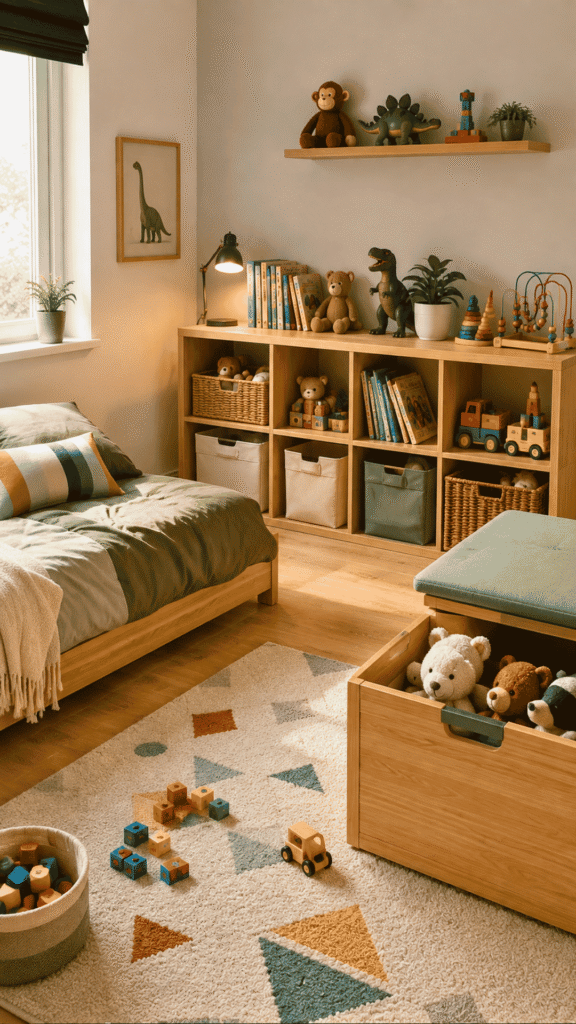
Before storing the toys, categorize them. Keep the ones children play with most frequently within easy reach, and store less frequently used toys separately. Opt for storage solutions that children can easily use and manage on their own, so they can put items back in their designated spots.
You can also introduce the concept of toy rotation if necessary. Toy rotation means keeping a smaller selection of toys available while storing others away and swapping them periodically. It can be a useful part of kids room storage ideas, especially when there are more toys than the room can comfortably hold.
4. Compact Study Areas
How can a study desk fit into a child’s small bedroom?
This is one of the practical kids bedroom ideas for small rooms when a child needs a dedicated study space. The desk needs enough clear surface space for homework, drawing, crafts, and projects.
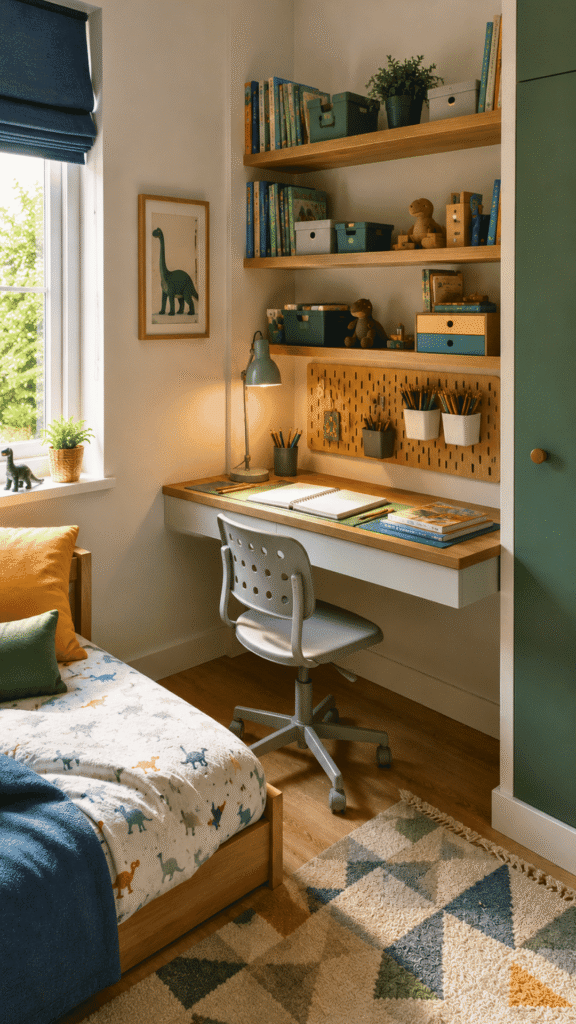
A full-size standard desk is not always necessary. Instead, you can opt for space-saving alternatives such as corner desks or wall-mounted units. By utilizing vertical space for storage, you can keep the desk surface clear for studying, writing, and working on projects.
You could even set up a study area by placing a table under the loft bed. A bookshelf or storage space beneath the loft bed’s ladder may also be added. When practical, place the desk where there is good natural light.
5. Small Reading and Play Corners
Can a corner of a child’s small bedroom be turned into a useful reading and play area?
Small bedrooms often have corners that can be transformed into useful activity zones for children. Items such as a floor cushion, a compact chair, a small rug, or a narrow bookshelf can be used to create a space for reading, drawing, or quiet play.
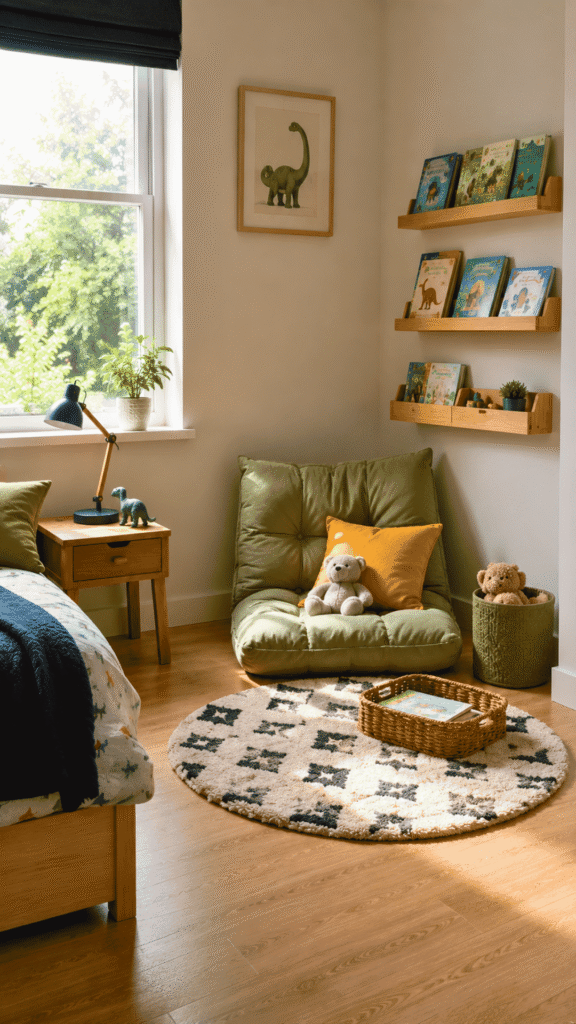
Keep the setup simple to avoid making the room look cluttered. When practical, place this corner near a window to make use of natural light.
6. Multifunctional Furniture
How can a single piece of furniture solve two problems in a small room?
In a small room, it is difficult to have separate furniture for every activity. Therefore, opt for pieces that serve multiple purposes and help solve space constraints, such as a bed with built-in storage or a study area, a bench with toy storage, a desk with shelving, or a wardrobe combined with a study nook.
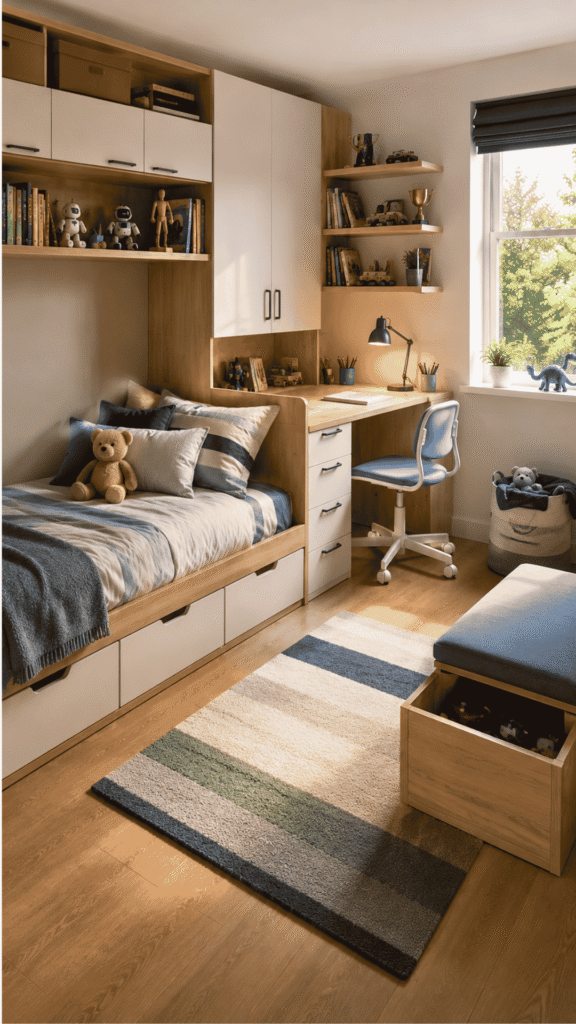
Don’t choose furniture solely based on its multifunctional label, as the secondary function may not always be practical. Instead, select pieces that offer genuine utility and reduce the need for separate furniture while helping you make better use of the available space.
7. Space-Saving Clothes Storage
Where do you put kids’ clothes when a small bedroom lacks enough closet space?
Children’s bedrooms need organized clothing storage despite limited space. Opt for tall or narrow wardrobes instead of standard ones. Use under-bed drawers for seasonal clothing and install hooks or compact hanging rails for items such as hats, jackets, scarves, and gloves.
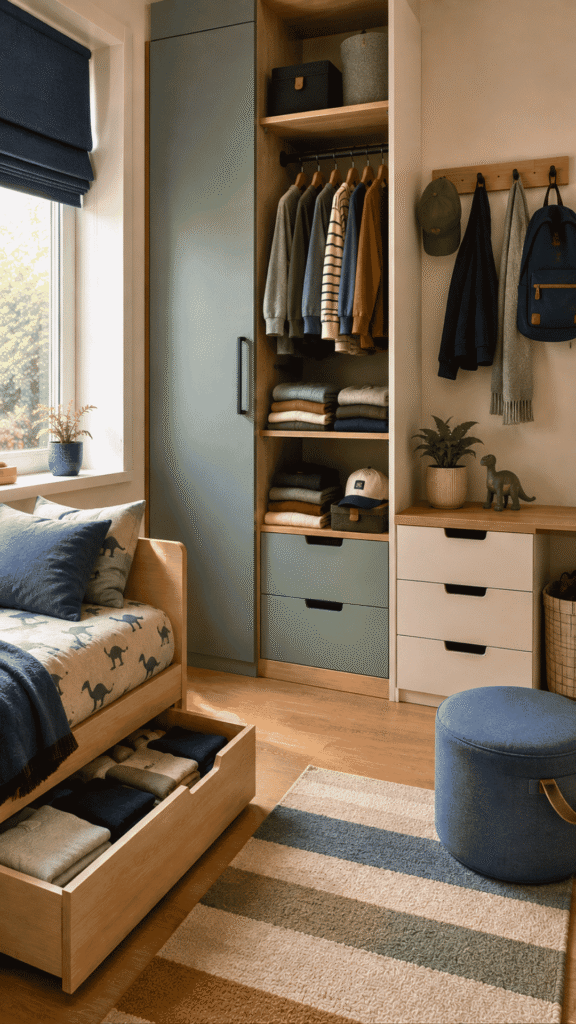
Keep everyday clothes easily accessible while storing seasonal or rarely used items in higher storage areas. Maintain a separate, smaller cabinet for daily-use clothes so children can easily access and change their outfits themselves, such as after returning from school or before going to bed.
Organize clothing based on how frequently it is used.
8. Under-Bed Storage That Actually Stays Organized
What children’s items should be kept under the bed, and what should not?
Instead of turning the space under the children’s bed into a hidden dumping ground, utilize pull-out drawers or boxes beneath it and label them. You can store seasonal clothing, spare bedding, and other items that are occasionally needed in these spaces.
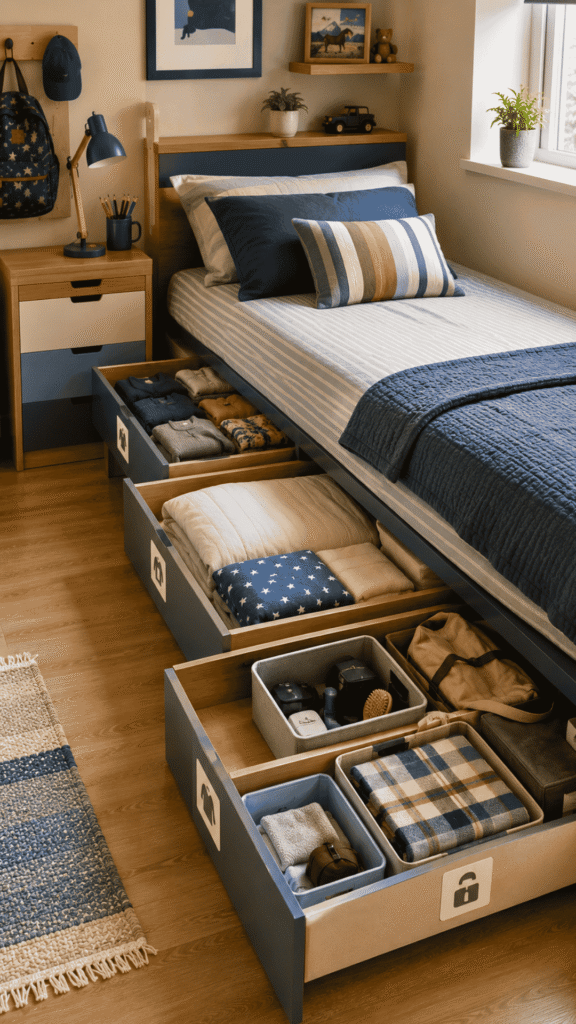
Avoid storing daily-use items such as stationery, school bags, or everyday essentials here. Arrange the containers by category. Ensuring there is enough clearance to open the drawers is important, and labeling the boxes can also help children understand what is stored where and return items to the correct place.
9. Behind-the-Door Storage
How can you make use of the area behind the door in a kids’ bedroom without using any floor space?
There is often unused space behind the door in a child’s bedroom that tends to go unnoticed. You can utilize this area for hanging organizers, hooks, lightweight bags, accessories, or craft supplies.
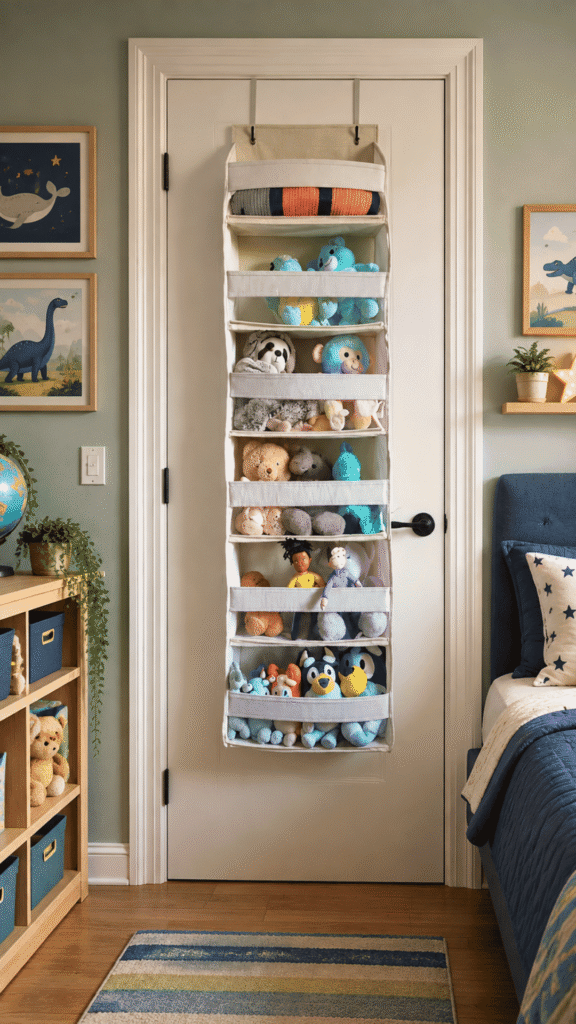
Whatever storage method you choose, ensure the door can still close properly. Avoid placing heavy items on the organizers, and be mindful not to overload the door to the point where it becomes difficult to open or close.
A door organizer can also give children a designated place for school supplies and other everyday items, making them easier to find and put away after use.
10. Create Sleep, Study, Play, and Storage Zones
How can one small room handle sleeping, studying, playing, and storage without feeling overcrowded?
Divide a child’s small room into distinct functional zones, such as areas for sleeping, studying, playing, and storage. You don’t need to build physical walls for this; simply arranging furniture strategically can create these zones.
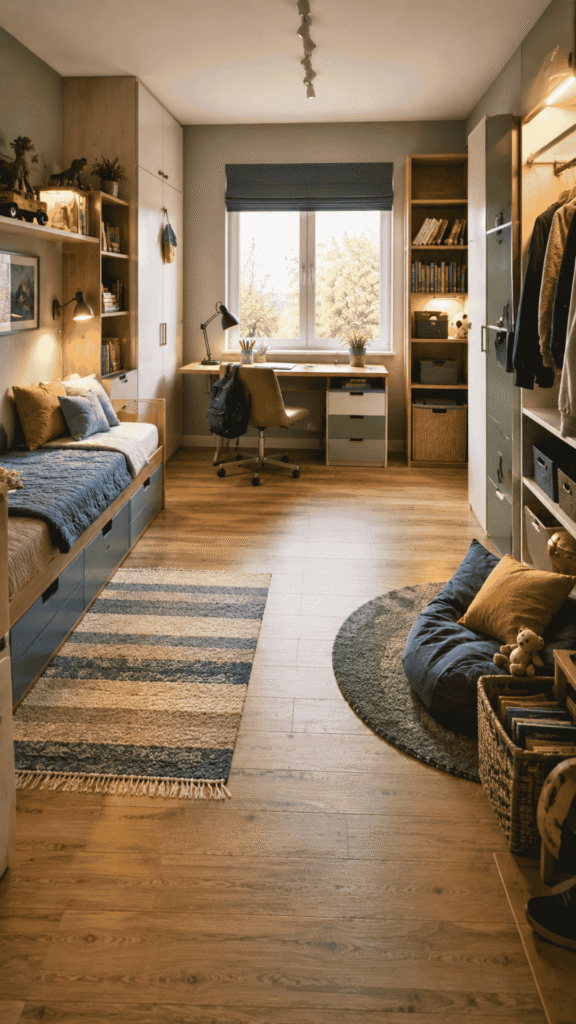
Lighting can also help define the different areas. Keep the central space open for easy movement. Organization becomes crucial when multiple activities are taking place in a limited space.
Creating functional zones allows you to accommodate different activities within the same small area while keeping belongings organized—for example, keeping toy storage separate from clothing storage.
Final Thoughts
When dealing with a small children’s bedroom, the goal isn’t simply to cram in separate pieces of furniture for every activity. Instead, identify the specific challenges and choose multifunctional furniture accordingly.
Make use of vertical space and incorporate storage that aligns with your daily routine, ensuring that items remain accessible without compromising the room’s walking space. You don’t need to implement every idea at once—select the ones that best suit your needs.
Organizing the room gradually can help you understand what works best for the available space and create a more effective storage layout. Ultimately, the aim is to create a room that is highly functional while providing efficient storage.