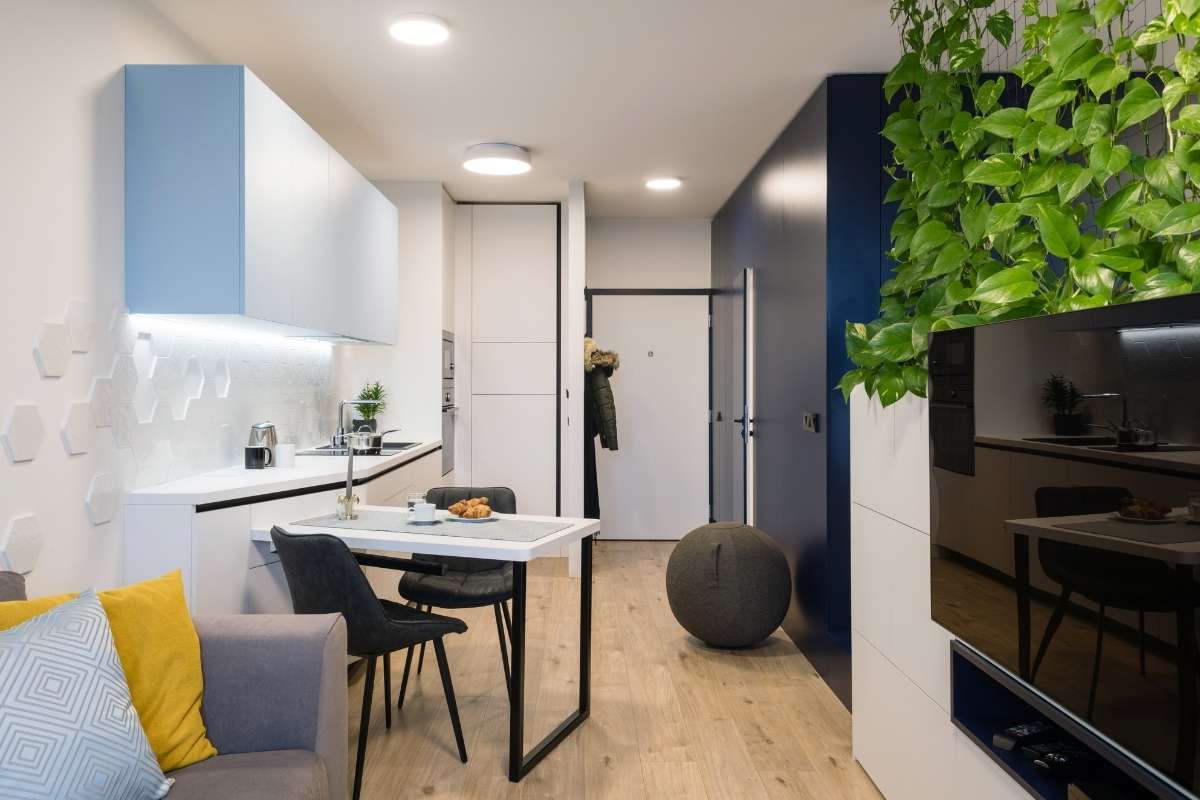
Discover practical tiny apartment organization ideas to reduce clutter, improve storage flow, and make small home feel bigger with smart design choices
The problem is not cleanliness; it is the design. Many people clean their homes every day, return things to their places, and still find the space feeling cluttered again within a few hours.
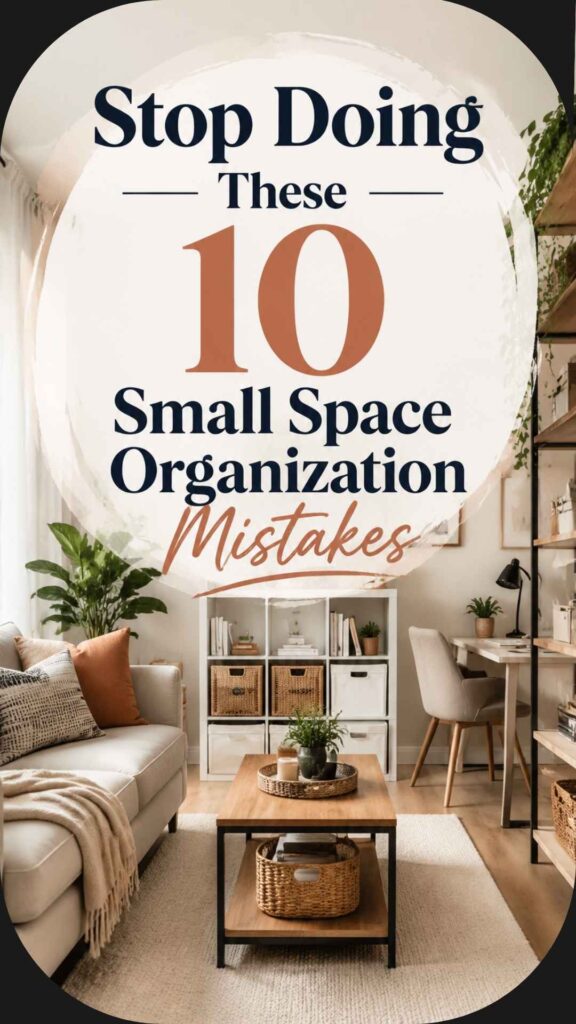
The real issue is often improper storage placement, poor organization flow for frequently used items, and too much visual clutter. A home can be completely clean and still feel small. Tables become crowded, kitchen counters remain covered with everyday items, and clothes stay outside even when there is enough wardrobe space.
The problem is that the space has not been designed around your lifestyle. These tiny apartment organization ideas are not just about adding more storage; they focus on understanding why small homes feel cluttered and how thoughtful organization can naturally make small home feel bigger.
1. Wrong Place, Wrong Storage
People living in small homes often wonder why their belongings continue to collect on counters despite having enough storage space. The reason is simple: having storage is one thing, but having functional storage is completely different.
For example, a kitchen cabinet may have plenty of space, but if everyday items like oil, spices, and plates are stored at the back, people naturally leave them on the counter for convenience.
Storage should not be measured only by the amount of space available. It should be planned according to how often an item is used, who uses it, and how easily it can be accessed. Daily essentials should remain within reach, while rarely used items can be placed in deeper or higher storage areas.
The purpose of storage is not simply to hide things away. It is to create a system where everything naturally returns to its correct place.
2. Visual Clutter Overload
A room does not need to be filled with belongings to feel crowded. Sometimes, even a small number of items can create a sense of disorder because the eye processes too many objects at once.
Multiple jars on kitchen counters, random items near the sofa, and overcrowded open shelves can make a room feel smaller than it actually is.
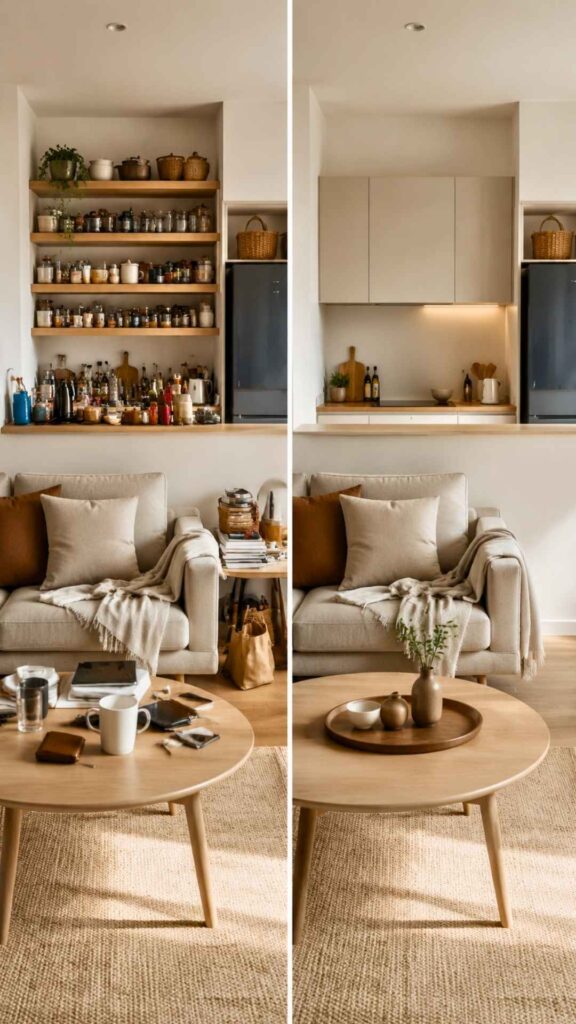
Have you noticed how hotel rooms often feel calm and spacious despite their limited size? The reason is visual order. Everything has a place, and the space is allowed to breathe.
In a small home, every surface does not need to be filled. Group similar objects together, maintain discipline in open storage areas, and keep unnecessary items inside closed storage. Good organization is not only about creating more space; it is also about creating visual peace.
3. Furniture That Shrinks Space
Choosing smaller furniture does not always make a small home work better. Many people assume that compact furniture is the best solution, but the wrong furniture choices can actually make a space feel more crowded.
For example, buying a small sofa that does not provide enough seating may lead to adding extra chairs later. Choosing a tiny dining table may create the need for additional storage furniture elsewhere.
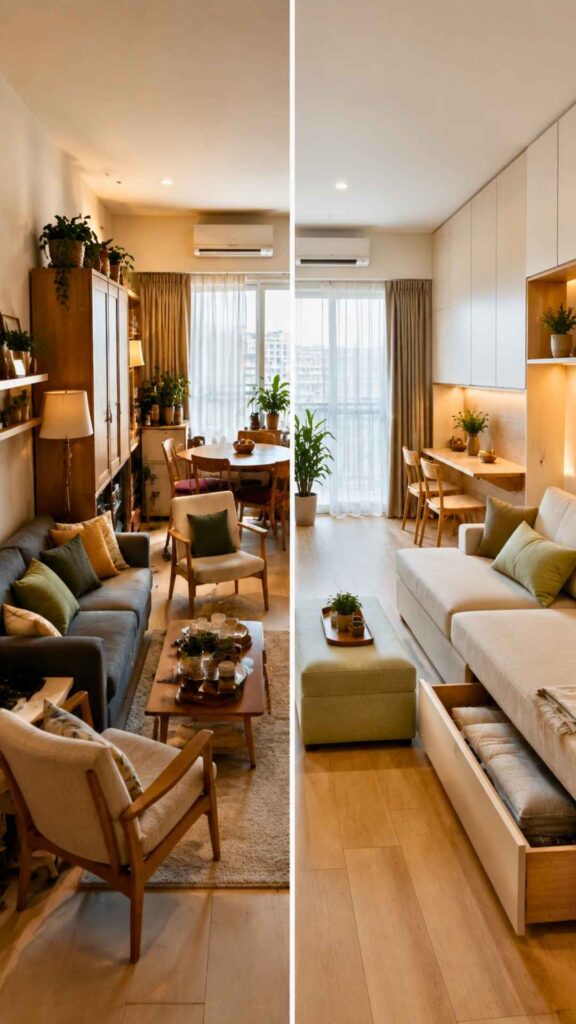
Furniture should not simply occupy space; it should serve multiple purposes. A storage bed can hide belongings, foldable furniture can create flexibility, and multifunctional pieces can reduce the number of items needed in a room.
The right furniture should support your lifestyle while keeping the space open.
4. Poor Space Flow
In many small homes, clutter is not caused by a lack of storage but by poor movement and accessibility.
When there is no dedicated space for shoes near the entrance, they often spread throughout the home. In the kitchen, when cooking areas and storage zones are placed too far apart, counters quickly become filled with unnecessary items.
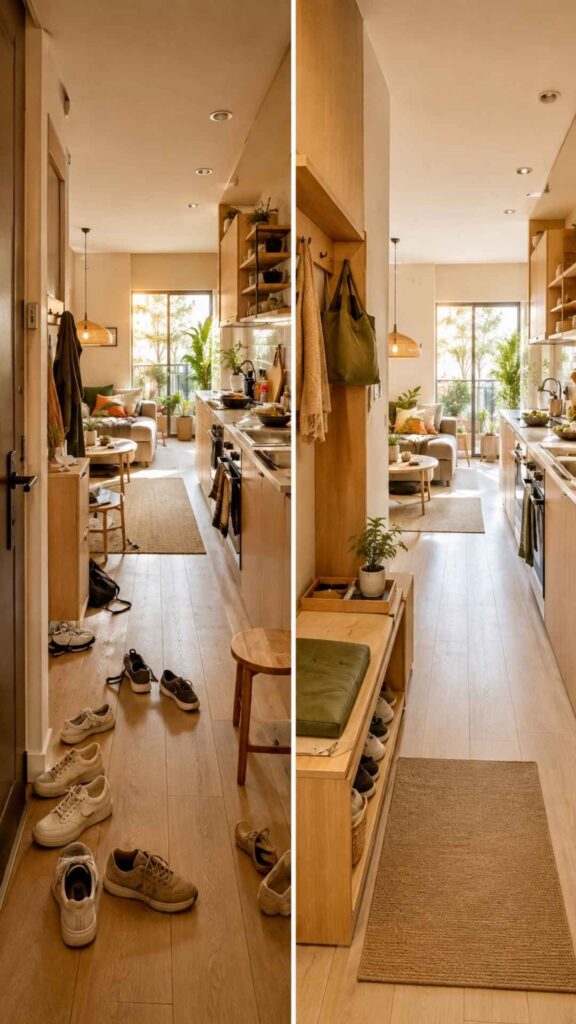
Think about it: if you have to walk across the house fifty times a day to access something, are you really going to return it to its original place every time?
A well-organized small home reduces unnecessary movement and makes daily routines easier. Entryway drop zones, efficient kitchen work triangles, and practical bedroom storage can significantly improve how the home functions.
5. Filling Every Empty Corner
One common mistake people make is trying to use every empty corner for storage. Inspired by online designs, many homeowners add shelves, cabinets, and organizers everywhere, but this can make the home feel more crowded.
Empty space is an important part of good design. Rooms need areas where the eye can rest.
Not every wall needs shelves, and not every corner needs to be filled. Visual breathing room creates a feeling of openness and even adds a sense of luxury.
A well-designed home is not the one with the most storage. It is the one where storage is added thoughtfully.
6. Storage Without Lifestyle Thinking
Organization works best when it matches daily habits.
If someone always places their bag on the sofa after coming home, repeatedly telling them to keep it elsewhere is unlikely to solve the problem. A better approach is creating storage near that natural stopping point.
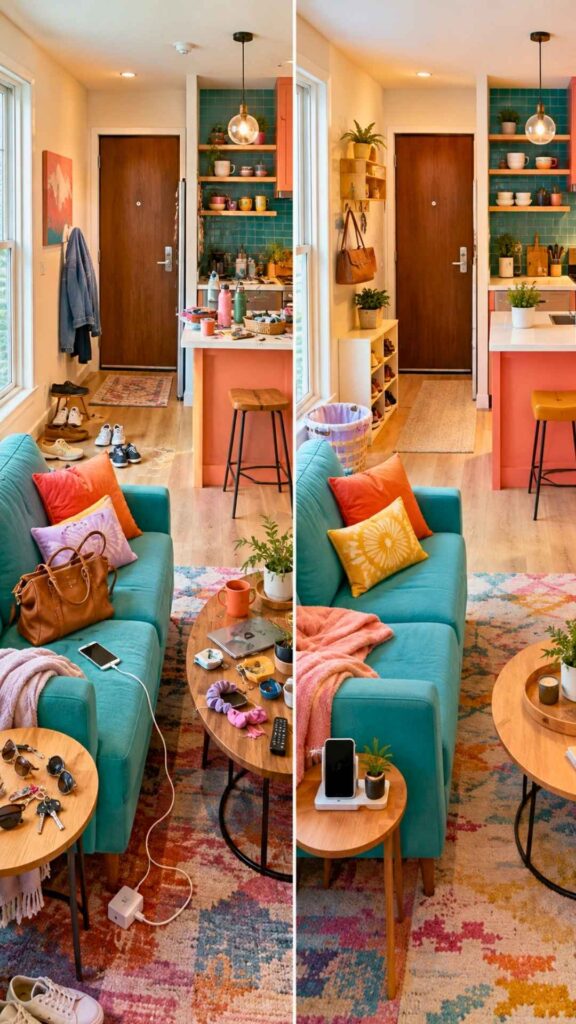
Small adjustments can make a big difference, such as hooks near the entrance, a charging station near your usual sitting area, a laundry basket close to the changing space, or kitchen tools placed near the preparation area.
Good organization supports your habits instead of forcing you to change them.
7. Too Many Categories
Sometimes people make organization harder by creating too many categories.
Dividing one drawer into ten different sections may look impressive initially, but maintaining such a complicated system becomes difficult over time.
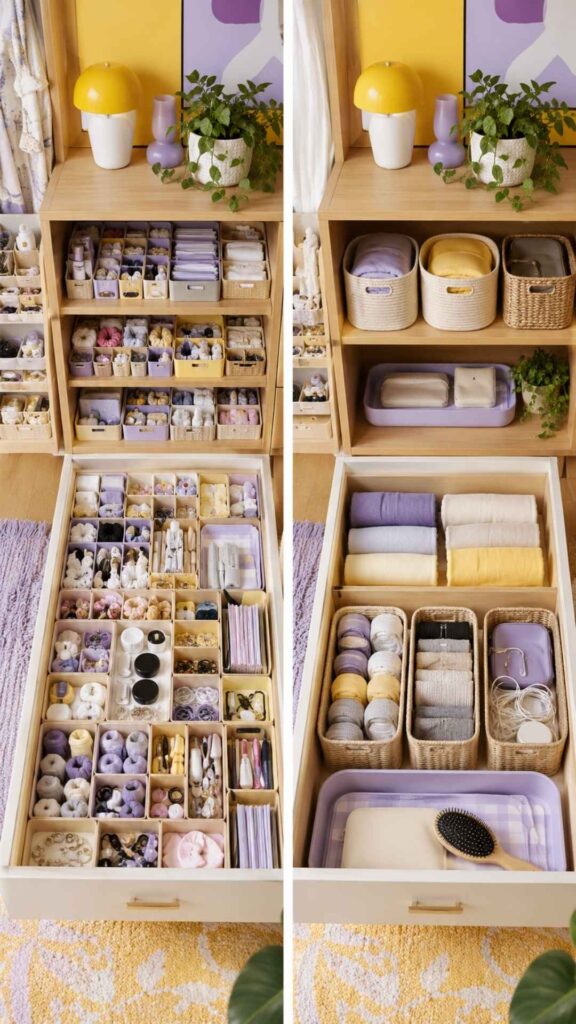
Simple systems are easier to follow. Focus on practical categories and easy access rather than creating unnecessary labels and divisions.
Maintenance is the most important part of organization. Even the best system will fail if it becomes difficult to maintain.
8. Unused Vertical Space
Small homes often have limited floor space, but many walls remain completely unused.
Vertical storage can provide valuable extra space through wall shelves, floor-to-ceiling cabinets, and hanging solutions.
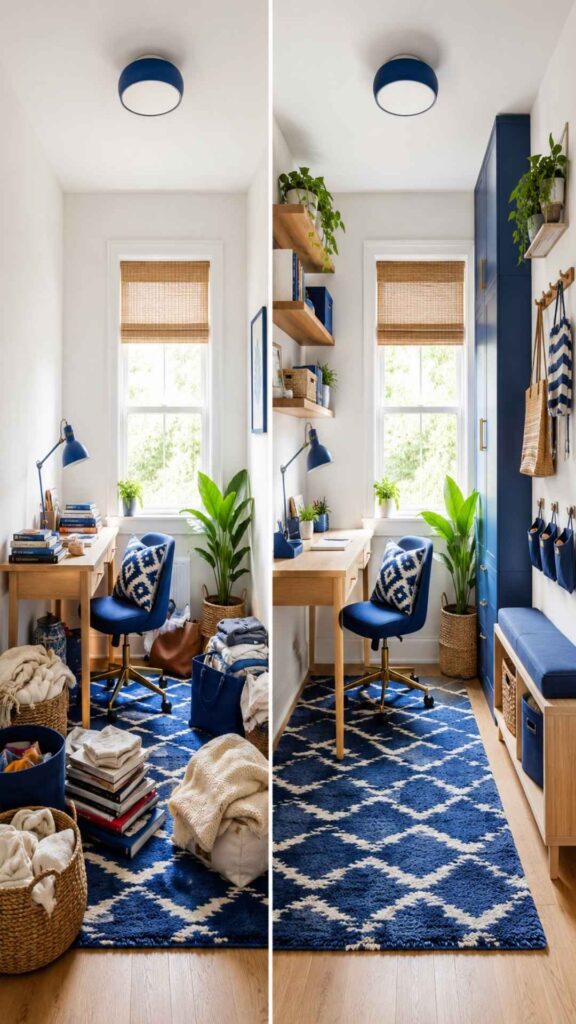
However, balance is important. Covering every wall with storage can make a room feel closed and heavy. The goal is to use vertical space without sacrificing openness.
9. Hidden Clutter Problem
Not all clutter is visible. Sometimes, the mess is hidden inside cabinets, drawers, and storage boxes.
Overfilled cupboards and random containers holding unused items create stress because they make it harder to find things when needed.
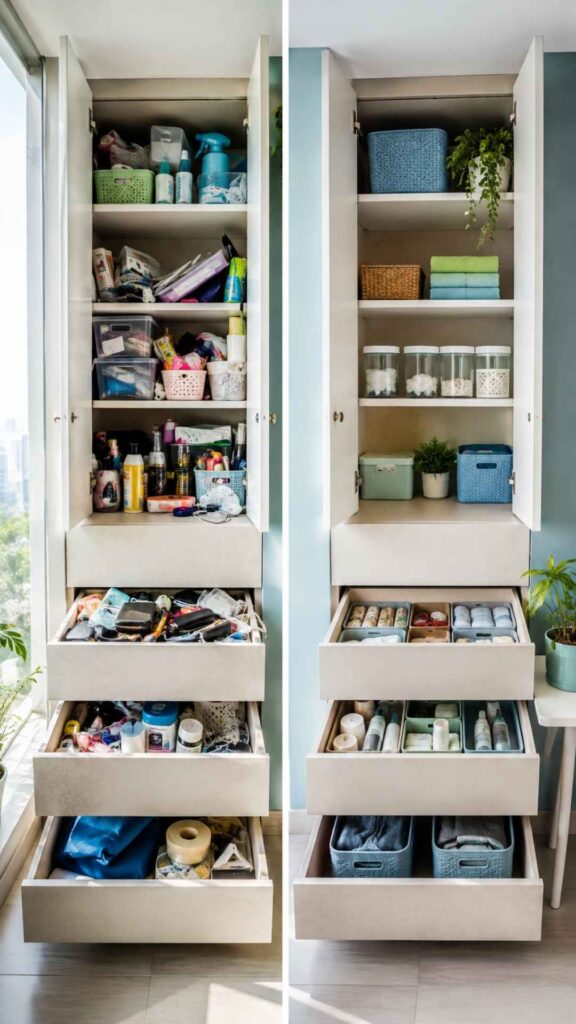
Before storing something, ask yourself: “Does this item make my daily life easier?”
If the answer is no, keeping it may only create unnecessary clutter.
10. Design With Intention
A small home does not feel larger because of expensive décor or oversized furniture. It feels larger when every item has a purpose and the layout allows easy movement.
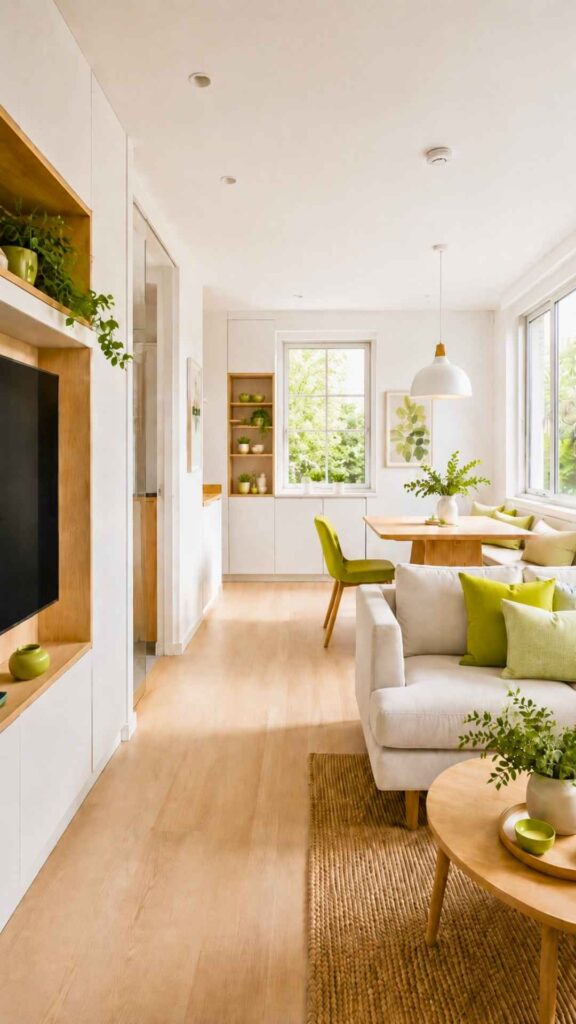
Choosing open colours, suitable materials, and functional storage solutions can create a sense of space without making the home feel empty.
The best storage solutions are often the ones that work quietly in the background.
Final Thoughts on Tiny Apartment Organization Ideas
A small home is not the problem; the challenge is when the design does not match the way you live.
The right tiny apartment organization ideas can transform how your home feels by improving storage, reducing clutter, and creating better flow. These small apartment organisation ideas prove that even limited spaces can feel peaceful, comfortable, and spacious.
When every item has a logical place and every area supports your daily routine, you can truly make small home feel bigger without expanding its size.