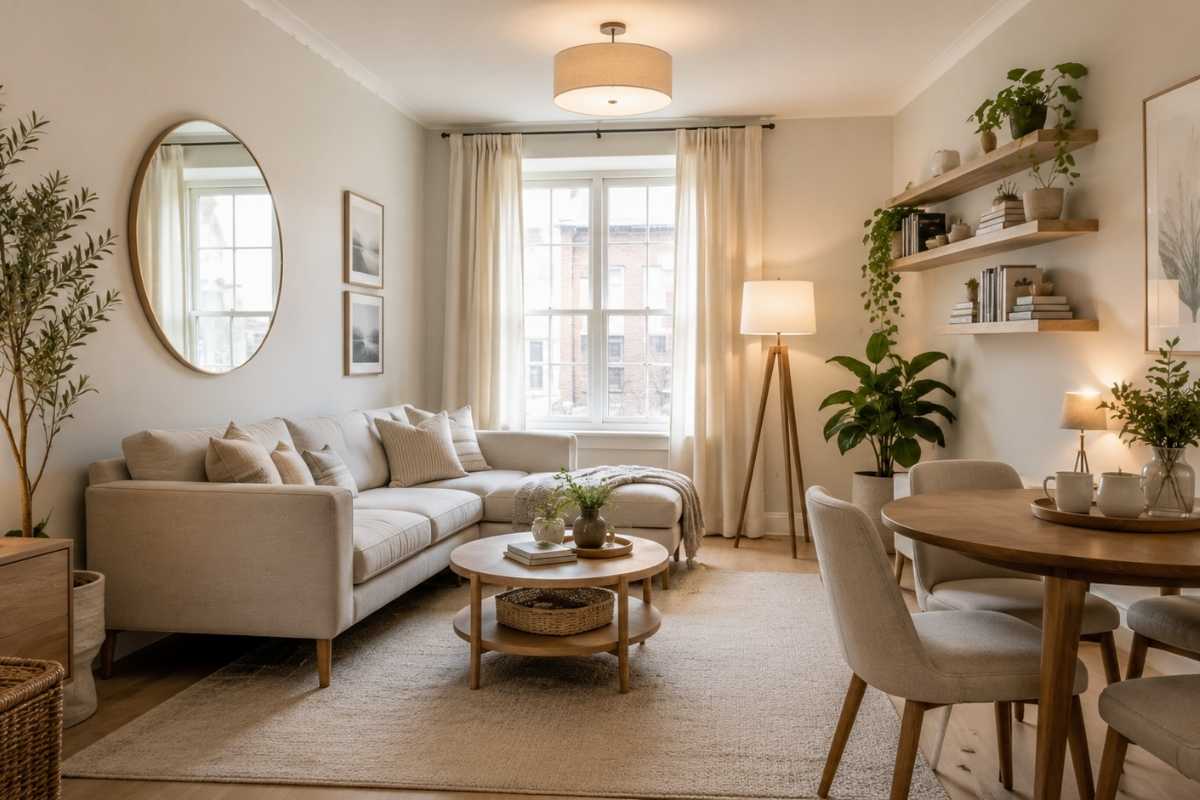
Small spaces can be charming, cozy, and full of personality, but they need thoughtful decorating. When every wall, corner, and furniture piece matters, the right design choices can make a small room feel open, bright, and beautifully organized.
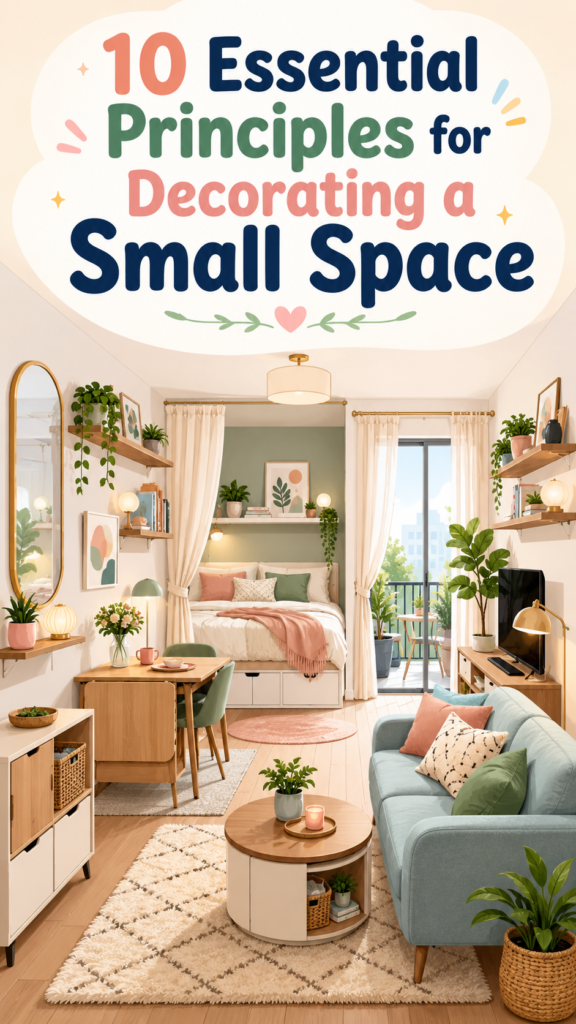
The secret is not to fill the room with more things. The secret is to make the space feel lighter, taller, and more connected. Whether you are decorating a small apartment, studio, small bedroom, or compact living room, these small space decorating ideas will help you create a home that feels larger than it really is.
1. Start with Light Wall Colors
Light wall colors are one of the most powerful tricks for small space design. Shades like soft white, cream, beige, pale gray, warm ivory, and light taupe reflect natural and artificial light better than dark shades. This makes the room feel brighter and more open.
Dark colors can add drama, but they also absorb light. In a small room, that can make the walls feel like they are closing in. Too many bold or contrasting colors can also make the space feel busy because each color competes for attention.
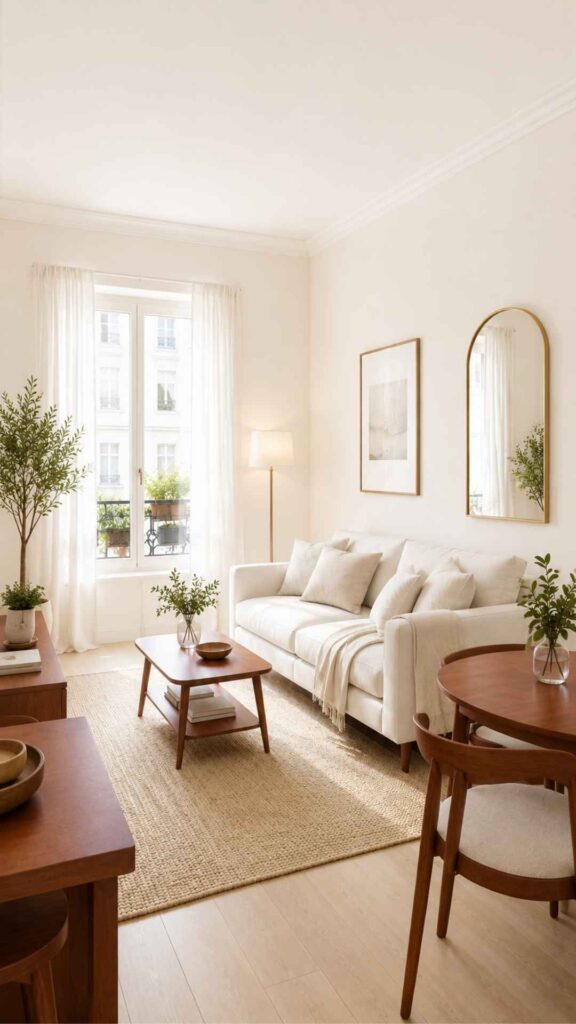
For a bigger-looking room, keep the main wall color soft and simple. This creates a calm background and allows furniture and decor to blend more naturally.
Practical Tip: Choose one light wall color for the room, then use small accents like pillows, throws, artwork, or vases for personality.
2. Layer Your Lighting
A single ceiling light is rarely enough in a small space. It usually lights only the center of the room and leaves the corners dark. Those shadowy corners make the room feel smaller.
Layered lighting solves this problem. Use a mix of ceiling lights, table lamps, floor lamps, wall sconces, and accent lighting. When light reaches different corners and heights, the room feels more open and inviting.
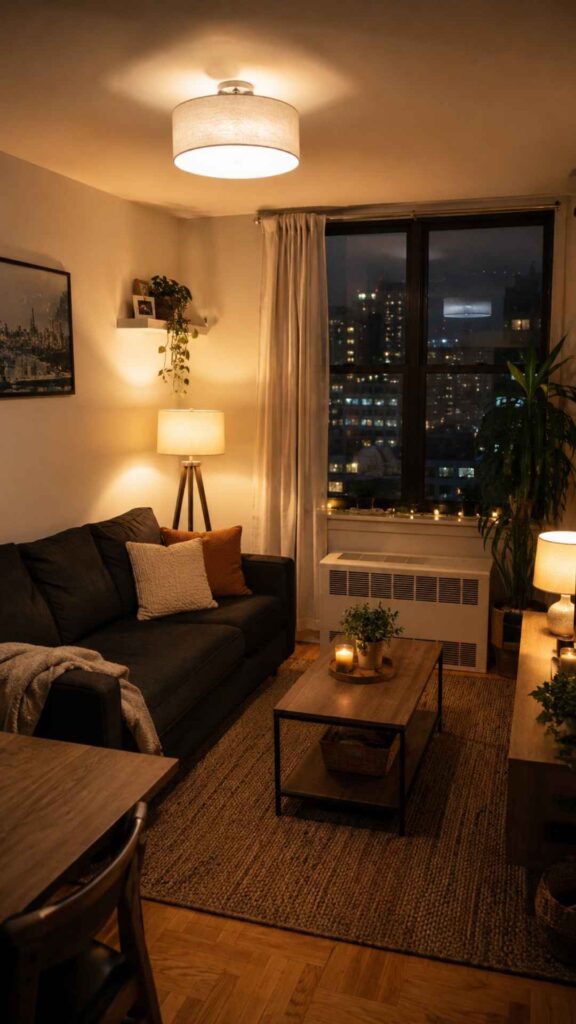
This is especially useful in small living rooms, bedrooms, kitchens, and studio apartments where one room may serve multiple purposes.
Practical Tip: Use at least three light sources in a small room: one overhead light, one task light, and one soft accent light.
3. Pick Furniture That Works Hard
In a small space, furniture should do more than just look good. It should also help you save space. Multifunctional furniture is a smart choice because it gives you style and storage at the same time.
Think of beds with storage drawers, ottomans with hidden compartments, sofa beds, foldable desks, nesting tables, and benches with storage. These pieces reduce clutter and help the room stay organized.
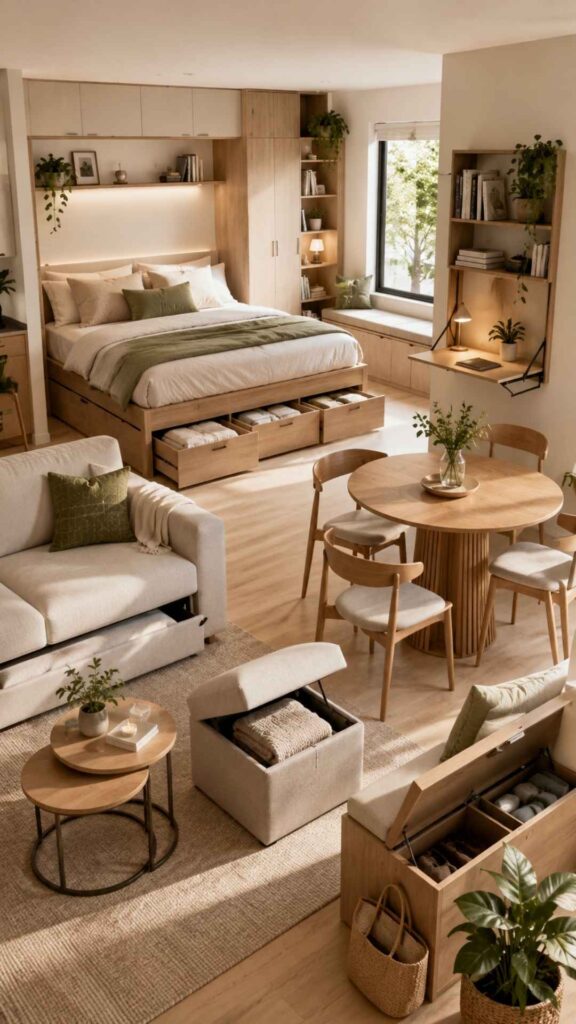
For dining areas, a round dining table is often better than a square or rectangular one. A round table has no sharp corners, so it is easier to move around. It also creates a softer look and makes the dining area feel less crowded.
Practical Tip: Before buying furniture, ask yourself: “Does this piece offer storage, flexibility, or better movement?”
4. Keep the Look Cohesive
A small space looks better when the design feels connected. This does not mean everything has to match perfectly. It simply means the colors, materials, and shapes should work together.
For example, repeat similar shades in your sofa, dining chairs, rug, curtains, and wall decor. If your sofa is beige, you can repeat warm neutral tones in your dining table runner, cushions, and artwork. This creates flow.
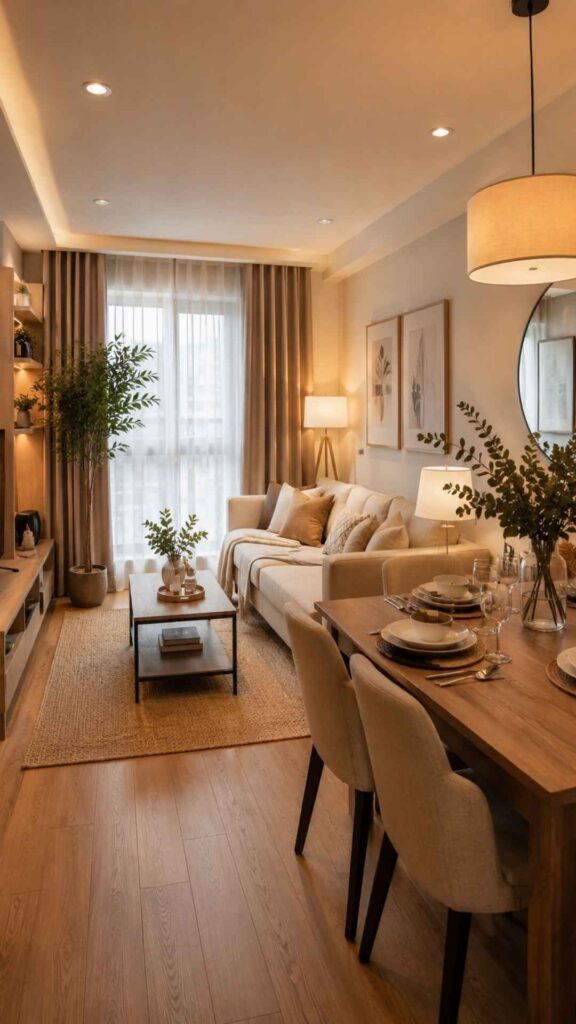
When every item is a different color or style, the room can feel visually crowded. A cohesive color palette makes the space feel calmer, cleaner, and larger.
Practical Tip: Choose one main color, one secondary color, and one accent color for the whole room.
5. Use Space-Saving Doors and Furniture with Legs
Traditional hinged doors need room to swing open. In a small bedroom, bathroom, closet, or laundry area, that door swing can waste valuable floor space. Sliding doors are a great alternative because they move sideways and keep the space more functional.
Another smart trick is to paint the door the same color as the wall. This helps the door visually disappear, making the wall look longer and the room feel more seamless.
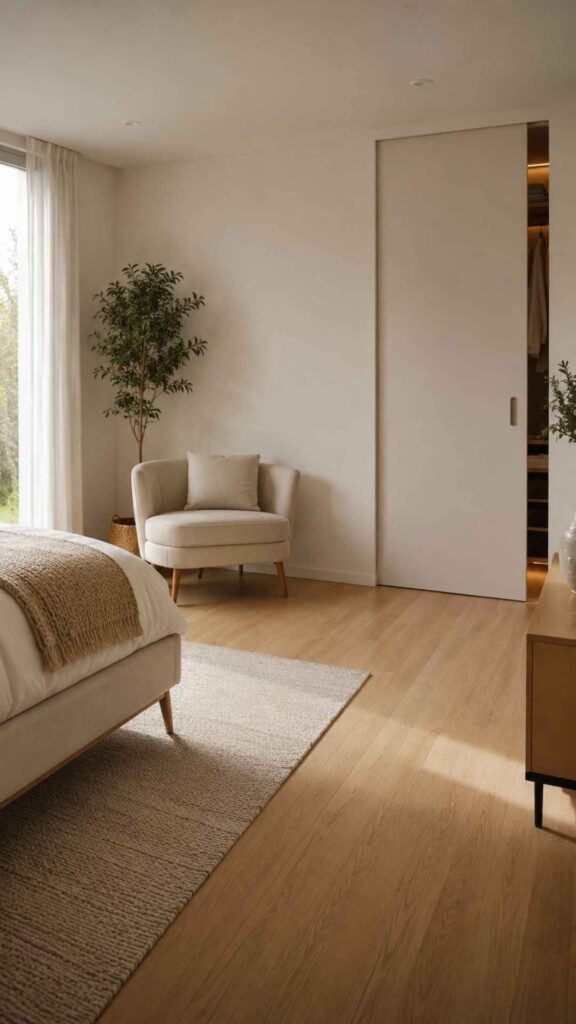
Furniture with visible legs also helps. Sofas, chairs, beds, and TV units with raised legs show more floor underneath. When more floor is visible, the room automatically feels more open.
Practical Tip: Use sliding doors for closets and bathrooms, and choose raised-leg furniture whenever possible.
6. Decorate Upward with Vertical Storage
When a room is small, the walls become your best friend. Instead of using more floor space, use vertical space. Tall shelves, floating racks, wall-mounted cabinets, hanging plants, and vertical bookcases help you store and decorate without crowding the room.
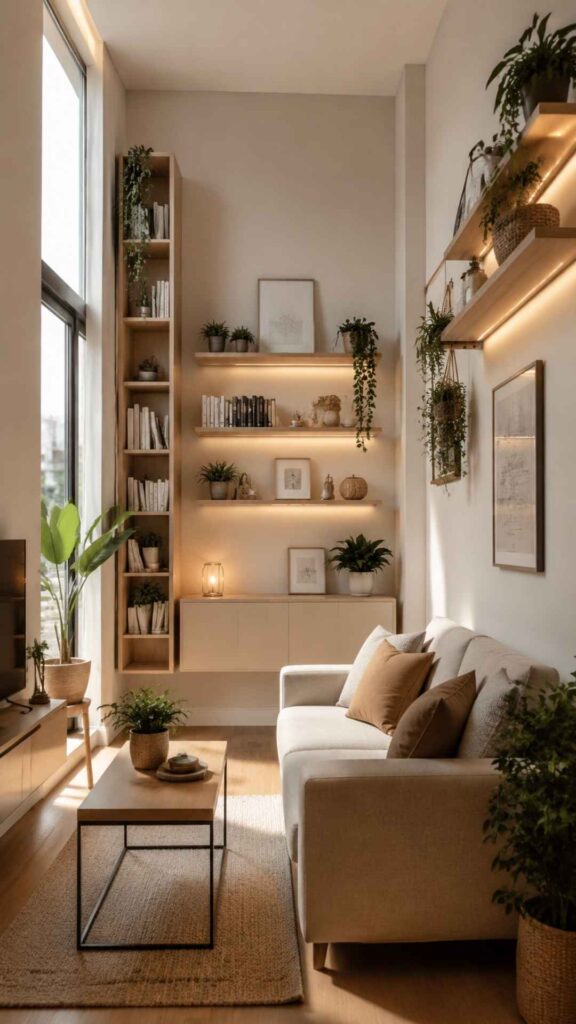
Vertical decor also makes your eyes travel upward. This creates the illusion of height and makes the ceiling feel taller. Books, plants, baskets, framed prints, and small sculptures can all be arranged vertically for a stylish small apartment decor look.
Practical Tip: Add floating shelves above a desk, sofa, bed, or dining corner to maximize empty wall space.
7. Add Tall Lamps and Vertical Decor
Tall lamps and vertical decorative pieces are perfect for small room styling. They create height, add elegance, and make the room feel more layered.
A tall floor lamp beside a sofa or bed can brighten an area that may otherwise look dark. Vertical wall lights, slim sculptures, tall plants, and narrow artwork can also help stretch the room visually.
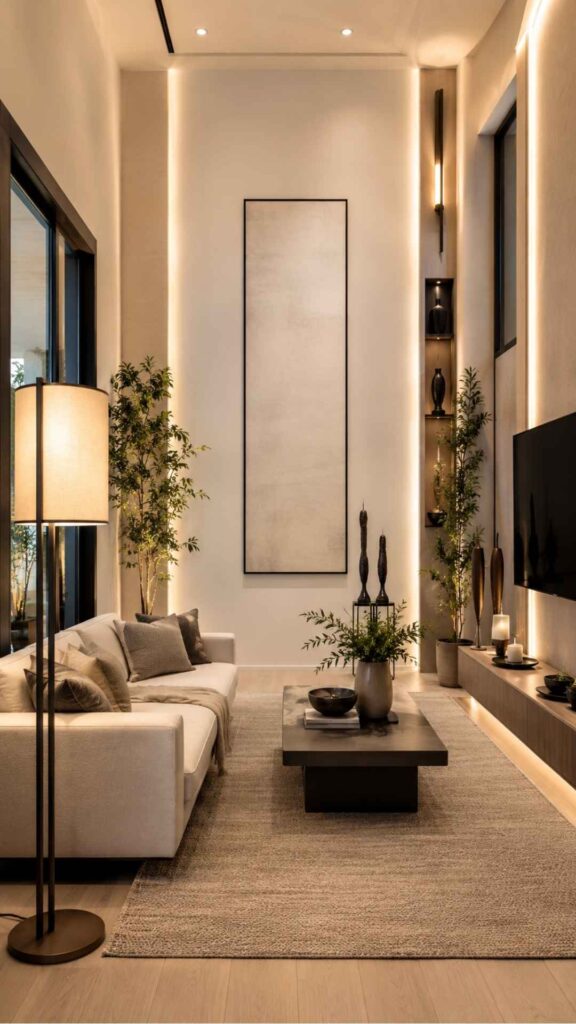
Avoid depending on one light source because it can create shadows in corners. Those shadows make the room look smaller and less finished.
Practical Tip: Place a tall lamp or tall plant in an empty corner to make that corner feel intentional and open.
8. Hang Curtains High and Keep Them Light
Curtains can make a major difference in small space decorating. The best trick is to hang them higher than the window frame, close to the ceiling. This makes the room look taller.
Light-colored curtains also help the room feel soft and airy. White, cream, beige, light gray, and sheer curtains allow more light to pass through. Heavy dark curtains can block light and make a small room feel closed.
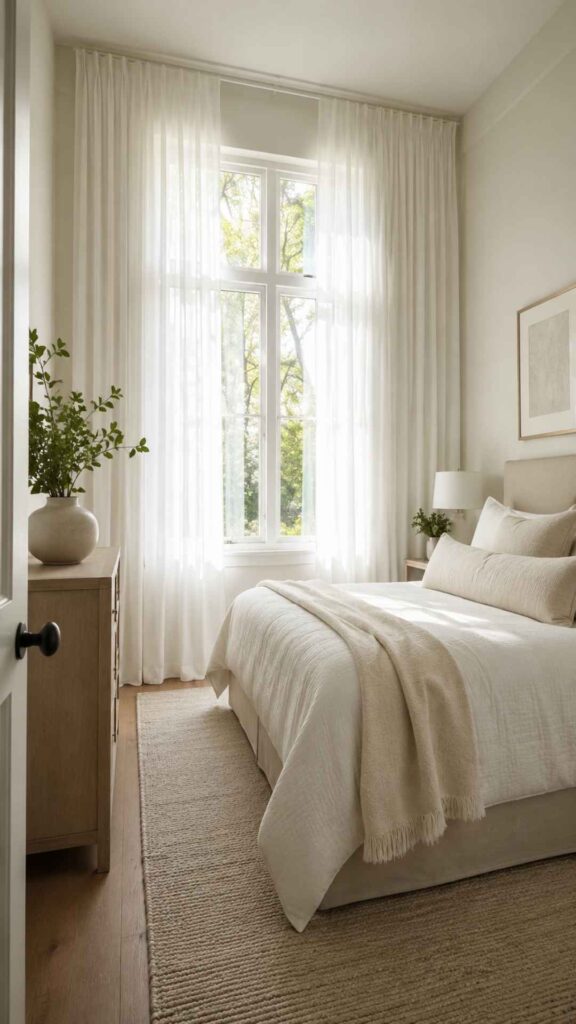
For the best effect, let curtains fall all the way to the floor. This creates a clean vertical line and makes the room feel more elegant.
Practical Tip: Mount your curtain rod 4 to 6 inches above the window frame, or closer to the ceiling if possible.
9. Use Mirrors to Open the Room
Mirrors are a classic interior design trick for making a small room look bigger. They reflect light and create the feeling of depth. This works especially well in small living rooms, bedrooms, entryways, and dining areas.
A mirror placed across from a window can reflect natural light and brighten the entire room. A large mirror behind a sofa or console table can also make the wall feel more spacious.
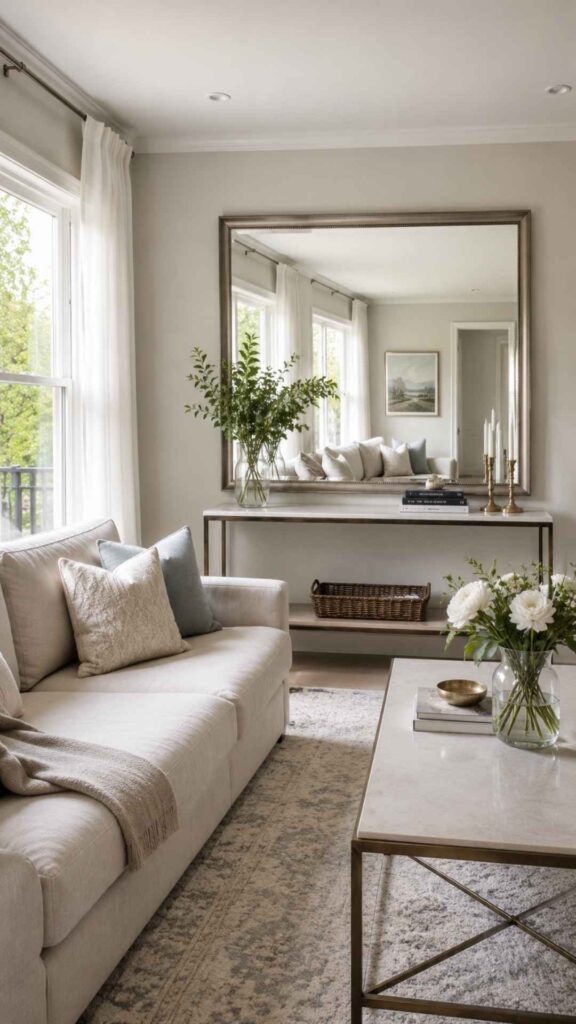
Mirrors are also useful because they add style without adding clutter. A beautiful mirror can act like wall art while still making the space feel larger.
Practical Tip: Place a mirror near a window or light source to double the brightness in the room.
10. Edit Your Decor Carefully
Small spaces need breathing room. Too many decorative items can make the room feel cluttered, even when each piece is attractive. The goal is to choose decor that feels intentional.
Instead of covering every shelf, table, and wall, leave some empty space. Empty space is not wasted space. It gives your eyes a place to rest and makes the room feel more peaceful.
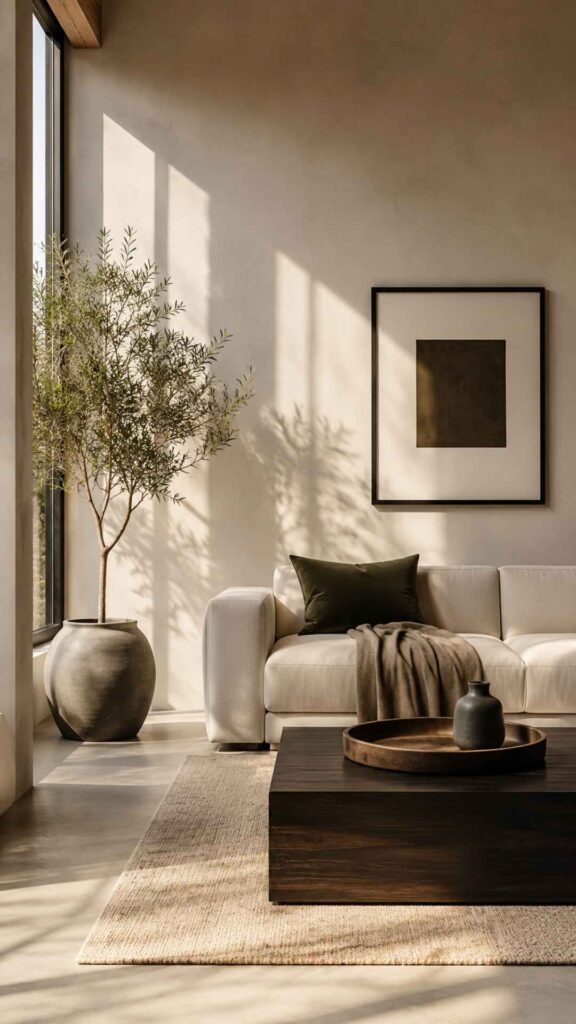
Choose a few meaningful pieces: a statement vase, a framed print, a cozy throw, a plant, or a stylish tray. A clean and simple room often looks more expensive and more spacious.
Practical Tip: Style surfaces in groups of three, such as one vase, one candle, and one small book stack.
Final Thoughts
Decorating a small space is about making smart design choices. Light colors make the room brighter. Layered lighting removes dark corners. Multifunctional furniture saves space. Sliding doors, vertical shelves, tall curtains, mirrors, and cohesive colors all help create the illusion of a larger home.
With the right small space decorating ideas, even a tiny apartment or compact room can feel stylish, open, and comfortable. You do not need a bigger home to create a beautiful home. You just need to design the space you have with intention.